
The Andean Condor in Patagonia: Where to Find the King of the Sky
Everything you need to find Andean Condors in Patagonia, from Torres del Paine to Cerro Dorotea near Puerto Natales.
There are moments in birding that stop you completely. Not just the sighting, but the scale of it. Standing on the ridge of Cerro Dorotea, a short but steep hill just outside Puerto Natales, we watched 51 Andean Condors move through in a single afternoon. Some soared above us. Others, riding the same ridge thermals at a lower angle, passed below us, their three-meter wingspans filling the view from our feet downward. Nobody in our group spoke much. There was nothing useful to say.
If you are heading to Patagonia and want to understand what this bird actually is, this guide covers everything: biology, behavior, the best sites on both the Chilean and Argentine sides, what time of day works, and exactly how to plan a condor-focused outing.
What You Are Looking At
The Andean Condor (Vultur gryphus) is the largest flying bird in the Western Hemisphere by combined weight and wingspan. Males can weigh up to 15 kilograms and carry a wingspan that regularly exceeds 3 meters. When one passes overhead, the size takes a moment to register. Your brain has no reference point for a bird this large in flight.
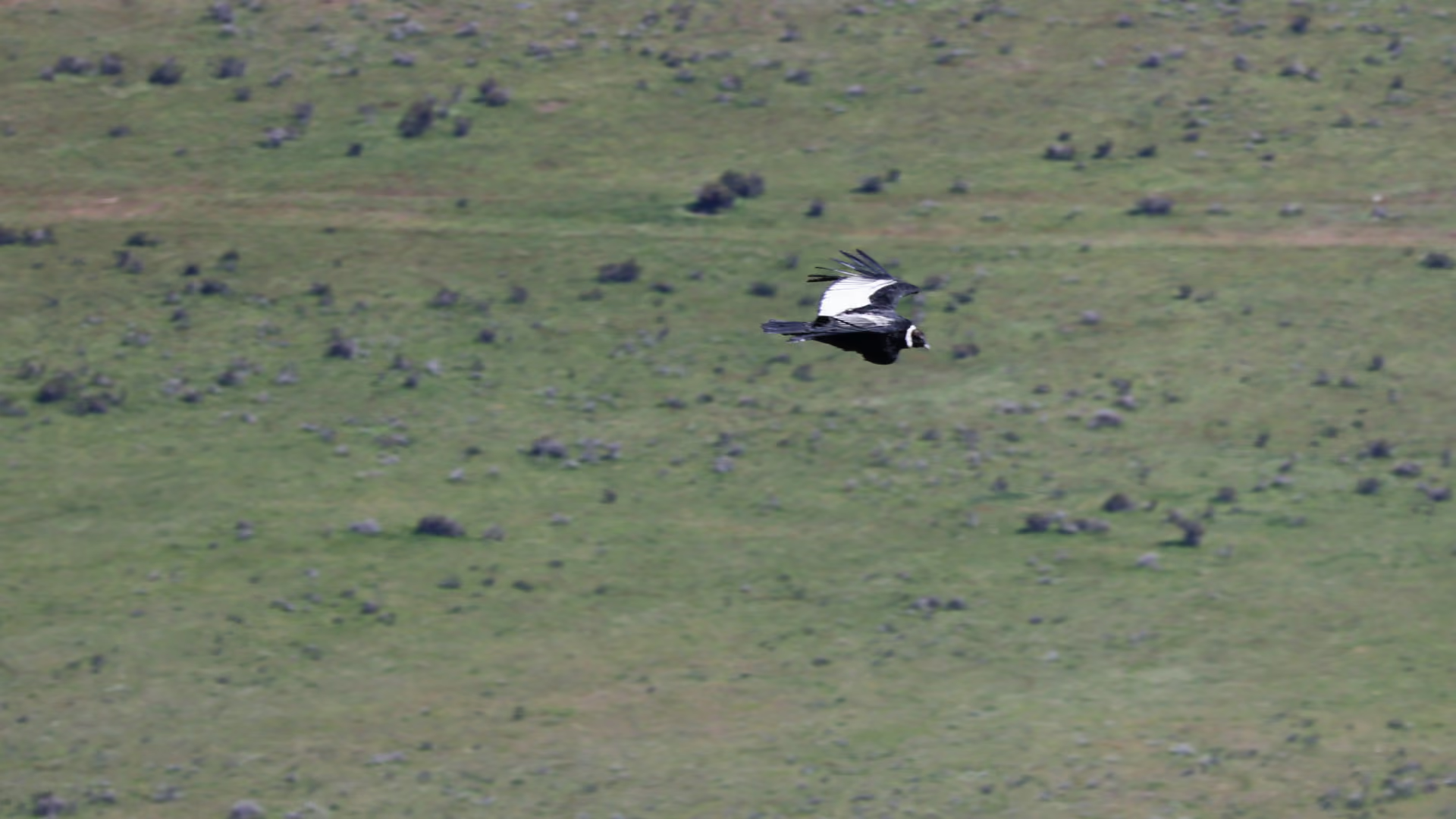
The adult plumage is unmistakable: jet black body, a white ruff at the base of the neck, and broad white patches on the upper wing. Males carry a prominent fleshy crest on the head that females lack. Juvenile birds are a flat brown with dark bare skin, and they go through a long transitional phase before reaching full adult plumage, which can take six or more years. On a good day at a productive site you will see multiple age classes together, and that contrast is one of the great pleasures of watching condors closely.
As a scavenger, the condor plays a fundamental ecological role. It feeds primarily on large mammal carcasses, guanacos and livestock being the most common food source in Patagonia. Near the coasts it will descend to feed on stranded marine mammals and during sea lion pupping season on placentas at breeding colonies. Its survival depends entirely on flight efficiency: it must locate food across vast territories while spending as little energy as possible. This is why the condor is a thermal specialist, waiting for the air to heat before it leaves the roost, riding updrafts for hours without a single wingbeat.
When Condors Are Most Active
The single most useful thing to know before going out to look for condors is this: they do not move until the thermals are ready. Early morning is almost always a waste of time at inland mountain sites. The birds are perched, conserving energy, waiting.
The productive windows are late morning as thermals develop, and particularly late afternoon when condors return to ridgeline roosts and the social activity around carcass sites increases. If you know there is carrion nearby, late afternoon is when the gathering happens. That Cerro Dorotea afternoon was proof of it: the flow of birds along the ridge in the last two hours of light was constant, one after another, sometimes in loose groups, working the same thermal corridor above and below where we stood.
In winter, fewer tourists, calmer winds on some days, and the absence of leaf cover on deciduous Nothofagus trees can actually improve sightings at certain forest-edge sites on the Chilean side.
The Best Sites in Chilean Patagonia
Cerro Dorotea, Puerto Natales
This is the site we keep coming back to, and the one most underrepresented in other guides. Cerro Dorotea sits just outside Puerto Natales and is reachable by taxi in minutes. The hike is steep but short, gaining elevation quickly to a long open ridge with views across Ultima Esperanza Sound. The ridge acts as a natural thermal highway. Condors use it consistently in the afternoons, and because you are walking along the ridge rather than looking up at a cliff, you get lateral and even downward views that most condor sites cannot offer. 51 birds in one afternoon is not a fluke here. It is what the geography produces. Budget two to three hours and go in the second half of the day.
Torres del Paine National Park
The most visited condor site in Patagonia and for good reason. The Mirador del Condor near Lago Pehoe is a straightforward walk with reliable sightings. Condors are also regularly seen along the road into the park, soaring above the Paine Massif, and near puma kill sites on the steppe where multiple scavengers gather. If you are spending more than one day in the park you will almost certainly see condors without trying.
Olga Teresa Ranch, near Punta Arenas
About 60 minutes from Punta Arenas by road, this working ranch protects a roost site of over 100 condors at a vertical rock face embedded in a steep hill. Far South Expeditions runs dedicated photography hides here for close-range flight shots. For photographers, this is one of the most productive condor sites in the world. The birds arrive, depart, and interact socially at very close range.
Carretera Austral
Condors are present throughout the Carretera Austral and are best found by stopping at any high ridge or valley with open steppe on the eastern slopes. The section between Cochrane and Villa O'Higgins is particularly productive for high soaring birds.
The Best Sites in Argentine Patagonia
El Chalten and Los Glaciares National Park
The Fitz Roy massif is excellent condor habitat. Birds soar the ridgelines above the valley consistently, and the hikes to Laguna de los Tres and Mirador Condores are named for good reason. On calm mornings the thermals develop later but the sightings on the return hike in the afternoon are often excellent.
Ruta 40 Corridor
Driving the Argentine steppe on Ruta 40 between El Calafate and Bariloche, condors appear regularly at any cliff face, canyon edge, or site with obvious carrion activity. This is less predictable than dedicated sites but rewards patient roadside scanning.
Bariloche and Nahuel Huapi National Park
The lake district of Argentine Patagonia holds good condor numbers and the dramatic Andean topography provides consistent thermal activity. Cerro Catedral and the roads south toward El Bolson are reliable areas.
Practical Tips for Seeing Condors
Go in the afternoon. Morning sessions at flat or valley sites are rarely worth the effort. Save your energy, arrive at the ridge or viewpoint by early afternoon, and stay until the light goes.
Learn the silhouette. In Patagonia you will see Black-chested Buzzard-Eagles and large turkey vultures at a distance that can briefly confuse. The condor's flat wing profile, the finger-like primary feathers, the white upper-wing patches, and above all the sheer size will eliminate any doubt quickly. At distance, if it looks absurdly large, it is a condor.
Bring optics. Even at close sites like Cerro Dorotea and Olga Teresa, a good pair of binoculars transforms the experience. For sites where birds soar at distance, a spotting scope lets you study plumage and age class in detail.
Read the landscape. Condors follow thermals and ridge lines. If you understand which cliffs and ridges the wind hits first each afternoon, you can position yourself ahead of the birds rather than scanning hopefully. Ask local guides where the afternoon thermal corridors run. Cerro Dorotea's ridge runs northeast to southwest, which the prevailing Patagonian westerlies load perfectly.
Age, Sex, and What to Look For
Adults have jet black plumage, a bright white collar, white upper-wing patches, and a bare pinkish-red head. Males have the prominent fleshy crest. Immatures are in transition: the plumage darkens progressively and the white collar begins to form but remains incomplete. Juveniles are uniformly brown with dark bare skin and none of the white patterning, often mistaken for large eagles at a distance. Seeing all three age classes together at a roost or carcass site is one of those quietly extraordinary moments that rewards patience.
Conservation Status
The Andean Condor is currently listed as Vulnerable on the IUCN Red List, with a global population estimated between 6,700 and 10,000 individuals. In Patagonia the population is considered relatively stable compared to the northern Andes, but habitat pressures, accidental poisoning through lead from hunter-shot carcasses, and deliberate persecution by livestock farmers remain real threats. The ecotourism model at sites like Olga Teresa, which generates local income directly tied to condor presence, is one of the most effective conservation tools available in the region.
The Cerro Dorotea Moment
We have seen condors in many places across Patagonia. Torres del Paine, the Carretera Austral, El Chalten, valley roads where a dead guanaco pulled ten birds into view at 50 meters. Every sighting is something. But Cerro Dorotea in the late afternoon, on the ridge above Puerto Natales, with friends who understood what they were looking at, watching 51 condors move through on a single thermal highway, some passing below our feet, is a different category of experience entirely. It is the kind of moment that reminds you why you came to Patagonia in the first place, and why, once you start birding here, you cannot stop.
If you are in Puerto Natales for even one night, go to Cerro Dorotea. Go in the afternoon. Bring binoculars. Count every bird. Then tell us how many you got.