
Central Park Spring Birding: A Hotspot Guide for May Migration
Central Park spring birding peaks in the second week of May. Here's the complete hotspot route.
There is a specific disorientation that happens the first time you stand in the Ramble at 6 AM in May. You are in the middle of Manhattan. The skyline is visible above the trees. The subway is running beneath you. And in the branches at arm's reach, a Blackburnian Warbler (Setophaga fusca) is feeding with complete indifference to all of it.
From the last week of April through the end of May, the Ramble attracts a wealth of colorful and sought-after short-distance and neotropical migrants. Thirty-seven acres of wooded hills in the center of the most densely populated city in North America, and on a good morning in the second week of May it can produce more warbler species in two hours than a full day in the finest rural woodland. The contrast between setting and experience is the Central Park effect, and it is real.
More than 200 species of birds visit the park every year, taking advantage of all that green space in the middle of the dense city buildings. This guide covers the hotspots in the order you should visit them, the species to expect at each, and the community tools that make Central Park birding unlike any other experience in North American birding.
The Central Park Effect: Why This Works
The long green rectangle of Central Park stands out on any map of Manhattan, and it stands out to the droves of migrating birds of all kinds that flock here during migration. Songbirds such as warblers, tanagers, and grosbeaks are particularly plentiful here, but anything from Eastern Whip-poor-wills to American Bittern may be found on the right migration day.
The mechanism is the same as every other urban park concentration, but amplified to an extraordinary degree. A migrant descending over Manhattan Island at 3 AM has one viable landing option: Central Park. Every bird in the sky over Midtown targets the same 843 acres. The park does not just attract migrants. It collects them from a catchment area of hundreds of square kilometers of concrete, glass, and steel. A woodlot in Connecticut of the same size might hold 15 warblers on a good morning. Central Park on the same morning might hold 2,000.
People willing to spend the whole day sweeping through the park and targeting sightings of rare birds occasionally top 100 species. One experienced birder recorded 98 species in a single mid-May morning, including 28 species of wood-warblers, and was still finding great birds when it was time to leave for work at 9 AM.
The Community Advantage
Before covering the hotspots, there is one resource that is as valuable as any location in the park: the birding community itself.
Word of rarities spreads quickly, and there are always plenty of like-minded people around. The NYC birding community is one of the most active, generous, and social in North America. Sightings are posted to eBird within minutes of observation, shared on social media in real time, and communicated via the NYC Bird Alliance's channels throughout the day.
For any visitor, this means the Central Park experience is not solitary. You are birding alongside and with the benefit of dozens of observers simultaneously covering the same 843 acres. Check eBird's Explore page for Central Park, filtered to the past 24 hours, before you arrive. The sightings list tells you what was found yesterday, where, and at what time. On a good migration morning, reports are updating every 10 to 15 minutes as observers move through the park.
The Spring Peak Window
By early April the pace of migration lifts a little, and the hardier warblers appear. Pine Warbler (Setophaga pinus) and Yellow-rumped Warbler (Setophaga coronata) are all to be found. Early April is prime time for Louisiana Waterthrush (Parkesia motacilla) migration. Until the trees start to leaf out in late April, finding spring migrants is relatively easy both by song and sight.
The second week of May is the height of spring migration. The best days are the ones where the wind comes from the south, especially if preceded by a few days of northerly winds. The first or second day after the wind moves to the south are your best bets for the largest numbers in the park, especially if there was a little rain in the morning. On the best fallout days it can seem like every tree within the Ramble is loaded with migrants, and there will be birds everywhere else within the park too.
The spring migration at Central Park peaks between the last week of April and the third week of May. For planning purposes, the second week of May is the single best target window. Flights are at peak density, species diversity is highest, and the leaf-out is far enough along that birds are visible but not completely hidden in dense foliage.
The Sequential Walking Route: South to North
In general the most productive areas in the park are The Ramble and the areas around it. Here you will find most of the migrant bird species, plus most of the birders. The route below connects all the major spring hotspots from the southwest corner to the north end, covering it fully in three to five hours depending on pace.
Stop 1: Strawberry Fields and the West 72nd Street Entry
From the West Side at 72nd Street, start at Strawberry Fields, a long meadow bordered by tall oaks and other trees that attract migrating warblers, tanagers, orioles, and grosbeaks, as well as shrubby areas popular with thrushes and sparrows.
This is the right entry point from the Upper West Side subway lines (B/C at 72nd Street). The oak canopy at Strawberry Fields warms up quickly in morning sun and activates insect hatches that migrants follow. Check the oaks carefully before moving deeper into the park. Tanagers and grosbeaks feed conspicuously here.
Stop 2: The Hallett Nature Sanctuary and The Pond
Hallett Nature Sanctuary runs from the east side of the park between 60th and 62nd Streets. It is a protected woodland that was completely closed to visitors from 1934 to 2001. Since 2013, the Central Park Conservancy has maintained regular visiting hours and tours so that one may bird this pristine area, which attracts a good variety of land birds during migration.
The key constraint: Hallett Sanctuary is only open during certain times of the day, not including mornings, primetime for birding. Check the Central Park Conservancy website for current hours before visiting. The workaround for early birds is to scan the sanctuary boundaries from the accessible path along The Pond's edge, where the wooded hillside rising above the water is visible and productive without entering the sanctuary itself. Northern Parula (Setophaga americana), Black-and-white Warbler (Mniotilta varia), and Hermit Thrush (Catharus guttatus) are all regularly visible from the pond shoreline.
The Pond itself is productive for waterfowl through early May: Wood Duck (Aix sponsa), Green Heron (Butorides virescens), and Black-crowned Night-Heron (Nycticorax nycticorax) roost in the willows.
Stop 3: The Ramble
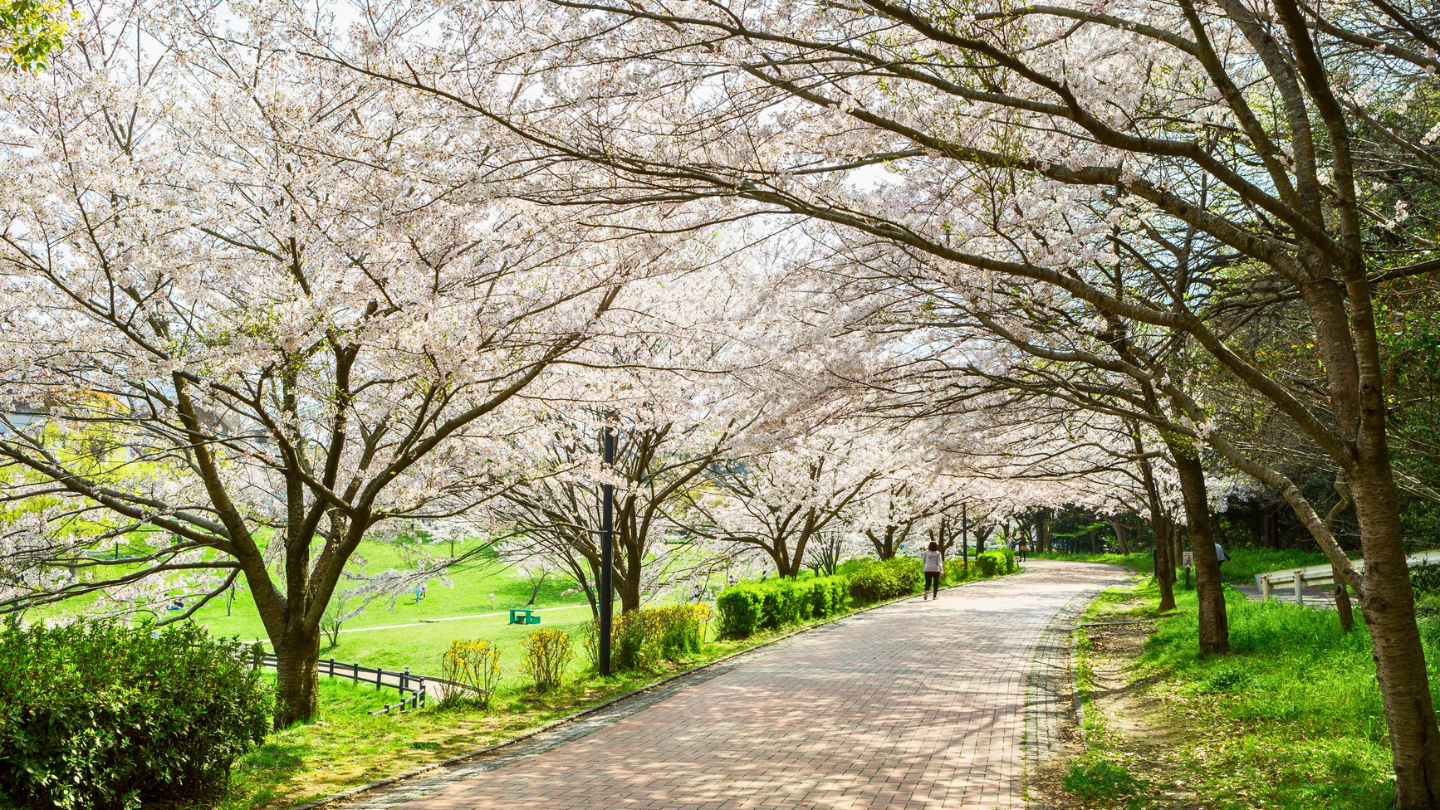
The forested area just north of the boathouse is the celebrated Ramble, 37 acres of hills extending from 72nd Street to 79th Street. It is the place to be in spring. Paths wind through woods and thickets, along the Lake, over Bow Bridge, and back to the boathouse. If you work the paths slowly, you will find an amazing variety of birds at close range. Wet spots and seeps can be especially attractive for weary migrants in search of a bath.
The Gill, a stream that flows through the interior of the Ramble, is the single most productive feature in spring. Migrants follow running water to drink and bathe, and the streamside vegetation concentrates birds in a linear corridor that is easy to work systematically. On a fallout morning, the Gill corridor can hold a dozen warbler species in 50 meters of streambank.
The Ramble's interior paths reward slow, patient walking over fast coverage. Stop at any wet seep, dripping moss, or small pool and wait. Birds that are feeding actively in the canopy will drop to water sources repeatedly. A stationary observer at a water feature in the Ramble on a good May morning is more productive than a birder covering twice the ground.
Stop 4: The Lake and Bow Bridge
Check both sides of the Balcony Bridge, which crosses a small creek that enters the Lake. From the Lake's shore you may see a variety of waterfowl including Northern Shoveler (Spatula clypeata), Wood Duck, and Double-crested Cormorant (Nannopterum auritum), as well as wading birds such as Great Blue Heron (Ardea herodias), Great Egret (Ardea alba), and Green Heron. Black-crowned Night-Herons often roost in low willows over the water. Belted Kingfisher (Megaceryle alcyon) can be seen and heard fishing here, and during migration the brushy lake edges are popular with Eastern Phoebe (Sayornis phoebe), Swamp Sparrow (Melospiza georgiana), and warblers including both waterthrush species. Many springs, a Prothonotary Warbler (Protonotaria citrea) may be found foraging along the Lake's shaded northern shoreline.
Bow Bridge, the ornate cast iron bridge over the Lake's narrowest point, gives you a 360-degree scan of both the Lake shoreline and the canopy of the adjacent woodland. In migration, it is one of the best single vantage points in the entire park. Stand still, scan both sides, and let the birds reveal themselves.
Stop 5: Summit Rock and Sparrow Rock
Enter the park at 81st or 85th and climb to the top of Summit Rock, an open area bordered by tall oaks that can be full of songbirds. The shaded woods here are also popular with thrushes. Tanner's Spring, just south of Summit Rock, is a small natural water source where birds often come to drink and bathe. Later in the morning, this spot can stay productive when other areas quiet down.
Summit Rock is the technique that experienced Central Park birders use when the Ramble is busy: climb to the highest point and scan the surrounding canopy from above. It is a particularly fruitful stop during the spring migration, when birders sometimes spot as many as 10 different warbler species. The elevated angle puts you at eye level with mid-canopy feeders that are invisible from the ground.
If you head to Turtle Pond or the Ramble from Summit Rock, stop by Sparrow Rock. There are several large rocky outcroppings in this area, interspersed with patches of wildflowers, shrubs, and trees, and during migration the habitat can be quite lively with warblers and sparrows. Lincoln's Sparrows (Melospiza lincolnii) are observed in Central Park every migration season.
Stop 6: The Reservoir
The large body of water also attracts rarities, and in the spring the same trees can be dripping with warblers. The Jacqueline Kennedy Onassis Reservoir, the 106-acre body of water in the center of the park, is primarily a waterfowl and diving bird site but the surrounding oak canopy is exceptional during migration. Walking the full 2.5-kilometer perimeter path takes 30 minutes and consistently produces warblers in the adjacent trees that are largely overlooked by birders heading directly for the Ramble.
Stop 7: The North Woods, the Loch, and the Ravine
The Great Hill and North Woods is probably every bit as good bird-wise as the Ramble, but the birder coverage is less dense.
The North Woods is a great spot for birding if you want something more remote. By its pool are ducks and herons, while up in the willow trees are flycatchers and warblers. The Loch and the Ravine are two great spots to set up shop. The North Woods runs from 101st Street to 110th Street and contains the Loch, a rocky stream that flows through a genuine woodland ravine: the most naturalistic habitat in the entire park. The combination of running water, dense canopy, and understory shrubs makes the Loch corridor one of the best thrush sites in the park. On a good May morning, all five Catharus thrushes have been recorded simultaneously in the North Woods.
Popular entry points for birders include the 103rd Street entrance near the North Woods and the 81st Street entrance near the Ramble. For a first visit, the 103rd Street entrance gives direct access to the North Woods without passing through the crowded central section of the park.
The Arthur Ross Pinetum: The Specialist's Stop
Stands of evergreen trees are fairly uncommon in the park and the Arthur Ross Pinetum has the largest of all. This often proves to be a big attractor for birds with a preference for evergreens, and the deciduous trees along its perimeter are good for other migrants, particularly the trees along the north edge. The Pinetum, located between 84th and 86th Streets on the west side, is the specialist's complement to the Ramble. Pine Warblers, Yellow-rumped Warblers, and in the right conditions, Cape May Warblers (Setophaga tigrina) feed in the conifers in April.
Getting There
The subway lines and stops most useful for birding:
B/C train, 72nd Street: West 72nd Street entrance, Strawberry Fields, and the Ramble from the west.
B/C train, 81st Street (Museum of Natural History): Direct access to the Ramble's west entrance and Belvedere Castle.
4/5/6 train, 86th Street: East entrance to the Ramble and Belvedere Castle from the east side.
2/3 train, 96th or 103rd Street: North Woods access.
No parking required. No car needed. The entire route described above is accessible by subway, and the park is compact enough that the full south-to-north route is walkable in a half day. This is the practical advantage of Central Park that no rural migration hotspot can replicate: the birding is world-class, and the transportation infrastructure is world-class, and they happen to occupy the same 843 acres.
The Short Version
The spring migration tends to peak in April and May, with the second week of May at the height. Enter from West 72nd Street, check Strawberry Fields, work south to The Pond and Hallett boundary, enter the Ramble at the Gill, cross Bow Bridge, climb Summit Rock, walk the Reservoir, continue to the North Woods and the Loch.
Check eBird before you arrive. Warblers in the trees above Manhattan skyscrapers, Prothonotary Warblers along the lakeshore, all five thrushes singing in the North Woods before anyone else wakes up. This is Central Park in May, and it is unlike anywhere else.
The allure of off-the-beaten-path travel
Lorem ipsum dolor sit amet, consectetur adipiscing elit ut aliquam, purus sit amet luctus venenatis, lectus magna fringilla urna, porttitor rhoncus dolor purus non enim praesent elementum facilisis leo, vel fringilla est ullamcorper eget nulla facilisi etiam dignissim diam quis enim lobortis scelerisque fermentum dui faucibus in ornare quam viverra orci sagittis eu volutpat odio facilisis mauris sit amet massa vitae tortor.
Unveiling the charm of lesser-known Destinations
Orci sagittis eu volutpat odio facilisis mauris sit amet massa vitae tortor condimentum lacinia quis vel eros donec ac odio tempor orci dapibus ultrices in iaculis nunc sed augue lacus.
- Lorem ipsum dolor sit amet consectetur facilisi etiam dignissim diam quis enim
- Mauris aliquet faucibus iaculis dui vitae ullamco sit amet luctus
- Posuere enim mi pharetra neque proin dic rhoncus dolor purus non enim
- Dui faucibus in ornare posuere enim mi pharetra neque proin dicit
Finding solitude in hidden gem locations
Lorem ipsum dolor sit amet, consectetur adipiscing elit ut aliquam, purus sit amet luctus venenatis, lectus magna fringilla urna, porttitor rhoncus dolor purus non enim praesent elementum facilisis leo, vel fringilla est ullamcorper eget nulla facilisi etiam dignissim diam quis enim lobortis scelerisque fermentum dui faucibus in ornare quam viverra orci sagittis eu volutpat odio facilisis mauris sit amet massa vitae tortor condimentum lacinia quis vel eros donec ac odio tempor orci dapibus ultrices.
The thrill of discovering untouched natural beauty
Dolor sit amet, consectetur adipiscing elit ut aliquam, purus sit amet luctus venenatis, lectus magna fringilla urna, porttitor rhoncus dolor purus non enim praesent elementum facilisis leo, vel fringilla est ullamcorper eget nulla.
- Lorem ipsum dolor sit amet consectetur tempor orci dapibus ultrices
- Mauris aliquet faucibus iaculis dui vitae ullamco elementum facilisis
- Posuere enim mi pharetra neque proin dic fermentum dui faucibus in ornare
- Purus sit amet luctus posuere enim mi pharetra neque proin dic
“Ut enim ad minim veniam, quis nostrud exercitation ullamco laboris nisi ut aliquip ex ea commodo consequat uis aute irure dolor in reprehenderit in voluptate velit”
Exploring cultural marvels off the tourist radar
Donsectetur adipiscing elit ut aliquam, purus sit amet luctus venenatis, lectus magna fringilla urna, porttitor rhoncus dolor purus non enim praesent elementum facilisis leo, vel fringilla est ullamcorper eget nulla facilisi etiam dignissim diam quis enim lobortis scelerisque fermentum dui faucibus in ornare quam viverra orci sagittis eu volutpat odio facilisis mauris sit amet massa vitae tortor condimentum lacinia quis vel eros donec ac odio tempor orci dapibus ultrices in iaculis nunc sed.