
American Robin Life Cycle: From Egg to Adult, Stage by Stage
American robin life cycle, migration timing, nesting habits, and diet explained. A complete identification guide for beginners and experienced birders.
The American robin is one of the most recognized birds in North America, and for good reason. Its cheerful song at dawn, bold orange-red breast, and habit of hunting earthworms on suburban lawns make it a constant companion through the seasons. Yet despite its familiarity, many birders miss the fascinating details of the robin's life cycle, migration, and survival strategies that make this thrush far more remarkable than a backyard regular.
Whether you are watching your first robin tug a worm from wet grass or trying to distinguish it from its European namesake, this guide covers everything you need to know about the American robin from egg to adult, summer to winter.
Identification and Life Stages
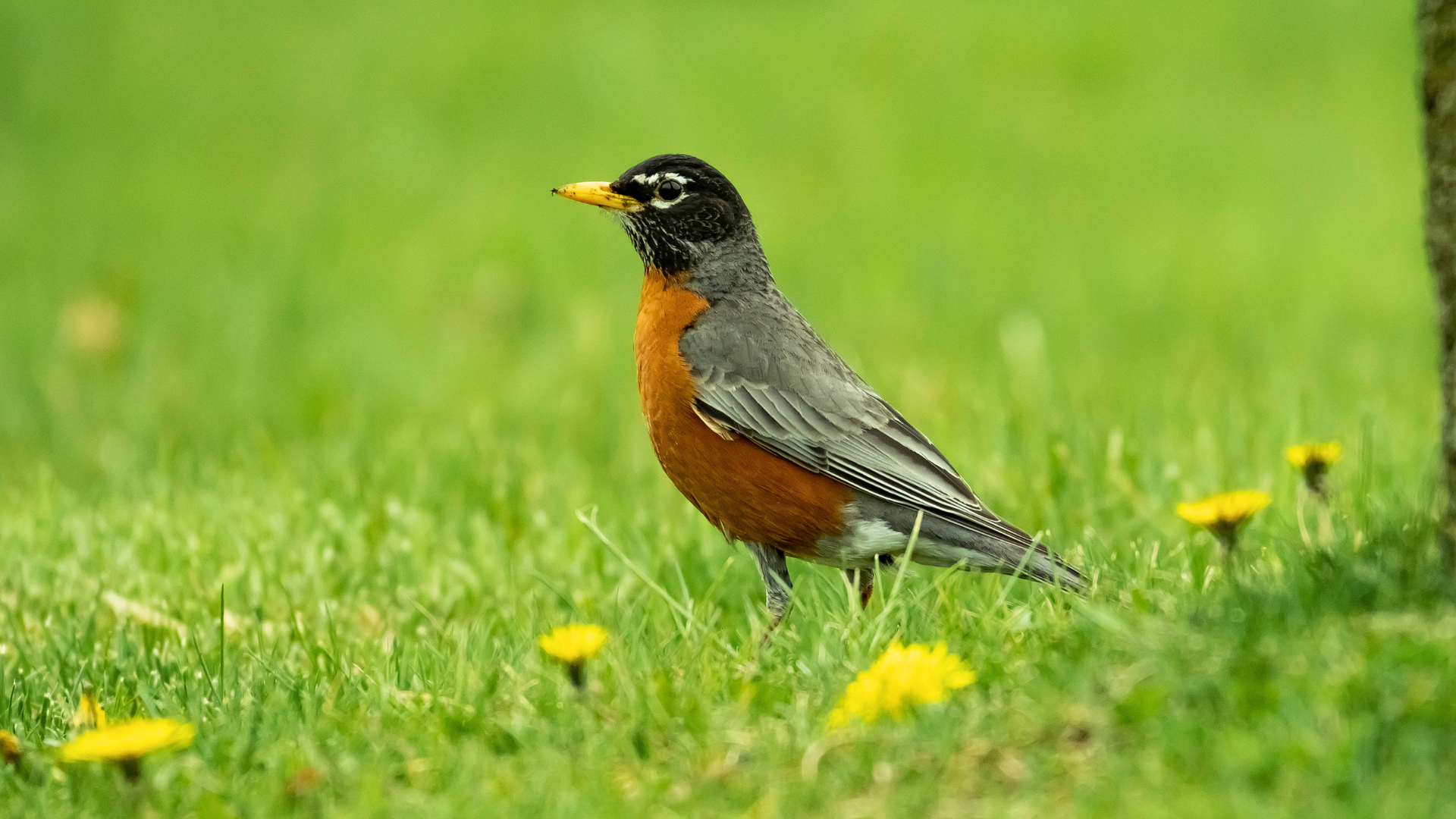
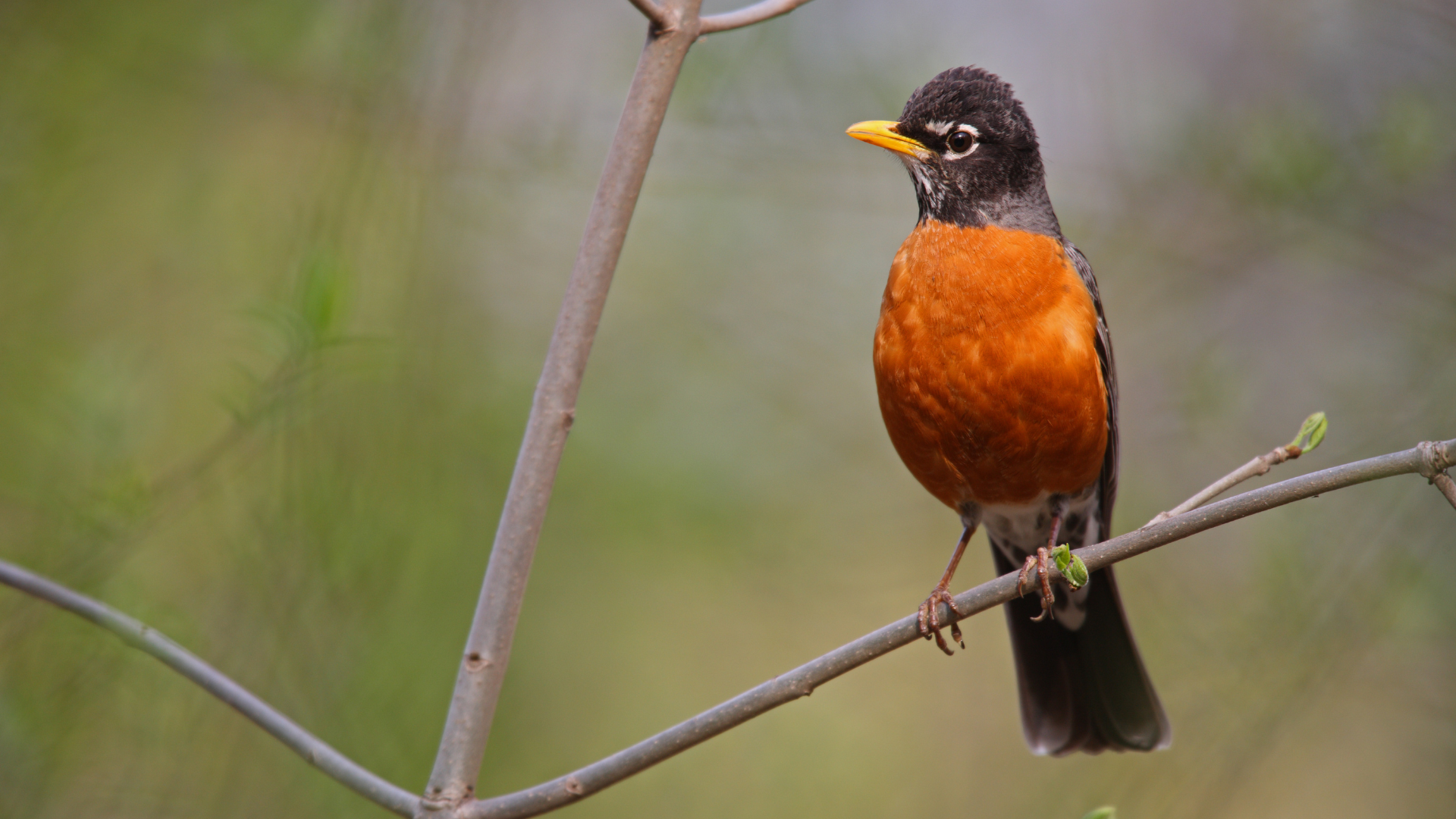
The American robin (Turdus migratorius) is a medium-sized thrush, typically 9 to 11 inches long with a wingspan of 12 to 16 inches. The most distinctive field mark is the brick-orange or rust-red breast, which contrasts sharply with a dark gray-to-black back and head. The yellow-orange bill is another reliable identifier at close range. Adult males show the richest coloration, with a nearly black head and deeply saturated breast. Females are similar but noticeably paler overall, with a lighter gray-brown head and a softer salmon-orange breast.
Juvenile Features
Baby robins and juvenile birds look strikingly different from adults and often confuse new birders. Fledglings sport heavily spotted, speckled breasts on a pale background, a typical pattern for thrushes that provides camouflage in dappled light. The spotting fades through the first summer as juveniles complete their post-juvenile molt. Young birds also show buffy wing bars and pale spots on the back that disappear by fall. If you spot a streaky, spotted-breasted bird hopping through your yard in June or July, there is a good chance it is a baby robin learning to forage independently.
Migration Patterns
Robins are partial migrants, meaning not all individuals migrate and those that do can vary significantly in how far they travel. Populations in the southern United States and along the Pacific Coast may remain year-round, while robins breeding in Canada and the northern states typically move south for winter. Migration in spring begins as early as February across the southern tier and reaches northern Canada by May. Fall migration is more diffuse and less conspicuous, with birds drifting south from September through November.
A common misconception is that the first robin of spring signals the end of winter. In reality, robins often winter in flocks in wooded areas and fruiting tree groves, even in northern states. They tend to become more visible in spring when they shift from fruit-heavy winter diets to earthworms and begin claiming territories on lawns and open ground.
- Spring northward migration peaks from late February through April depending on latitude
- Fall migration runs from September through November, often going unnoticed due to flock movement through forests
- Winter roosts can contain hundreds to thousands of birds gathering in communal sites with reliable fruit sources
- Robins in Quebec and other northern Canadian provinces are highly migratory, departing by October and returning in April
Nesting Biology and Breeding Habits
American robin breeding habits are well documented and offer some of the best opportunities for backyard wildlife observation. Males arrive on breeding grounds before females and establish territories through persistent song. The familiar cheerily, cheer-up, cheerio phrase is a territorial advertisement that peaks in the early morning hours, making the robin a signature voice of the dawn chorus.
Nesting typically begins in April across most of the United States and in May across Canada. The female builds the cup nest almost entirely on her own, selecting a sturdy fork in a tree, shrub, or even a building ledge as her foundation. The nest is constructed with coarse grass, twigs, and plant material on the outside, and lined with a distinctive layer of mud that hardens into a firm cup. The interior is then cushioned with fine grass. A completed nest takes roughly five to six days to build.
Robin Egg Incubation and Clutch Details
American robin eggs are famous for their vivid color. The bright, sky-blue eggs with no markings are so distinctive that robin egg blue has become a recognized color in common usage. A typical clutch contains three to five eggs, with four being the most common number. The female incubates the eggs alone for 12 to 14 days. Once hatched, both parents feed the nestlings, delivering a mix of earthworms and soft invertebrates. Young robins fledge at approximately 13 days but remain dependent on their parents for food for several more weeks. American robins often raise two to three broods per season, with the female sometimes beginning her second nest while the male continues feeding fledglings from the first brood.
Robin Diet: Worms, Fruit, and Foraging Behavior
Few bird behaviors are as entertaining or instructive as watching an American robin hunt earthworms on a wet lawn. The robin uses a combination of visual and auditory cues to locate prey beneath the surface. It pauses, tilts its head at an angle, then makes a rapid lunge to pull a worm free. Research has shown that robins rely primarily on sight rather than hearing when foraging, though vibration sensitivity may also play a role in detecting worm movement.
Diet shifts seasonally in an important way. During spring and summer, earthworms make up a large portion of the diet and are critical for feeding nestlings. In fall and winter, robins shift heavily toward fruit. They consume berries from holly, juniper, crabapple, dogwood, and many other fruiting shrubs and trees. This dietary flexibility is a key reason why robins can survive in northern climates through winter when the ground is frozen and worms are inaccessible.
- Spring and summer staples: earthworms, beetles, caterpillars, grasshoppers
- Fall and winter staples: holly berries, juniper berries, crabapples, dogwood fruit, sumac
- Robins are drawn to yards with short grass that gives them clear sight lines for worm hunting
- Standing water and birdbaths attract robins, especially during dry spells when earthworms retreat deeper into the soil
Winter Behavior and Survival Strategies
Robins in winter are often overlooked because they behave so differently from their spring and summer selves. Rather than defending territories on open lawns, wintering robins form large nomadic flocks that follow fruit availability across the landscape. They move through forests and thickets, stripping berry crops as they go. In years with abundant fruit, significant numbers of robins may remain well into winter even in Quebec, Ontario, and New England.
Understanding robin winter behavior is useful for attracting them to your property. Planting native fruiting trees and shrubs, particularly holly, serviceberry, and crabapple varieties that hold fruit through the cold months, is the most reliable way to draw in winter flocks. Unlike summer robins that respond to feeders and earthworms, winter birds are almost entirely fruit-dependent and rarely visit seed feeders.
American Robin vs European Robin
The American robin and the European robin (Erithacus rubecula) share the name but are not closely related. Early European settlers named the American bird after the familiar robin back home because of the orange-red breast, but the two species belong to entirely different families. The European robin is a small, round, short-tailed bird in the Old World flycatcher family, closer in size to a sparrow. The American robin is a true thrush, significantly larger and more closely related to the song thrush and blackbird of Europe.
- Size: American robin is much larger, roughly twice the body mass of the European robin
- Orange coverage: The European robin has orange restricted to the face and upper breast; the American robin has a full orange-red breast
- Tail: The European robin often cocks its tail and has a rounder, more compact shape; the American robin holds a more horizontal posture
- Range: No overlap; European robins are found across Europe and western Asia, while American robins range across North America
- Family: European robin is Muscicapidae; American robin is Turdidae (true thrushes)
Frequently Asked Questions
What do American robins eat?
American robins eat a varied diet that changes with the seasons. In spring and summer, earthworms are the primary food source, supplemented by insects like beetles, grasshoppers, and caterpillars. In fall and winter, robins shift almost entirely to fruit, favoring native berries from holly, juniper, dogwood, and crabapple trees. Nestlings are fed primarily soft invertebrates and earthworms during their first weeks of life.
Do American robins migrate?
American robins are partial migrants. Most populations breeding in Canada and the northern United States move south for winter, while birds in warmer regions may remain year-round. Robins often linger farther north than people expect during winter, gathering in large fruit-eating flocks in wooded areas. The visible arrival of robins on lawns in spring reflects a behavioral shift toward worm foraging rather than a true arrival from far south.
How is the American robin different from the European robin?
Despite sharing a name and an orange-red breast, the two species are not closely related. The American robin is a true thrush in the family Turdidae, significantly larger than the European robin, which belongs to the Old World flycatcher family Muscicapidae. The American robin has a full orange-red breast and longer body, while the European robin is small, round, and has orange only on the face and upper chest. The two species share no range overlap.
What does a robin nest look like?
A robin nest is a sturdy, well-constructed cup built with coarse grass and plant material on the outside, reinforced with a hardened layer of mud, and lined inside with fine soft grass. Nests are typically placed in a tree fork, on a horizontal branch, or on a sheltered ledge. The distinctive mud lining makes old robin nests easy to identify even after the season ends. Robins lay three to five brilliant sky-blue eggs per clutch and may raise two to three broods each season.
How do you identify a baby robin?
Baby robins and juveniles are spotted and streaky rather than plain-breasted like adults, a typical characteristic of young thrushes. The breast shows dark spots on a pale or whitish background, and the back may show pale buff spots as well. This spotting fades through the first summer molt. Fledglings often appear fluffy, short-tailed, and awkward on the ground as they learn to forage. They are commonly seen in June and July being attended by parent birds.
The Robin as a Year-Round Neighbor
The American robin rewards careful observation across every season. From the speckled eggs in a mud-lined cup nest to the cheerful dawn chorus announcing spring, from the worm-hunting antics on a wet lawn to the quiet winter flocks moving through a berry-laden holly grove, this thrush offers a full-season window into bird life that few other species can match. Understanding its life cycle, migration patterns, and seasonal behavior turns a familiar backyard bird into one of the most satisfying subjects in North American birding.
The allure of off-the-beaten-path travel
Lorem ipsum dolor sit amet, consectetur adipiscing elit ut aliquam, purus sit amet luctus venenatis, lectus magna fringilla urna, porttitor rhoncus dolor purus non enim praesent elementum facilisis leo, vel fringilla est ullamcorper eget nulla facilisi etiam dignissim diam quis enim lobortis scelerisque fermentum dui faucibus in ornare quam viverra orci sagittis eu volutpat odio facilisis mauris sit amet massa vitae tortor.

Unveiling the charm of lesser-known Destinations
Orci sagittis eu volutpat odio facilisis mauris sit amet massa vitae tortor condimentum lacinia quis vel eros donec ac odio tempor orci dapibus ultrices in iaculis nunc sed augue lacus.
- Lorem ipsum dolor sit amet consectetur facilisi etiam dignissim diam quis enim
- Mauris aliquet faucibus iaculis dui vitae ullamco sit amet luctus
- Posuere enim mi pharetra neque proin dic rhoncus dolor purus non enim
- Dui faucibus in ornare posuere enim mi pharetra neque proin dicit
Finding solitude in hidden gem locations
Lorem ipsum dolor sit amet, consectetur adipiscing elit ut aliquam, purus sit amet luctus venenatis, lectus magna fringilla urna, porttitor rhoncus dolor purus non enim praesent elementum facilisis leo, vel fringilla est ullamcorper eget nulla facilisi etiam dignissim diam quis enim lobortis scelerisque fermentum dui faucibus in ornare quam viverra orci sagittis eu volutpat odio facilisis mauris sit amet massa vitae tortor condimentum lacinia quis vel eros donec ac odio tempor orci dapibus ultrices.
The thrill of discovering untouched natural beauty
Dolor sit amet, consectetur adipiscing elit ut aliquam, purus sit amet luctus venenatis, lectus magna fringilla urna, porttitor rhoncus dolor purus non enim praesent elementum facilisis leo, vel fringilla est ullamcorper eget nulla.
- Lorem ipsum dolor sit amet consectetur tempor orci dapibus ultrices
- Mauris aliquet faucibus iaculis dui vitae ullamco elementum facilisis
- Posuere enim mi pharetra neque proin dic fermentum dui faucibus in ornare
- Purus sit amet luctus posuere enim mi pharetra neque proin dic
“Ut enim ad minim veniam, quis nostrud exercitation ullamco laboris nisi ut aliquip ex ea commodo consequat uis aute irure dolor in reprehenderit in voluptate velit”
Exploring cultural marvels off the tourist radar
Donsectetur adipiscing elit ut aliquam, purus sit amet luctus venenatis, lectus magna fringilla urna, porttitor rhoncus dolor purus non enim praesent elementum facilisis leo, vel fringilla est ullamcorper eget nulla facilisi etiam dignissim diam quis enim lobortis scelerisque fermentum dui faucibus in ornare quam viverra orci sagittis eu volutpat odio facilisis mauris sit amet massa vitae tortor condimentum lacinia quis vel eros donec ac odio tempor orci dapibus ultrices in iaculis nunc sed.