The Best Time to Go Birding in Patagonia: An Honest Month-by-Month Guide
The honest birder's guide to timing a Patagonia trip. Why December beats January, and what every month delivers species by species.
Every general travel guide will tell you the same thing. Visit between November and March, peak season is January, book early. That advice is fine if your priority is hiking the W Trek or getting a table at a popular lodge. For birding, it misses the point almost entirely.
The best time to go birding in Patagonia depends on what you are trying to see, where you are going, and what kind of experience you want on the ground. This guide breaks it down month by month from a birder's perspective, with honest notes on crowds, breeding activity, species availability, and what each window actually delivers.
Our answer, if you want one upfront: December is the best month to go birding in Patagonia. Here is why, and how every other month stacks up around it.
Why Birding Timing in Patagonia Is Different
Patagonia's austral summer runs from November through February. Most of the migratory species that breed here arrive from September onward and begin departing by late February. The breeding season peaks in November and December, when activity, song, display, and nest building are at their most intense. By January the region is also at its most visited, with tour buses at the penguin colonies, full refugios on the trekking circuits, and crowded lookout points at the main parks.
For a birder, the overlap of peak breeding activity with peak tourism creates a real tension at certain sites. At others it barely matters. Understanding which sites are crowd-sensitive and which are not is as important as understanding the seasonal bird calendar.
Weather is a separate issue. Patagonia is notoriously unpredictable throughout the entire austral summer. Wind, rain, and sun can all happen in the same afternoon regardless of month. The months with the most stable average weather are December and January, which is another reason December stands out as the sweet spot.
November: Spring Arrivals, Wind, and Wildflowers
November is when Patagonia comes alive. Migrants are arriving throughout the month, breeding birds are establishing territories and beginning to display, and the landscape is green and flowering after winter. It is also the windiest month on average, and some services, lodges, and trails are just reopening after the southern winter.
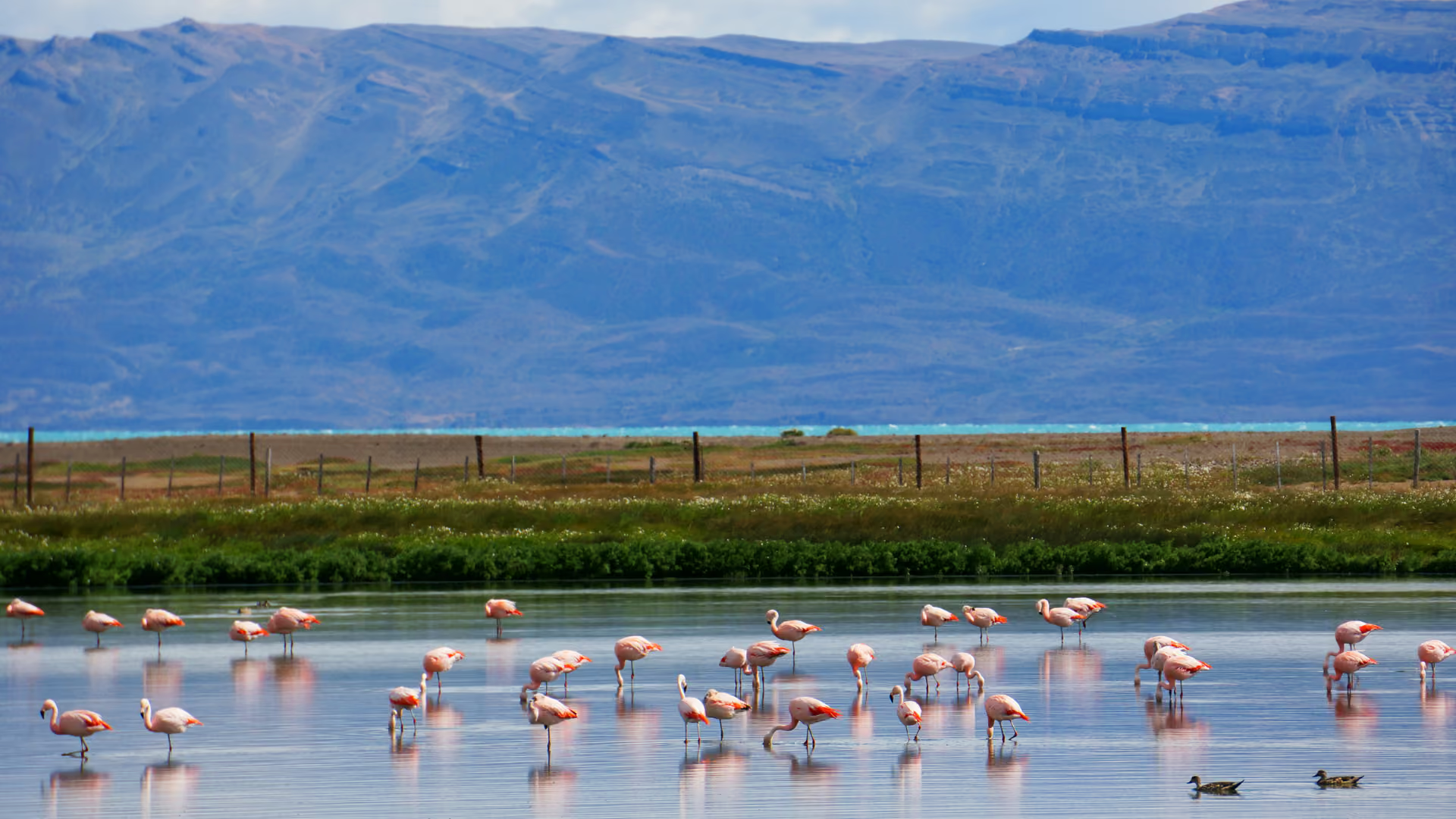
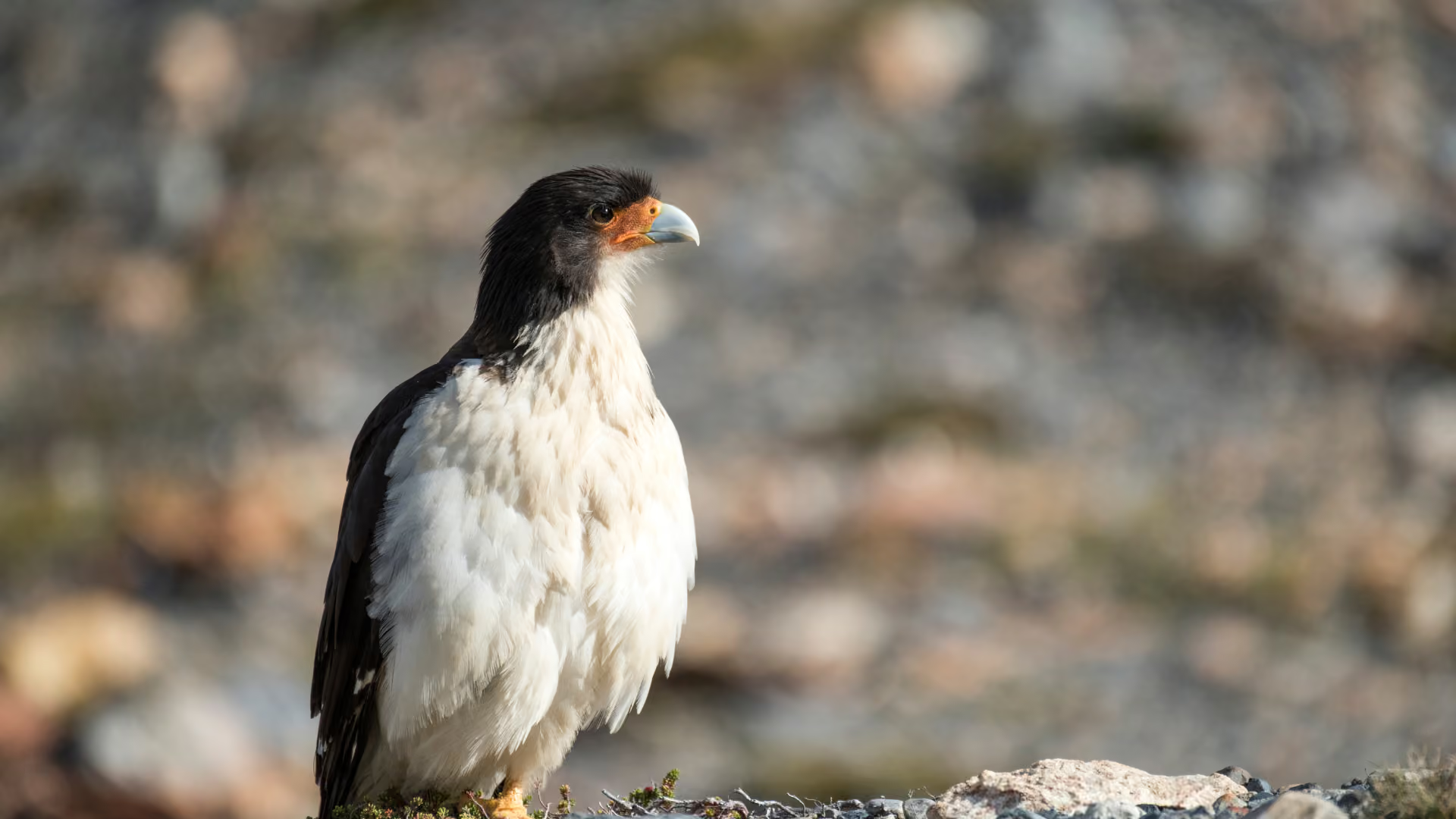
From a birding perspective, November is excellent for activity and song. You will find birds that are newly arrived, freshly territorial, and singing constantly. The steppe is alive with earthcreepers, canasteros, and meadowlarks. Condors are active early in the month as the thermals establish. Flamingos are present at the salt lakes of Santa Cruz and Magallanes. The practical constraint is that November is a transitional month logistically. Some lodges and operators are still finding their footing for the season. Trails in Torres del Paine can be muddy from snowmelt. Peninsula Valdés is excellent in November for southern right whales overlapping with the early penguin season.
Best for: Serious birders who want maximum activity with lower crowds. Those targeting species that require off-trail access on the steppe or high Andean sites.
December: The Sweet Spot for Birders
We keep coming back to December, and after years of birding across Chilean and Argentine Patagonia in different months, our preference is clear. December combines the peak of the breeding season with genuinely exceptional conditions across most of Patagonia.
December in Patagonia is unlike any other month we have spent in the field. The breeding season is at full intensity, and the difference is felt the moment you step outside. Corurendera pipits dart along the ground with beaks full of insects, betraying nests hidden just meters away. Yellowfinches and cinclodes are in full song, territorial and constant, making identification effortless compared to the quieter months. Darwin's Rhea males sit enormous and motionless on communal nests, their patience extraordinary. Ducklings appear on almost every lake and stream, trailing adults who respond to every passing shadow with urgent alarm calls. The nest building, the feeding runs, the courtship displays still finishing at the edges of the season: it is birding at its most alive. For us, December in Patagonia felt like reliving spring, but in the southern hemisphere's own time. A window that opens briefly and closes before you realize what you had. Do not miss it.
Breeding activity is at its most intense across every habitat. Magellanic Penguin colonies are full of eggs and early chicks. Upland Geese are tending goslings on the steppe. Condors are soaring daily on well-established thermals. Austral Parakeets are nesting in Nothofagus cavities.
At the same time, crowds have not yet reached their January and early February peak. Torres del Paine is busy but not overwhelmed. The trails are fully open, the weather is at its most reliable, and the days are at their longest, up to 18 hours of usable light, giving you extraordinary flexibility for early-morning and late-afternoon sessions at your target sites.
Best for: Everyone. It is the single best overall month for birding in Patagonia regardless of experience level or target species.
January: Peak Summer, Long Days, and the Crowd Question
January is the most popular month to visit Patagonia, and the crowds show. At Torres del Paine, the W Trek refugios are at capacity. The Punta Tombo penguin colony receives its highest visitor numbers. Laguna Nimez in El Calafate is busy throughout the day.
Whether this affects your birding depends entirely on the site. For Laguna Nimez, crowds barely matter: the flamingos, Black-necked Swans, and grebes are habituated to visitor presence and the reserve is large enough that you can always find a quiet corner. For the Hooded Grebe lakes in Perito Moreno National Park, where the birds are highly sensitive to disturbance, January visits require genuine discipline and ideally a local guide who knows the protocol.
The breeding season is still active in January but beginning to shift. Many species that hatched in December are now well-grown chicks. Song and display activity is reduced compared to November and December. The behavioral theater is less intense, though the overall species diversity remains high and most migrants are still present.
January remains excellent birding. The days are still very long, the weather is generally good, and all sites are fully operational. If December is not possible, January is a strong second choice.
Best for: Those for whom logistics demand peak season travel, and for combining birding with other activities on a mixed trip.
February: Late Summer, Departures Beginning
February is the end of the austral summer and the beginning of the departure window for many migratory species. Shorebirds that staged briefly in January are already moving north. Some of the early-season breeders have finished their breeding cycles and become harder to find.
That said, February is still a good birding month. The steppe and forest residents are all still present. Penguin colonies at Punta Tombo are now full of large chicks approaching fledging, creating extraordinary photographic opportunities. Condors remain active. The lakes and wetlands of the Argentine steppe still hold their full complement of waterbirds. Crowds begin to thin toward the end of February as the European and North American summer holidays end.
Best for: Those targeting penguin colonies at the chick stage, and birders who want the combination of late summer species with slightly lower crowds than January.
March and April: Autumn Light, Empty Trails, and Hidden Value
March and April are significantly underrated by the general travel market and almost completely overlooked by birding guides. This is a mistake.
The austral autumn brings one of the most dramatic landscape transformations in the southern hemisphere as the lenga beech forests turn gold, orange, and red against the backdrop of the grey-green steppe and the blue glacial lakes. It is objectively the most beautiful month to be in Patagonia from a photographic standpoint.
From a birding perspective, many migrants are still present in early March, particularly the shorebirds that use Patagonia as a staging ground on their northward migration. Austral Parakeets, now finished breeding, begin forming large flocks. Condors remain active and are often easier to approach as the thermal conditions of autumn are calmer and more predictable than the windier summer months.
The practical benefits of March and April are significant for birders: trails are quiet, lodges are available without advance booking, prices are lower, and the lack of general tourists means you have the best forest and steppe sites largely to yourself. April in Torres del Paine feels like a different park from January.
Best for: Experienced birders who prioritize solitude, autumn forest species, and photographic conditions. Also excellent for those targeting the departing shorebird migration.
Quick Reference: Month-by-Month Summary
November: Strong breeding activity, migratory arrivals, some logistical gaps, windiest month. Good for experts seeking solitude.
December: Peak breeding season, exceptional weather, long days, pre-peak crowds. Best overall month for birding.
January: Full summer, all sites open, long days, peak tourist numbers. Crowd impact varies by site. Strong second choice.
February: Late summer, early departures beginning, penguin chick spectacle, crowds easing. Good for colony birding.
March: Migrants still present, autumn beginning, very quiet, affordable. Underrated month.
April: Autumn color peak, resident species only, limited services in south. Best for forest birding and photographers.
May to August (Winter): Resident species only, many sites closed, cold and often inaccessible in the far south. For specialists only.
Site-Specific Crowd Notes
Torres del Paine: Crowds matter here in January and early February, particularly on the main circuit trails. For birding focused visits that use the park roads and viewpoints rather than the trekking infrastructure, it is manageable year-round.
Punta Tombo and Peninsula Valdes: The Magellanic Penguin colonies are large enough that crowds rarely reach the birds. December for eggs and early chicks, February for large chicks, are the best windows.
Laguna Nimez, El Calafate: A small reserve that can feel genuinely busy in January. Go early morning or late afternoon. The birds are habituated and remain present regardless.
Cerro Dorotea and the Puerto Natales area: Essentially uncrowded at any time of year. A trail used mostly by local hikers and informed visitors. December and January equally good.
Perito Moreno National Park and Hooded Grebe lakes: Sensitive sites that require guided access and respectful behavior at any time of year. Not affected by general tourist crowds because almost nobody goes there.
One Final Note
Whatever month you choose, build in flexibility. Patagonia's weather will test your plans regardless of season. The birder who is happy to wait out a two-hour wind squall behind a boulder and then emerge for the calm golden hour afterward will always see more than the one who goes back to the lodge.
December is the answer. But any month between November and April, approached with the right mindset and the right optics, will deliver experiences that stay with you for a long time.