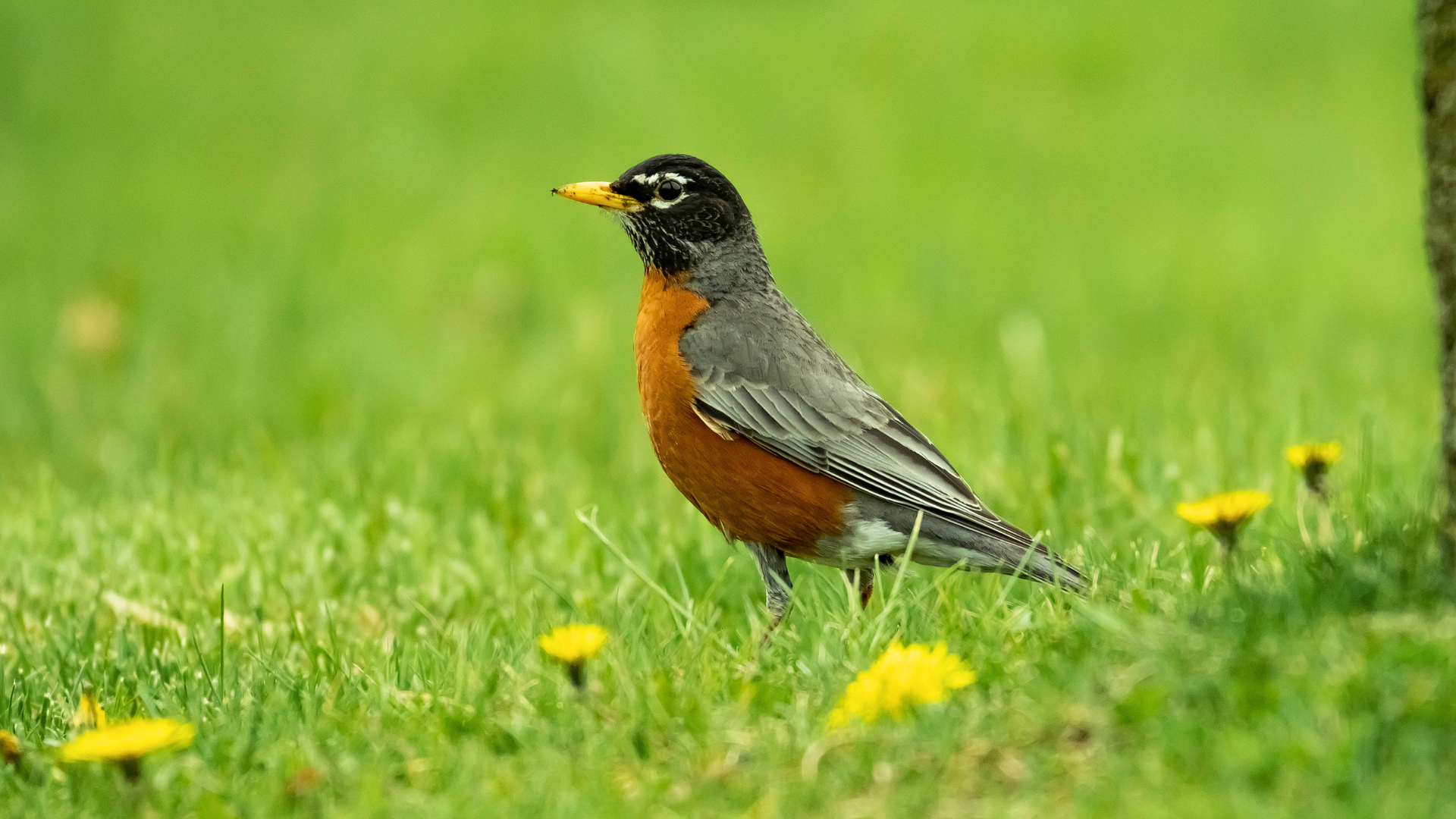

How Birds Forage Without Becoming Lunch (Foraging Strategies)
Learn how birds forage and avoid predators: gleaning warblers, probing shorebirds, perch-hunting hawks, flocking safety, and mobbing behavior explained.
Watch any bird long enough and you will notice it is never simply eating: it is solving a complex, moment-to-moment problem. Every feeding movement reflects a strategy refined by natural selection to maximize energy gain while minimizing the risk of becoming someone else's meal. Understanding bird foraging behavior transforms what looks like random pecking and scratching into a readable map of adaptation, habitat, and survival.
North American birds use a remarkable diversity of foraging techniques, from the delicate leaf-gleaning of wood warblers to the explosive strike of a hunting Peregrine Falcon. They also employ an equally varied toolkit for avoiding the predators that target them. This guide covers the major foraging strategies, the species that exemplify them, and the predator avoidance tactics that keep birds alive long enough to breed.
Major Bird Foraging Techniques
Ornithologists classify foraging strategies based on where birds search for food, how they locate it, and the physical techniques they use to capture or extract it. Bill morphology is the primary constraint: a hummingbird's needle-like bill and a pelican's pouch represent the extreme ends of a spectrum of tools shaped for specific food types and acquisition methods.
Probe vs. Glean: Two Fundamental Approaches
Gleaning is the technique of picking prey, almost always insects or small invertebrates, directly from surfaces such as leaves, bark, or soil without penetrating the substrate. Warblers are the archetypal gleaners of North American forests, and research suggests that gleaning accounts for approximately 80 percent of insect captures in wood warbler foraging. Different warbler species partition the forest vertically to reduce competition: Black-throated Green Warblers forage in the outer canopy, while Black-and-white Warblers creep along bark surfaces, and Ovenbirds work the leaf litter on the forest floor.
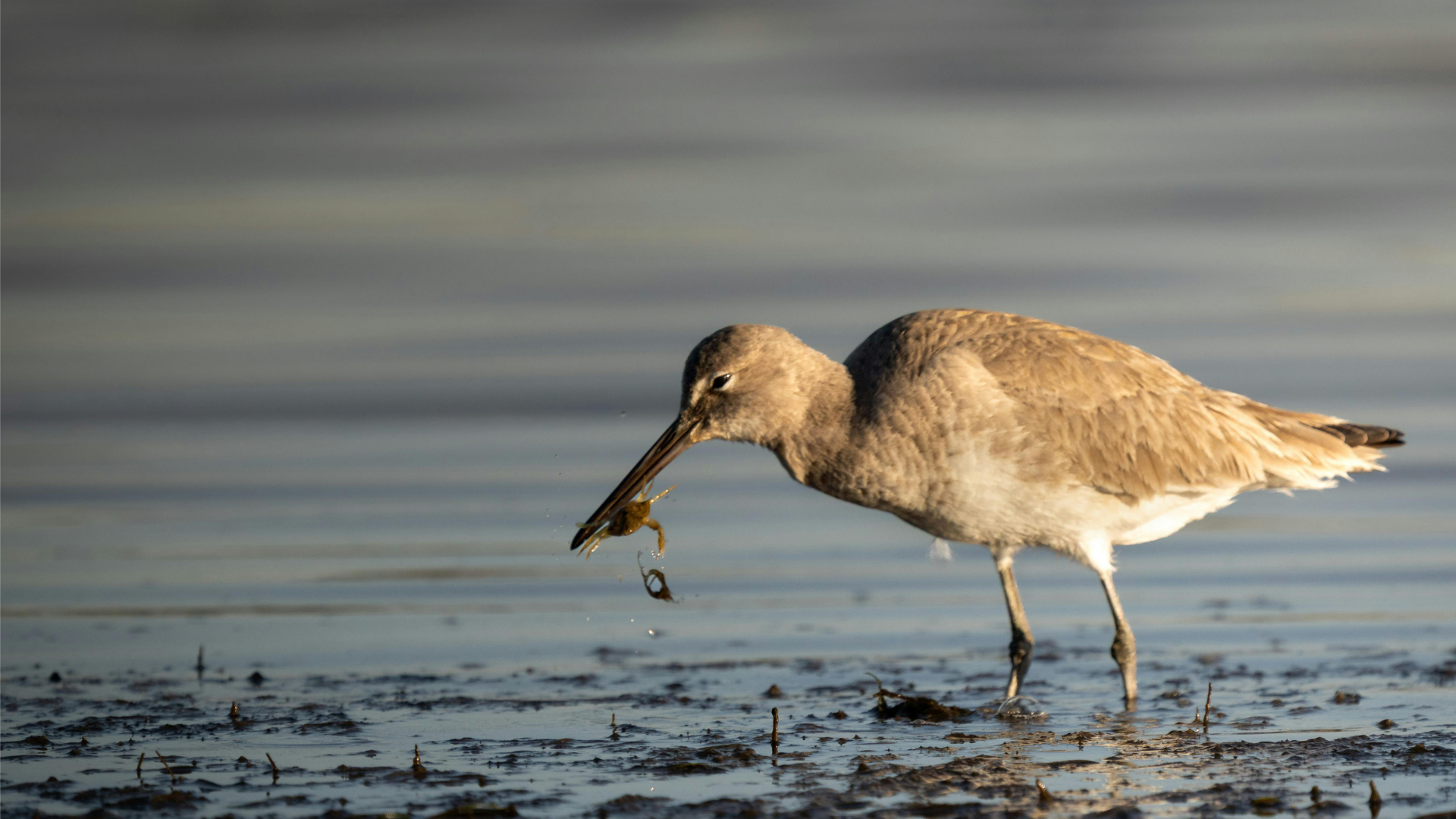
Probing, by contrast, involves inserting the bill into a substrate to extract hidden prey. Shorebirds are the masters of this technique. Dowitchers and Dunlin probe rhythmically into soft mud, using bill-tip organs packed with mechanoreceptors to detect invertebrates by touch rather than sight. American Woodcocks probe into moist soil for earthworms, their flexible bill tip capable of grasping prey underground without opening the full bill.
Aerial and Perch-Hunting Strategies
Birds that hunt mobile prey have evolved a range of pursuit and ambush strategies. The choice between active pursuit and sit-and-wait hunting reflects trade-offs between energy expenditure and prey encounter rates.
Red-tailed Hawks and American Kestrels are classic perch hunters, scanning open habitats from elevated positions and launching directed strikes at detected prey. Research on Red-tailed Hawk hunting success suggests that perch hunting yields successful captures in roughly 50 percent of attempts, a remarkably high rate compared to most predators. The kestrel adds hovering to its repertoire, using its ability to hold position against the wind while scanning ground-level vegetation for voles and large insects.
Aerial hawking, the technique of catching flying insects in mid-air, is the primary foraging mode for swallows, swifts, nighthawks, and flycatchers. Eastern Kingbirds use a sally-and-return technique, launching from a perch to catch a flying insect and returning to the same spot, minimizing exposure time in open air.
Specialized Foraging: Hummingbirds and Waterbirds
Some foraging strategies are so specialized that only a narrow range of species practice them. Hummingbirds are the supreme specialists of hover-feeding, sustaining stationary flight with wingbeats of 40 to 80 times per second while extracting nectar with a grooved tongue. Territorial Ruby-throated Hummingbirds actively defend patches of high-yielding flowers, prioritizing energy efficiency with spatial awareness that rivals mammalian foragers.
Herons and egrets employ a contrasting strategy of stillness, standing motionless in shallow water until fish come within striking range, then deploying a lightning-fast neck extension to spear prey. Great Blue Herons also wade actively, stirring sediment to flush invertebrates and small fish.
Predator Avoidance Tactics
Foraging birds face a constant threat from aerial and terrestrial predators. The strategies they use to reduce this risk are as varied and well-developed as their foraging techniques themselves.
Flocking and the Safety-in-Numbers Effect
Many songbirds, shorebirds, and waterfowl forage in flocks, gaining protection through collective vigilance. In a large flock, each individual bird can spend more time feeding and less time scanning for predators because the vigilance of the group covers the deficit. Mixed-species foraging flocks, common in North American forests in winter, combine the different predator detection abilities of multiple species. Black-capped Chickadees are often the sentinels of these flocks, their alarm calls warning nuthatches, woodpeckers, and other associates of approaching threats.
Mobbing Behavior
When a predator is discovered, many songbirds and corvids respond with mobbing: actively approaching, calling loudly, and sometimes physically harassing the threat. American Crows are North America's most enthusiastic mobbers, assembling in groups to harass Red-tailed Hawks, Great Horned Owls, and Bald Eagles. Mobbing draws attention to the predator, makes concealment impossible, and may educate naive juveniles about local threats. Small songbirds will mob even large owls, suggesting that the collective deterrent effect outweighs the risk to any individual bird.
Distraction and Escape
Ground-nesting and open-habitat birds use distraction displays to draw predators away from vulnerable nests and chicks. The Killdeer's broken-wing display is the most famous North American example, with adults dragging a wing along the ground to simulate injury and lead a predator away from the nest. Once at a safe distance, the bird instantly recovers and flies off. Shorebirds and waterfowl also use cryptic posture, pressing flat against the ground and relying on patterned plumage to disappear visually against their substrate when a hawk passes overhead.
Frequently Asked Questions
What is gleaning in bird foraging?
Gleaning is the technique of picking insects or other small invertebrates directly from surfaces such as leaves, bark, or the ground without inserting the bill into the substrate. It is the dominant foraging method of wood warblers and many other insectivorous songbirds in North American forests.
How do hawks hunt their prey?
Most North American hawks use either perch hunting, scanning from an elevated position before diving onto detected prey, or active pursuit, chasing prey in flight. Perch hunting yields successful captures in roughly half of attempts for species like the Red-tailed Hawk. Accipiters specialize in fast, low-level pursuit of birds through dense cover.
What is mobbing and does it actually work?
Mobbing is a collective predator harassment behavior in which multiple birds gather to call loudly and physically approach a threat. Research confirms that predators relocate more quickly when mobbed, and that naive birds learn to recognize new predators by observing mobbing responses in their flock-mates.
Why do shorebirds probe mud instead of picking from the surface?
Probing allows shorebirds to access invertebrates buried in soft sediment inaccessible to surface-picking species. Their bills contain dense arrays of mechanoreceptors that detect the pressure signatures of moving prey underground, allowing them to feed effectively even in turbid water with no visibility.
How do mixed-species flocks benefit birds in winter?
Mixed-species flocks allow each member to spend more time foraging and less time scanning for predators. Different species detect different types of threats, and alarm calls are shared across species lines. Birds in mixed flocks show lower stress responses to predator presentations than birds foraging alone.
Every Move Has a Meaning
Once you understand the foraging strategies and predator avoidance tactics that birds use, a walk in the woods becomes an entirely different experience. The warbler creeping along a branch is executing a precisely calibrated gleaning routine tuned to the insect distribution in that specific microhabitat. The chickadee's sharp call is an alarm system that dozens of species depend on. Watch carefully, and the behavior of birds reveals itself as one of nature's most elegant and legible texts.
The allure of off-the-beaten-path travel
Lorem ipsum dolor sit amet, consectetur adipiscing elit ut aliquam, purus sit amet luctus venenatis, lectus magna fringilla urna, porttitor rhoncus dolor purus non enim praesent elementum facilisis leo, vel fringilla est ullamcorper eget nulla facilisi etiam dignissim diam quis enim lobortis scelerisque fermentum dui faucibus in ornare quam viverra orci sagittis eu volutpat odio facilisis mauris sit amet massa vitae tortor.

Unveiling the charm of lesser-known Destinations
Orci sagittis eu volutpat odio facilisis mauris sit amet massa vitae tortor condimentum lacinia quis vel eros donec ac odio tempor orci dapibus ultrices in iaculis nunc sed augue lacus.
- Lorem ipsum dolor sit amet consectetur facilisi etiam dignissim diam quis enim
- Mauris aliquet faucibus iaculis dui vitae ullamco sit amet luctus
- Posuere enim mi pharetra neque proin dic rhoncus dolor purus non enim
- Dui faucibus in ornare posuere enim mi pharetra neque proin dicit
Finding solitude in hidden gem locations
Lorem ipsum dolor sit amet, consectetur adipiscing elit ut aliquam, purus sit amet luctus venenatis, lectus magna fringilla urna, porttitor rhoncus dolor purus non enim praesent elementum facilisis leo, vel fringilla est ullamcorper eget nulla facilisi etiam dignissim diam quis enim lobortis scelerisque fermentum dui faucibus in ornare quam viverra orci sagittis eu volutpat odio facilisis mauris sit amet massa vitae tortor condimentum lacinia quis vel eros donec ac odio tempor orci dapibus ultrices.
The thrill of discovering untouched natural beauty
Dolor sit amet, consectetur adipiscing elit ut aliquam, purus sit amet luctus venenatis, lectus magna fringilla urna, porttitor rhoncus dolor purus non enim praesent elementum facilisis leo, vel fringilla est ullamcorper eget nulla.
- Lorem ipsum dolor sit amet consectetur tempor orci dapibus ultrices
- Mauris aliquet faucibus iaculis dui vitae ullamco elementum facilisis
- Posuere enim mi pharetra neque proin dic fermentum dui faucibus in ornare
- Purus sit amet luctus posuere enim mi pharetra neque proin dic
“Ut enim ad minim veniam, quis nostrud exercitation ullamco laboris nisi ut aliquip ex ea commodo consequat uis aute irure dolor in reprehenderit in voluptate velit”
Exploring cultural marvels off the tourist radar
Donsectetur adipiscing elit ut aliquam, purus sit amet luctus venenatis, lectus magna fringilla urna, porttitor rhoncus dolor purus non enim praesent elementum facilisis leo, vel fringilla est ullamcorper eget nulla facilisi etiam dignissim diam quis enim lobortis scelerisque fermentum dui faucibus in ornare quam viverra orci sagittis eu volutpat odio facilisis mauris sit amet massa vitae tortor condimentum lacinia quis vel eros donec ac odio tempor orci dapibus ultrices in iaculis nunc sed.