
Blue Jay Habitat, Diet, and Calls: The Smartest Bird at Your Feeder
Discover blue jay habitat, diet, calls, and intelligence. Learn why this corvid is one of North America's smartest birds and how to attract it to your feeder.
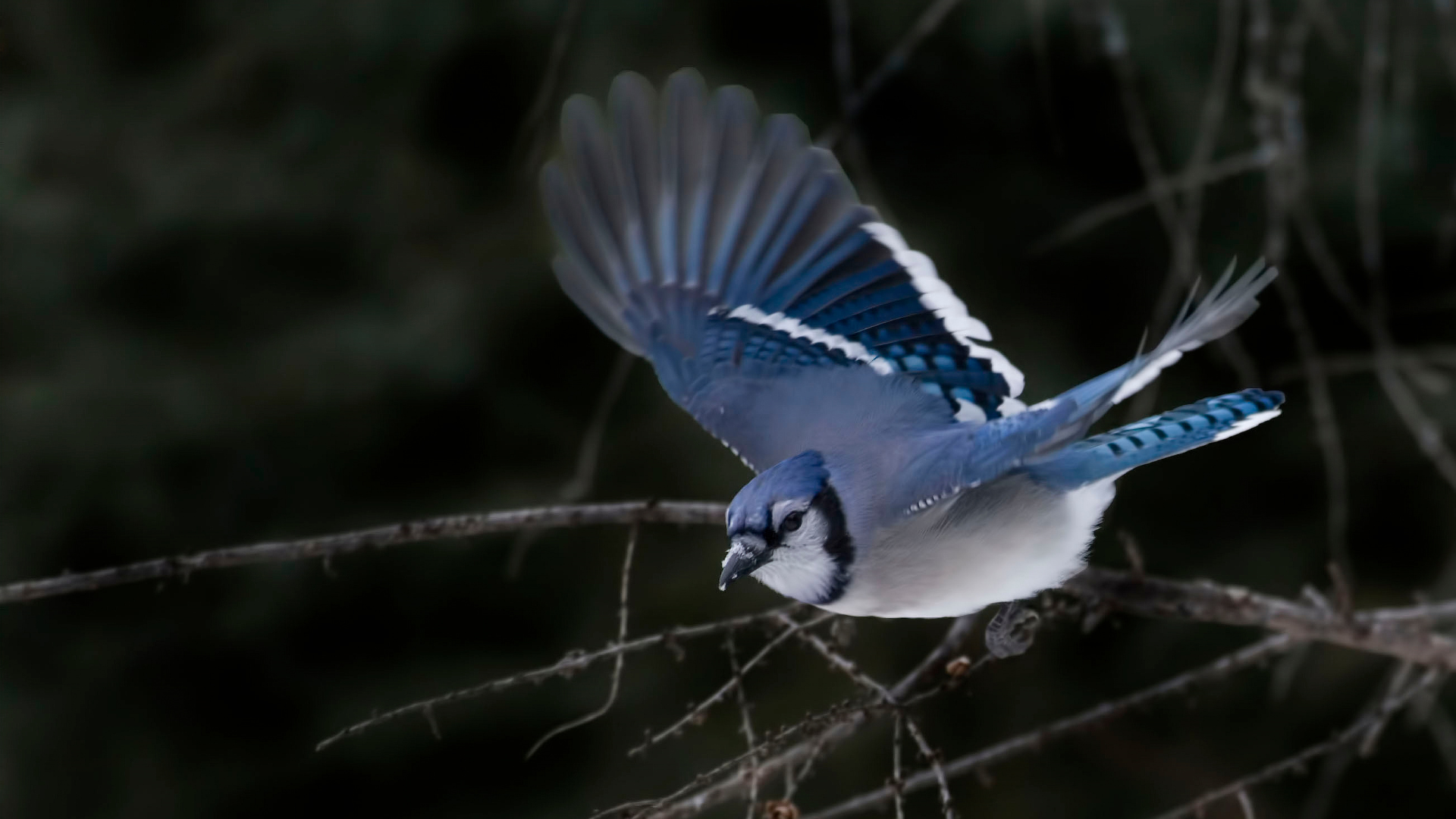
The blue jay is one of the most recognizable birds in North America, but its intelligence, complex calls, and fascinating diet make it far more remarkable than its bold plumage suggests. Whether you spot one raiding your feeder or mimicking a red-tailed hawk in the treetops, understanding blue jay behavior transforms every encounter into something worth stopping for.
Found across eastern and central North America, blue jays thrive in a remarkable range of habitats from dense oak forests to suburban backyards. They are members of the corvid family, placing them alongside crows, ravens, and Canada jays as some of the most cognitively advanced birds on the planet. This guide covers everything from blue jay identification and calls to diet, migration habits, and what the science says about their extraordinary minds.
Identification Features of the Blue Jay
Blue jays are impossible to misidentify once you know what to look for. Adults measure roughly 25 to 30 centimeters in length with a wingspan of around 34 to 43 centimeters. The most distinctive features include a bold blue crest on the head, a striking black necklace that wraps around the throat and chest, and a brilliant blue, white, and black patterned back and wings. The underparts are pale gray or white, offering a clean contrast to the vibrant upper body.
The crest is a reliable mood indicator. When a blue jay feels relaxed and social, the crest lies flat. When threatened, curious, or agitated, it rises sharply. Watching crest position during feeder visits reveals a surprising amount about what the bird is communicating to others around it.
Blue Jay vs. Steller's Jay
Birders in western Canada and the western United States will quickly notice that the blue jay has a close relative: the Steller's jay. While both species share the corvid family and a prominent crest, they are straightforward to tell apart. The Steller's jay has an entirely dark head and upper body, typically black or very dark blue, with a long crest that gives it an almost punk-rock silhouette. The blue jay, by contrast, displays bold blue, white, and black patterning across the entire body. Where their ranges overlap in the foothills of the Rockies, confusion is possible at a distance, but the contrasting face and underparts of the blue jay resolve any uncertainty quickly.
Habitat and Migration Patterns
Blue jays are habitat generalists, but they show a clear preference for oak forests, mixed woodlands, and forest edges. Their affinity for oak trees is directly tied to their diet, as acorns form a cornerstone of the blue jay food cache strategy. Suburban parks, large gardens with mature trees, and university campuses are also prime blue jay territory.
One of the more surprising aspects of blue jay ecology is their partial migration. Many blue jays are year-round residents, particularly in southern and central parts of their range. However, populations in northern areas, including parts of Canada, do undertake southward movements in autumn. These migrations are often irregular and not fully understood. Some individual birds migrate one year and remain resident the next, making blue jays one of the more enigmatic migrants in North American ornithology. In winter, blue jays that remain in their breeding territories often move to forest edges and feeders, making this an excellent season to observe them up close.
Blue Jay Intelligence and Tool Use
The corvid family is celebrated for problem-solving abilities that rival those of great apes, and blue jays are no exception. Studies have demonstrated that blue jays can plan ahead, recognize individual humans, and remember the locations of thousands of cached food items across their territories. Their social structures involve complex communication, and individuals appear to learn from watching others.
Perhaps the most exciting recent development in blue jay research is the documentation of wild tool use. In 2025, researchers reported the first confirmed observations of wild blue jays using objects to manipulate their environment, a behavior previously seen only in controlled laboratory settings. This finding places blue jays in a very select group of wild birds known to use tools, joining species like New Caledonian crows and Galapagos woodpecker finches.
Call Types and Mimicry
Blue jay calls are among the most varied of any North American songbird. The classic loud, harsh jay-jay call is familiar to most backyard birders and serves as an alarm signal. But blue jays also produce a remarkable range of other vocalizations, including a soft, musical gurgling song rarely heard at a distance, bell-like notes, and squeaky whistles used during social interactions within a flock.
Their most striking vocal ability is hawk mimicry. Blue jays are skilled at imitating the calls of red-tailed hawks, red-shouldered hawks, and other raptors with remarkable accuracy. The function of this mimicry is debated among ornithologists. One leading hypothesis is that blue jays use hawk calls to scatter competitors from feeders or food sources. Another is that the calls serve as genuine alarm signals, warning other birds of real predatory threats. Whatever the purpose, hearing a perfect red-tailed hawk scream emerge from a small blue bird in a suburban oak tree remains one of the great surprises of North American birding.
Blue Jay Diet and Feeding Behavior
Blue jays are omnivores with a diet that shifts dramatically by season. In autumn and early winter, acorns dominate. A single blue jay can carry multiple acorns at once by storing them in a specialized throat pouch called the gular pouch, transporting them hundreds of meters from the source tree to cache sites. Research from the Cornell Lab of Ornithology estimates that individual blue jays cache between 3,000 and 5,000 acorns in a single autumn season, and they retrieve these stores throughout winter and early spring. Many cached acorns are never recovered, making blue jays important agents of oak forest regeneration across their range.
Beyond acorns, blue jays eat a wide variety of seeds, nuts, berries, insects, small vertebrates, and occasionally the eggs or nestlings of other birds. This last habit has given them an undeserved reputation in some quarters, but scientific studies consistently show that eggs and nestlings account for only a tiny fraction of the blue jay diet.
How to Attract Blue Jays to Your Feeder
If you want to attract blue jays to your feeder, especially through Canadian winters, the approach is straightforward. Blue jays strongly prefer whole or shelled peanuts, sunflower seeds (especially in the shell), and dried corn. Platform feeders or tray feeders work better than tube feeders because blue jays prefer to land and assess their surroundings before feeding. Placing feeders near mature trees, ideally oaks, gives them immediate cover to retreat to. Fresh water available year-round is also a strong attractant. Once a blue jay discovers a reliable food source, it will return consistently and often recruit other family members.
Blue Jay Nesting and Breeding Behavior
Blue jays begin breeding in spring, with pairs forming monogamous bonds that often persist across multiple seasons. Both members of the pair participate in nest construction, building a bulky cup of twigs, bark strips, grass, and moss in the fork of a tree or shrub. Nest heights vary considerably, from as low as 1 meter to over 15 meters above the ground. Clutches typically contain 3 to 6 eggs, and both parents incubate and feed the young. Fledglings remain with their parents for several weeks after leaving the nest, forming the loose family groups often seen moving through woodlands in late summer.
Frequently Asked Questions
Are blue jays really smart?
Yes, blue jays rank among the most intelligent birds in North America. As corvids, they demonstrate impressive problem-solving, tool use, social learning, and long-term memory for cached food locations. In 2025, wild tool use was documented for the first time, adding another dimension to their already remarkable cognitive profile.
What do blue jay calls mean?
Blue jays have a large vocal repertoire. The classic loud jay call typically signals alarm or alerts other birds to a threat. Softer gurgling notes are used during relaxed social interactions. Their hawk mimicry may serve to scatter competitors from food sources or to warn other birds of real predators nearby.
Do blue jays migrate?
Blue jays are partial migrants. Some populations, especially in northern Canada, move south in autumn, while others remain resident year-round. Individual birds may migrate in some years but stay put in others, making their migratory patterns irregular and variable compared to obligate migrants.
How do I attract blue jays to my feeder in winter?
Offer whole peanuts, sunflower seeds, and dried corn on a platform or tray feeder placed near trees. Blue jays prefer feeders with clear sightlines to escape routes. Maintaining fresh water through winter is also highly effective at drawing them in regularly.
Blue jay vs. Steller's jay: how do I tell them apart?
The blue jay has a blue, white, and black body with a pale gray-white belly and a patterned face. The Steller's jay has an entirely dark head and body (black fading to dark blue) with no white in the face or underparts. Range also helps: blue jays are eastern birds, while Steller's jays are found in western forests and mountain slopes.
The Blue Jay: More Than a Backyard Bird
The blue jay rewards close attention. Behind the familiar flash of blue at the feeder lies a corvid with a complex social life, a vocal range that can imitate predators, a memory system that plants oak forests, and a level of intelligence that science is still working to fully understand. Whether you are new to birding or have been watching birds for decades, the blue jay is a species that consistently reveals something new.
The allure of off-the-beaten-path travel
Lorem ipsum dolor sit amet, consectetur adipiscing elit ut aliquam, purus sit amet luctus venenatis, lectus magna fringilla urna, porttitor rhoncus dolor purus non enim praesent elementum facilisis leo, vel fringilla est ullamcorper eget nulla facilisi etiam dignissim diam quis enim lobortis scelerisque fermentum dui faucibus in ornare quam viverra orci sagittis eu volutpat odio facilisis mauris sit amet massa vitae tortor.

Unveiling the charm of lesser-known Destinations
Orci sagittis eu volutpat odio facilisis mauris sit amet massa vitae tortor condimentum lacinia quis vel eros donec ac odio tempor orci dapibus ultrices in iaculis nunc sed augue lacus.
- Lorem ipsum dolor sit amet consectetur facilisi etiam dignissim diam quis enim
- Mauris aliquet faucibus iaculis dui vitae ullamco sit amet luctus
- Posuere enim mi pharetra neque proin dic rhoncus dolor purus non enim
- Dui faucibus in ornare posuere enim mi pharetra neque proin dicit
Finding solitude in hidden gem locations
Lorem ipsum dolor sit amet, consectetur adipiscing elit ut aliquam, purus sit amet luctus venenatis, lectus magna fringilla urna, porttitor rhoncus dolor purus non enim praesent elementum facilisis leo, vel fringilla est ullamcorper eget nulla facilisi etiam dignissim diam quis enim lobortis scelerisque fermentum dui faucibus in ornare quam viverra orci sagittis eu volutpat odio facilisis mauris sit amet massa vitae tortor condimentum lacinia quis vel eros donec ac odio tempor orci dapibus ultrices.
The thrill of discovering untouched natural beauty
Dolor sit amet, consectetur adipiscing elit ut aliquam, purus sit amet luctus venenatis, lectus magna fringilla urna, porttitor rhoncus dolor purus non enim praesent elementum facilisis leo, vel fringilla est ullamcorper eget nulla.
- Lorem ipsum dolor sit amet consectetur tempor orci dapibus ultrices
- Mauris aliquet faucibus iaculis dui vitae ullamco elementum facilisis
- Posuere enim mi pharetra neque proin dic fermentum dui faucibus in ornare
- Purus sit amet luctus posuere enim mi pharetra neque proin dic
“Ut enim ad minim veniam, quis nostrud exercitation ullamco laboris nisi ut aliquip ex ea commodo consequat uis aute irure dolor in reprehenderit in voluptate velit”
Exploring cultural marvels off the tourist radar
Donsectetur adipiscing elit ut aliquam, purus sit amet luctus venenatis, lectus magna fringilla urna, porttitor rhoncus dolor purus non enim praesent elementum facilisis leo, vel fringilla est ullamcorper eget nulla facilisi etiam dignissim diam quis enim lobortis scelerisque fermentum dui faucibus in ornare quam viverra orci sagittis eu volutpat odio facilisis mauris sit amet massa vitae tortor condimentum lacinia quis vel eros donec ac odio tempor orci dapibus ultrices in iaculis nunc sed.