
Canada Jay Camp Robber Ecology: Food Caching, Boreal Habitat, and Where to Find Them
Learn about Canada jay food caching, boreal forest habitat, early breeding behavior, and the best places to see this friendly corvid on winter trails across Canada.
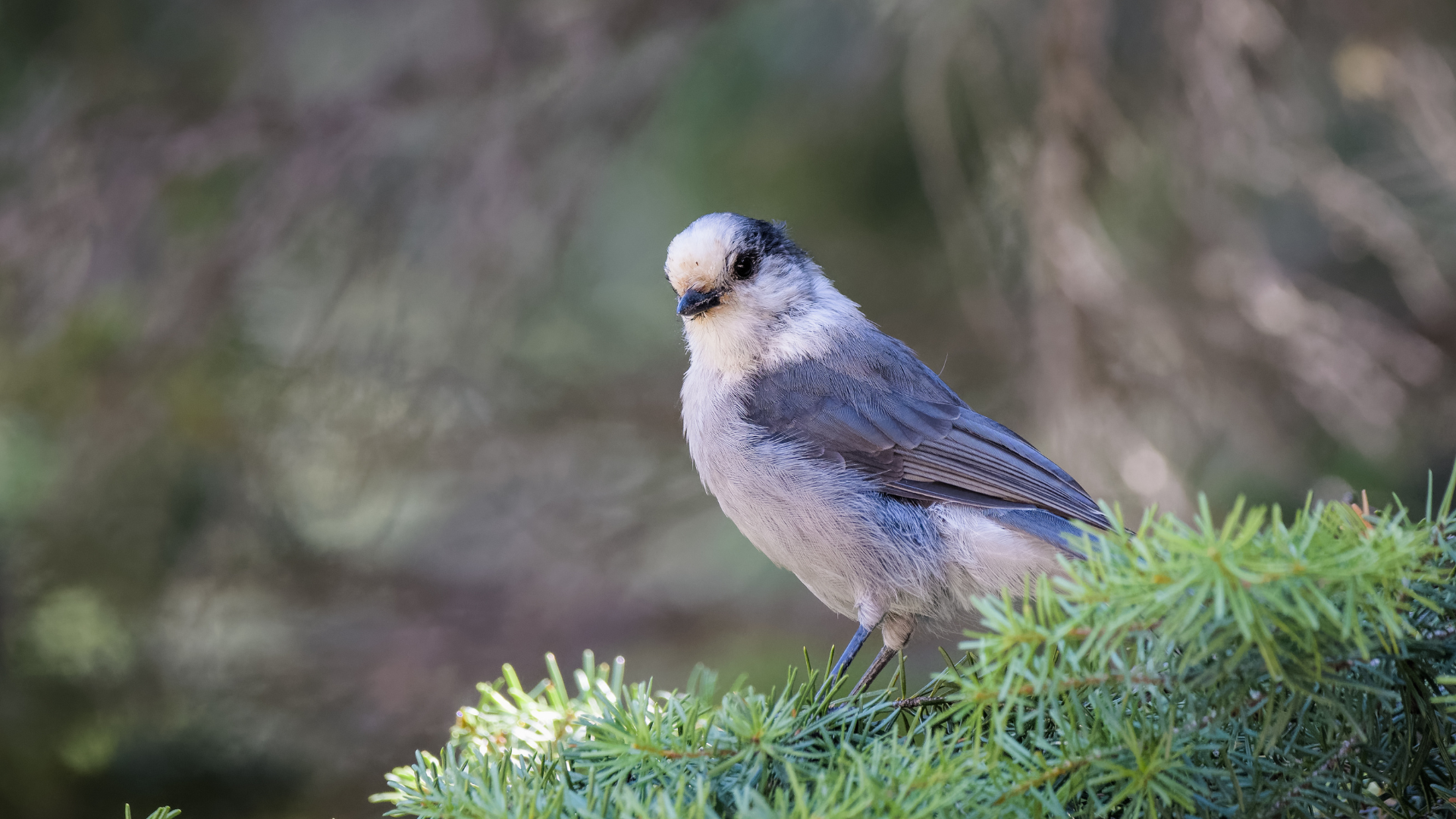
The Canada jay has earned its nickname. Anyone who has camped or hiked in the boreal forest of Canada knows the experience of setting down a sandwich for a moment too long, only to turn back and find a fluffy gray bird already investigating. Bold, tame, and perpetually curious, the Canada jay treats human visitors to its forest home as mobile vending machines. But behind this cheerful opportunism lies one of the most sophisticated survival strategies of any bird in the northern world.
Known historically as the gray jay and still called whiskeyjack in many parts of Canada, the Canada jay is the country's national bird candidate and a genuine ecological marvel. Its food-caching system, early breeding schedule, and boreal forest dependence make it a species that rewards deep attention. This guide covers Canada jay identification, its remarkable food storage behavior, boreal habitat requirements, and the best places in Canada to find one on a winter hike.
Identifying the Canada Jay
The Canada jay is a medium-sized corvid, roughly 25 to 33 centimeters in length, with a soft, fluffy plumage that gives it an almost spherical appearance in cold weather as it fluffs up to conserve heat. The adult plumage is clean and unfussy: dark gray above, pale gray to white below, with a white face, white forehead, and a dark gray cap and nape. The bill is short and sturdy. There are no crests, no flashy patches, and no bold markings. The overall impression is of a very polished, quietly handsome bird.
Young birds in their first summer are a uniform dark sooty gray that can cause brief confusion, but they moult into adult-like plumage by autumn. In flight, Canada jays show rounded wings and a moderately long tail. They move through forest with a buoyant, direct flight style quite different from the corvid swagger of their larger relatives.
Canada Jay vs. Clark's Nutcracker
In the mountain forests and subalpine zones of western Canada, the Canada jay and Clark's nutcracker sometimes share habitat, and beginning birders occasionally mix them up. The Clark's nutcracker is larger, with bold black-and-white wing and tail patches, a long pointed bill designed for extracting pine seeds, and a harsh, grating call very different from the Canada jay's whistled and gurgling notes. The Canada jay is softer in every dimension: softer colors, softer calls, and a far more approachable personality. Habitat helps too: Clark's nutcrackers prefer high-elevation pine forests and subalpine meadows, while Canada jays are birds of lower-elevation boreal spruce and fir, though the two can overlap in transitional zones.
The Food Caching System: A Winter Survival Marvel
The Canada jay does not migrate. It stays in the boreal forest through temperatures that routinely drop below -30 Celsius, and it raises its chicks while snow is still deep on the ground and temperatures remain freezing. This improbable life history is made possible by one of the most extraordinary food storage systems in the bird world.
Beginning in late summer and continuing through autumn, Canada jays spend enormous amounts of time collecting and caching food items throughout their home territory. The items cached include berries, mushroom fragments, insects, carrion, human food scraps, and virtually anything else organic they can find. But what makes the Canada jay's system unique is how these caches are stored. The bird produces unusually sticky saliva and uses it to adhere food items to the surfaces of bark, lichens, and conifer needles in locations spread across hundreds of individual cache sites within the territory. This method allows food to be stored above the snowpack, accessible even when the ground is buried under a meter of snow.
An individual Canada jay may maintain thousands of cache sites, and research has demonstrated that they remember the locations of these scattered stores with impressive accuracy throughout the winter and into the following spring and early summer when they are feeding nestlings. This memory-dependent food system is why Canada jays breed so early: by beginning incubation in February or March, while snow is still deep, they can time the peak food demands of rapidly growing nestlings to align with the period when cached food is still plentiful but before it degrades beyond use.
Climate Threat to the Caching System
The Canada jay's reliance on cold temperatures to preserve cached food creates a serious vulnerability to climate warming. Research led by Dan Strickland and Ryan Norris in Ontario's Algonquin Provincial Park has documented a significant decline in Canada jay breeding success and population density in the southern parts of the species' range, correlated with warmer autumn temperatures. When temperatures stay above freezing for longer in autumn, cached food items spoil before they can be used, undermining the winter food supply and the bird's ability to raise young successfully. This relationship between food cache integrity and temperature makes the Canada jay one of the most sensitive avian indicators of boreal climate change in Canada.
Boreal Forest Habitat
Canada jays are birds of the northern and montane boreal forest, strongly associated with conifer-dominated stands of black spruce, white spruce, balsam fir, and tamarack. They are year-round residents across a range that stretches from Newfoundland to British Columbia and north through Yukon and the Northwest Territories. Within this range, they show a preference for mature and old-growth boreal forest with well-developed understory structure, though they will use younger stands and forest edges, especially in areas with adjacent clearings where foraging is productive.
Territories are maintained year-round by resident family groups consisting of a breeding pair and typically one juvenile from the previous year's brood, which remains as a helper at the nest and assists with food delivery to the following year's young. This cooperative breeding system, rare among temperate songbirds, is directly tied to the family-territory food cache that must be defended through the year.
Finding Canada Jays in Canada
The Canada jay is one of the most reliably found birds on a boreal forest trail in winter, particularly in areas where hiking and skiing trails pass through mature spruce-fir forest. The birds are attracted to human presence partly by experience and partly by genuine curiosity. Stop on a quiet trail, produce food (particularly nuts, cheese, or dried fruit), and within minutes a Canada jay will often materialize from the trees and land directly on an outstretched hand.
Quebec's Laurentides Wildlife Reserve, Ontario's Algonquin Provincial Park, the boreal forests of northern Manitoba, and the mountain parks of British Columbia and Alberta all offer consistent Canada jay encounters. Trails that pass through mature black spruce bogs and mixed boreal forest are especially productive. Winter visits from December through March are ideal, as the birds are actively patrolling their territories, food is scarce, and they are most likely to approach closely.
Frequently Asked Questions
How does the Canada jay store food for winter?
Canada jays use their unusually sticky saliva to adhere food items to bark, lichen, and conifer needles at thousands of individual cache sites distributed throughout their territory. This above-snowpack storage system remains accessible even when the ground is buried under deep snow. They begin caching in late summer and rely on these stores through winter and into the early spring breeding season, with memory-based retrieval allowing them to locate cached items across large territories.
Where is the best place to see Canada jays in Canada?
Algonquin Provincial Park in Ontario is one of the most famous and reliable Canada jay destinations in the country, with birds that are completely accustomed to approaching hikers and skiers. Quebec's Laurentides and Gatineau regions, northern Manitoba boreal forests, and the mountain parks of British Columbia and Alberta all offer excellent encounters. Winter visits on quiet forest trails produce the most approachable birds.
How does the Canada jay's breeding season compare to other birds?
The Canada jay breeds earlier than almost any other bird in its range, beginning nest building in February and incubating eggs through March when temperatures in the boreal forest are still deeply below freezing. This extraordinarily early timing is an adaptation to align the peak food demands of nestlings with the period when cached food stores are still available and before late spring and summer food becomes reliably abundant.
Canada jay vs. Clark's nutcracker: how do I tell them apart?
The Canada jay is soft gray overall with a white face, short bill, and approachable behavior in dense boreal forest. The Clark's nutcracker is larger, with bold black-and-white wing patches, a long pointed bill, and harsh calls, found primarily in high-elevation pine forests. Where they overlap in transitional mountain zones, size, bill shape, and call are the most reliable separators.
The Camp Robber's Quiet Genius
The Canada jay's friendly personality conceals a remarkable ecological story. A bird that raises chicks in a February snowstorm, maintains thousands of saliva-preserved food caches across its territory, and faces the front lines of boreal climate change deserves far more than its reputation as a trail nuisance. The next time one lands on your hand in a Quebec spruce forest, you will know exactly what is sustaining it through the winter.
The allure of off-the-beaten-path travel
Lorem ipsum dolor sit amet, consectetur adipiscing elit ut aliquam, purus sit amet luctus venenatis, lectus magna fringilla urna, porttitor rhoncus dolor purus non enim praesent elementum facilisis leo, vel fringilla est ullamcorper eget nulla facilisi etiam dignissim diam quis enim lobortis scelerisque fermentum dui faucibus in ornare quam viverra orci sagittis eu volutpat odio facilisis mauris sit amet massa vitae tortor.
Unveiling the charm of lesser-known Destinations
Orci sagittis eu volutpat odio facilisis mauris sit amet massa vitae tortor condimentum lacinia quis vel eros donec ac odio tempor orci dapibus ultrices in iaculis nunc sed augue lacus.
- Lorem ipsum dolor sit amet consectetur facilisi etiam dignissim diam quis enim
- Mauris aliquet faucibus iaculis dui vitae ullamco sit amet luctus
- Posuere enim mi pharetra neque proin dic rhoncus dolor purus non enim
- Dui faucibus in ornare posuere enim mi pharetra neque proin dicit
Finding solitude in hidden gem locations
Lorem ipsum dolor sit amet, consectetur adipiscing elit ut aliquam, purus sit amet luctus venenatis, lectus magna fringilla urna, porttitor rhoncus dolor purus non enim praesent elementum facilisis leo, vel fringilla est ullamcorper eget nulla facilisi etiam dignissim diam quis enim lobortis scelerisque fermentum dui faucibus in ornare quam viverra orci sagittis eu volutpat odio facilisis mauris sit amet massa vitae tortor condimentum lacinia quis vel eros donec ac odio tempor orci dapibus ultrices.
The thrill of discovering untouched natural beauty
Dolor sit amet, consectetur adipiscing elit ut aliquam, purus sit amet luctus venenatis, lectus magna fringilla urna, porttitor rhoncus dolor purus non enim praesent elementum facilisis leo, vel fringilla est ullamcorper eget nulla.
- Lorem ipsum dolor sit amet consectetur tempor orci dapibus ultrices
- Mauris aliquet faucibus iaculis dui vitae ullamco elementum facilisis
- Posuere enim mi pharetra neque proin dic fermentum dui faucibus in ornare
- Purus sit amet luctus posuere enim mi pharetra neque proin dic
“Ut enim ad minim veniam, quis nostrud exercitation ullamco laboris nisi ut aliquip ex ea commodo consequat uis aute irure dolor in reprehenderit in voluptate velit”
Exploring cultural marvels off the tourist radar
Donsectetur adipiscing elit ut aliquam, purus sit amet luctus venenatis, lectus magna fringilla urna, porttitor rhoncus dolor purus non enim praesent elementum facilisis leo, vel fringilla est ullamcorper eget nulla facilisi etiam dignissim diam quis enim lobortis scelerisque fermentum dui faucibus in ornare quam viverra orci sagittis eu volutpat odio facilisis mauris sit amet massa vitae tortor condimentum lacinia quis vel eros donec ac odio tempor orci dapibus ultrices in iaculis nunc sed.