
Great Horned Owl Night Hunting Guide: Calls, Prey, and Habitat
A complete guide to the great horned owl: calls, hunting behavior, prey, habitat, and tips for finding this powerful raptor in winter woodlands.
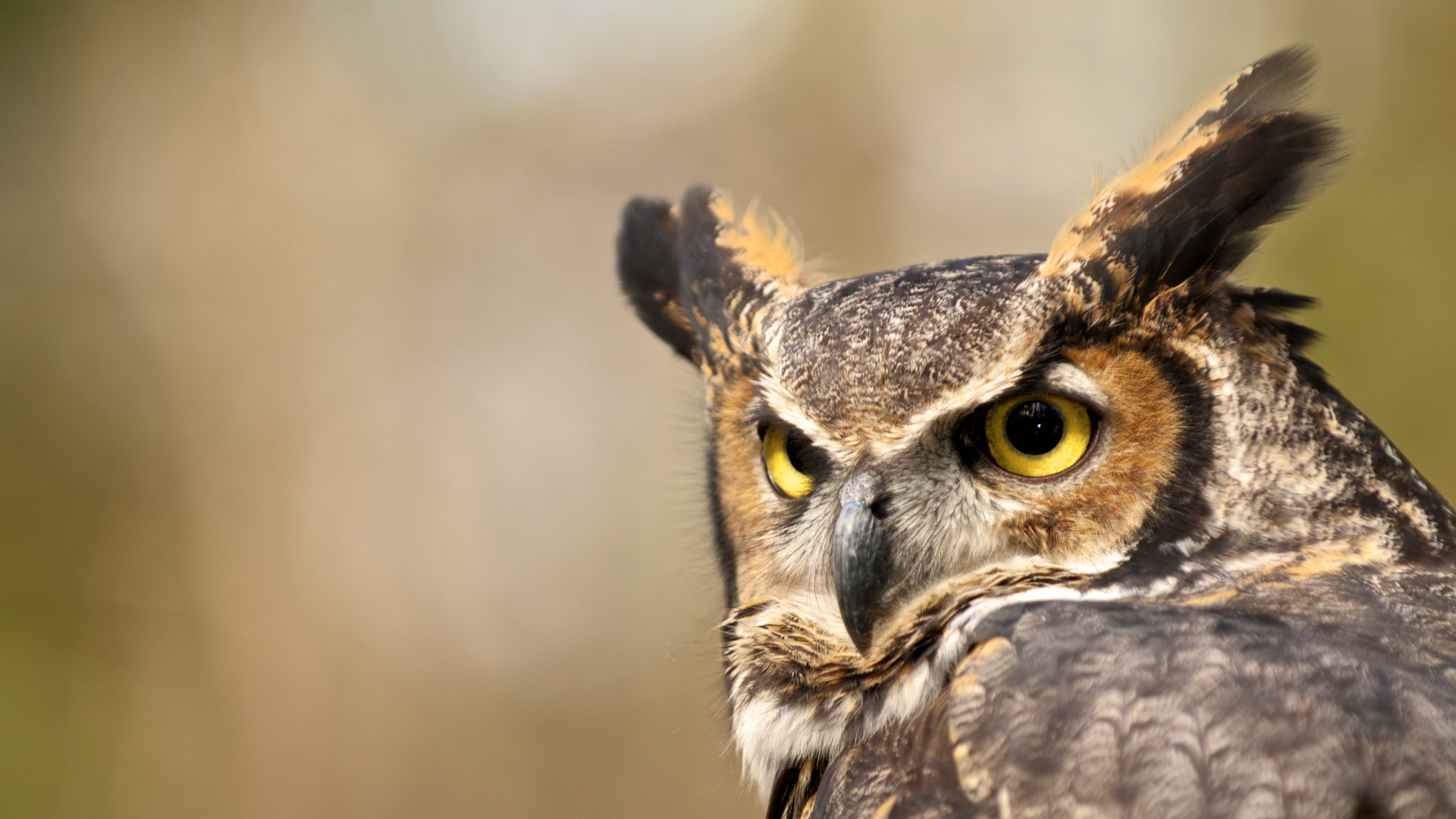
The great horned owl is the apex predator of North American nights. With silent flight, extraordinary hearing, crushing talons, and a territory that it defends year-round, this is a bird that commands respect from everything that moves in the dark. Whether you are new to owl watching or looking to deepen your understanding of this species, knowing how the great horned owl hunts, calls, nests, and compares to other owls in your area will transform your night birding completely.
Found from the Arctic treeline to the tropical forests of South America, the great horned owl occupies one of the largest ranges of any owl in the world. In Canada and the northern United States, including the boreal forests of Quebec and the mixed woodlands of Ontario, it is a year-round resident, active through even the coldest winters. This guide covers identification, hunting behavior, call recognition, and practical tips for finding great horned owls in winter woodland settings.
Identifying the Great Horned Owl
The great horned owl is the largest owl in North America by weight and wingspan, reaching up to 63 centimeters in length with a wingspan that can exceed 140 centimeters. Females are substantially larger than males, a pattern common across owl species. The plumage is a rich mottled brown, gray, and black above with fine horizontal barring on the pale chest. The face is marked by a rufous facial disk bordered in black, and the eyes are large and brilliant yellow.
The most distinctive feature is the pair of prominent ear tufts, or horns, that give the species its name. These are not ears at all. The actual ears are asymmetrically positioned openings on the sides of the skull, hidden by feathers, that allow the owl to triangulate sound with extraordinary precision. The ear tufts appear to function in social signaling, conveying mood and status to other owls and potentially serving as camouflage by breaking the owl's rounded silhouette when it is roosting against a tree trunk.
Great Horned Owl vs. Barred Owl
In eastern North America, the great horned owl and the barred owl share much of the same woodland habitat, and the question of how to distinguish them comes up frequently. The great horned owl is larger, with yellow eyes and prominent ear tufts, and shows horizontal barring on the breast below a vertically streaked belly. The barred owl has no ear tufts, dark brown eyes, and shows a distinctive pattern of vertical brown streaks on the lower belly below a horizontally barred chest. Their calls are the most reliable separator at night: the great horned owl gives a deep, resonant series of hoots in the rhythm often described as who's awake, me too, while the barred owl produces the unmistakable who cooks for you, who cooks for you-all phrasing. Habitat also separates them to a degree; barred owls prefer moister, older forest interiors, while great horned owls are comfortable in drier, more open woodland, forest edges, and even suburban parks.
Hunting Behavior and Prey
The great horned owl is one of the most versatile predators in North America, capable of hunting prey ranging from large insects to animals considerably heavier than itself. Its flight feathers are equipped with comb-like serrations along the leading edge and a velvet-like surface that disrupts airflow, producing the near-complete silence that allows it to approach prey without audible warning. This silent flight, combined with the owl's ability to locate prey by sound alone in complete darkness, makes it devastatingly effective.
Great Horned Owl Prey List
Documented prey species for the great horned owl exceed 250 in North America. Common prey items include rabbits and hares, which often form the bulk of the diet in many regions, along with squirrels, voles, mice, rats, opossums, skunks, and marmots. The great horned owl also takes significant numbers of other birds, including ducks, geese, smaller owls, crows, and even other raptors. Its grip strength has been measured at over 300 pounds per square inch, sufficient to compress the spine of a large rabbit instantly.
- Rabbits and snowshoe hares (primary prey in many areas)
- Voles, mice, and rats
- Squirrels and chipmunks
- Skunks (the great horned owl is one of the few predators that regularly takes skunks, apparently insensitive to their spray)
- Ducks, pheasants, and other ground-nesting birds
- Smaller owls including barred owls and screech-owls
- House cats and small domestic animals in suburban areas
Great Horned Owl Calls and Sounds
The great horned owl produces one of the most recognized night sounds in North America. The territorial hoot is a series of deep, resonant notes, typically four to five syllables, delivered in a rhythm that sounds almost conversational from a distance. Males and females often duet, with the female's voice being slightly higher in pitch than the male's, allowing experienced listeners to identify the sex of calling birds.
Calling activity peaks in the deep of winter, from December through February, when pairs are reinforcing territorial boundaries and initiating courtship. This makes midwinter nights in Quebec forests and Ontario woodlands the best time to hear great horned owls performing duets. Other vocalizations include hissing and bill-clapping when threatened, a variety of barks and squawks used in aggressive encounters, and the distinctive loud screech of fledglings begging for food, which continues well into summer and is often the first great horned owl sound young birders learn to recognize.
Habitat and Territory
The great horned owl is a habitat generalist that tolerates an extraordinary range of environments. It breeds in forests of all types, including boreal spruce-fir forest, deciduous hardwood stands, mixed woodland edges, river corridors, desert canyons, and suburban parks with large trees. What it requires is not a specific forest type but rather a combination of suitable perch sites for hunting, large trees or cliff ledges for nesting, and sufficient prey density to sustain a breeding pair and their young.
Territory sizes vary with prey availability. In productive habitats with high prey densities, territories may be as small as 1 to 2 square kilometers. In lower-quality habitat, territories can expand to 10 or more square kilometers. Great horned owls do not build their own nests. They take over the previous-season nests of red-tailed hawks, crows, herons, squirrels, and other species, often beginning to use the nest before winter is fully over. This habit of nesting in January and February, when snow may still be heavy, is one of the most striking aspects of great horned owl natural history.
Finding Great Horned Owls in Winter Woodlands
Winter, particularly December through February, is the best time to search for great horned owls in Quebec and throughout the northeastern forest. The combination of bare deciduous trees improving visibility, peak calling activity during courtship, and the birds' tendency to roost in predictable spots makes this the most productive season for finding them.
Focus your search at dusk and dawn when owls are transitioning between roost and hunting mode. Listen for the duetting hoots, which often begin 20 to 30 minutes after sunset on calm nights. Crows are invaluable guides: a group of crows mobbing a particular tree during the day almost always indicates a roosting owl, and following the noise will often reveal a great horned owl huddled against a trunk, head rotating slowly to track each noisy accuser. Pine plantations, tall spruce groves, and large maples adjacent to open fields and meadows are prime winter roost habitats throughout the Quebec and Ontario regions.
Frequently Asked Questions
What does a great horned owl call sound like?
The great horned owl produces a series of deep, resonant hoots typically phrased as five syllables. Pairs often duet, with the female's voice slightly higher in pitch. Calling is most frequent from December through February during courtship and territory establishment. Other vocalizations include hissing, barking, and the loud food-begging screech of fledglings heard through summer.
How do I find great horned owls in winter?
Search at dusk and dawn in mixed woodland edges, pine groves, and tall trees adjacent to open fields. Listen for hooting beginning around 20 to 30 minutes after sunset. During daylight, follow mobbing crows, which will often lead you to a roosting owl. In Quebec and Ontario, December through February is peak activity time when calling is most consistent.
Great horned owl vs. barred owl: which is which?
The great horned owl has yellow eyes, prominent ear tufts, and hoots in a deep four-to-five-syllable pattern. The barred owl has dark eyes, no ear tufts, and calls with the distinctive who cooks for you, who cooks for you-all phrasing. The barred owl prefers older, moister forest interiors, while the great horned owl tolerates more open and edge habitats. Size also helps: the great horned owl is noticeably larger.
What do great horned owls eat?
Great horned owls eat a wider range of prey than almost any other North American raptor. Rabbits and hares are the dietary staple in most regions, supplemented by voles, squirrels, skunks, ducks, smaller owls, and occasionally domestic cats. Their grip strength exceeds 300 pounds per square inch, allowing them to subdue prey much larger than themselves.
Do great horned owls migrate?
No. Great horned owls are year-round residents throughout their range, including the northern forests of Canada. They do not undertake seasonal migrations, though birds in the far north may make irregular movements during periods of extreme cold or prey scarcity. This resident status is part of what makes them reliable targets for winter owl watching.
The Great Horned Owl: Master of the Winter Night
The great horned owl is one of the most compelling birds to look for in the winter forests of eastern North America. Its deep hooting carries through bare trees on cold nights, its tracks in snow around a kill site tell vivid ecological stories, and its ability to thrive through Quebec winters while most other predators struggle makes it a symbol of adaptability and power. Learning its calls, understanding its habits, and knowing where to look transforms a walk in winter woods into something genuinely extraordinary.
The allure of off-the-beaten-path travel
Lorem ipsum dolor sit amet, consectetur adipiscing elit ut aliquam, purus sit amet luctus venenatis, lectus magna fringilla urna, porttitor rhoncus dolor purus non enim praesent elementum facilisis leo, vel fringilla est ullamcorper eget nulla facilisi etiam dignissim diam quis enim lobortis scelerisque fermentum dui faucibus in ornare quam viverra orci sagittis eu volutpat odio facilisis mauris sit amet massa vitae tortor.

Unveiling the charm of lesser-known Destinations
Orci sagittis eu volutpat odio facilisis mauris sit amet massa vitae tortor condimentum lacinia quis vel eros donec ac odio tempor orci dapibus ultrices in iaculis nunc sed augue lacus.
- Lorem ipsum dolor sit amet consectetur facilisi etiam dignissim diam quis enim
- Mauris aliquet faucibus iaculis dui vitae ullamco sit amet luctus
- Posuere enim mi pharetra neque proin dic rhoncus dolor purus non enim
- Dui faucibus in ornare posuere enim mi pharetra neque proin dicit
Finding solitude in hidden gem locations
Lorem ipsum dolor sit amet, consectetur adipiscing elit ut aliquam, purus sit amet luctus venenatis, lectus magna fringilla urna, porttitor rhoncus dolor purus non enim praesent elementum facilisis leo, vel fringilla est ullamcorper eget nulla facilisi etiam dignissim diam quis enim lobortis scelerisque fermentum dui faucibus in ornare quam viverra orci sagittis eu volutpat odio facilisis mauris sit amet massa vitae tortor condimentum lacinia quis vel eros donec ac odio tempor orci dapibus ultrices.
The thrill of discovering untouched natural beauty
Dolor sit amet, consectetur adipiscing elit ut aliquam, purus sit amet luctus venenatis, lectus magna fringilla urna, porttitor rhoncus dolor purus non enim praesent elementum facilisis leo, vel fringilla est ullamcorper eget nulla.
- Lorem ipsum dolor sit amet consectetur tempor orci dapibus ultrices
- Mauris aliquet faucibus iaculis dui vitae ullamco elementum facilisis
- Posuere enim mi pharetra neque proin dic fermentum dui faucibus in ornare
- Purus sit amet luctus posuere enim mi pharetra neque proin dic
“Ut enim ad minim veniam, quis nostrud exercitation ullamco laboris nisi ut aliquip ex ea commodo consequat uis aute irure dolor in reprehenderit in voluptate velit”
Exploring cultural marvels off the tourist radar
Donsectetur adipiscing elit ut aliquam, purus sit amet luctus venenatis, lectus magna fringilla urna, porttitor rhoncus dolor purus non enim praesent elementum facilisis leo, vel fringilla est ullamcorper eget nulla facilisi etiam dignissim diam quis enim lobortis scelerisque fermentum dui faucibus in ornare quam viverra orci sagittis eu volutpat odio facilisis mauris sit amet massa vitae tortor condimentum lacinia quis vel eros donec ac odio tempor orci dapibus ultrices in iaculis nunc sed.