
How to Attract Rose-Breasted Grosbeaks: 6 Feeder Setup Tips
How to attract Rose-breasted Grosbeaks: seed setup, feeder type, and native plants.
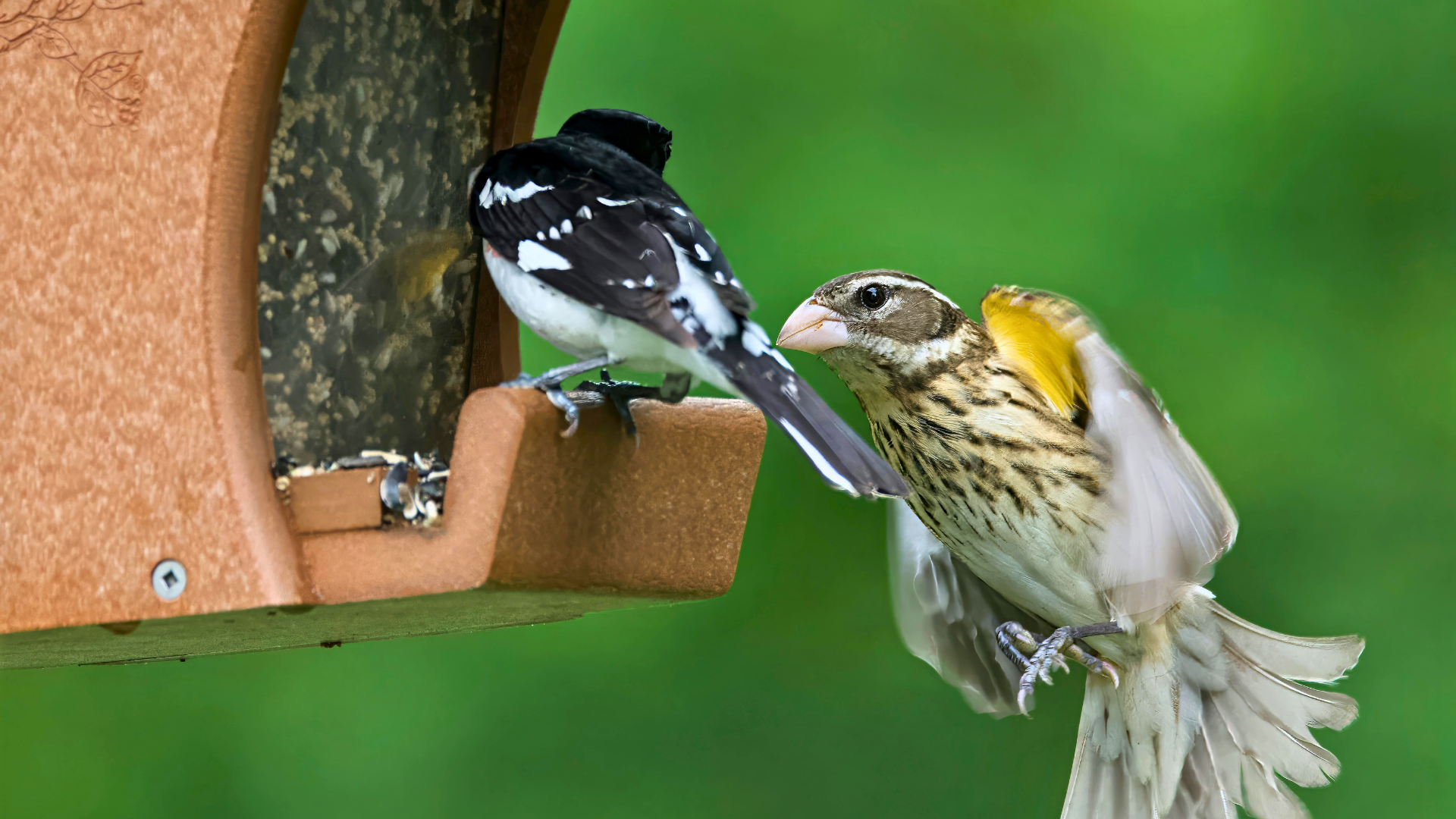
There is a specific feeling when a Rose-breasted Grosbeak lands at your feeder for the first time. Something that striking, that unexpected, choosing your yard out of the entire landscape. The rose-red triangle against black and white. The thick pale bill. The unhurried confidence of a bird that has just crossed the Gulf of Mexico overnight and has decided, for now, that this is where it will eat. You feel, genuinely, that your yard has been chosen. That something special just happened.
That feeling is what this guide is designed to help you experience more reliably. Not just knowing the right seed, but understanding the bird well enough to make your yard the kind of place a grosbeak finds, stays in, and returns to.
The Two-Hour Dawn Decision Window
Here is the single most important piece of timing knowledge for attracting Rose-breasted Grosbeaks: spring migration is often the best time to see them at feeders. Birds are hungry from travel and more willing to drop into a yard for sunflower seed.
But there is a narrower window within that broader truth that most guides miss. Rose-breasted Grosbeaks migrate at night, arriving somewhere in your area between midnight and first light. In the first two hours after dawn, the bird scans the immediate landscape for food. If your feeder is present, stocked, and visible from the surrounding trees, you are in the running. If your feeder is empty, obscured, or not yet out for the season, the bird moves on within that window and may not return.
This is why deploying your feeder two weeks before expected first arrival, keeping it stocked continuously through the migration window, and positioning it with a clear sight line from the surrounding canopy is not optional optimization. It is the core strategy. A bird that crosses the Gulf of Mexico overnight and finds your yard at 6 AM will remember your yard. A bird that finds nothing will not.
The Territorial Singing Rule: Understanding Feeder Social Dynamics
A breeding pair will tolerate migrant males in their territory if the intruder is silent. Each will defend a territory up to two acres, permitting other male grosbeaks to stop and feed as long as they do not sing. If they do start to sing they are immediately escorted out of the territorial boundary.
This behavioral rule explains something backyard birders observe every spring at grosbeak feeders without quite understanding why: multiple males feeding peacefully at the same feeder, seemingly ignoring each other, until one begins to sing. At that moment, the resident male launches into territorial display, the intruder is chased away, and the drama is over in under a minute.
The practical implication for feeder placement: a single well-positioned feeder in good habitat may attract multiple migrant males passing through, each feeding quietly without triggering territorial conflict. A second feeder on the opposite side of the house, out of sight of the first, creates a second feeding station that subordinate males can use without entering the primary male's direct line of sight.
Seed Setup: What Works and Why
The feeder setup that produces the most consistent grosbeak visits involves three elements working together.
Black-oil sunflower seed is the primary draw. Their heavy bill handles it easily. The thick triangular bill that makes Rose-breasted Grosbeaks unmistakable is a seed-cracking tool. Black-oil sunflower husks, which defeat most small feeder birds, are no challenge at all. Keep sunflower seed fresh and clean. Stale or moldy seed is detectable to birds and reduces feeder appeal.
Safflower seed is a strong secondary option. Safflower has the added advantage of being largely unattractive to starlings and House Sparrows, which means a safflower feeder stays cleaner and more welcoming between grosbeak visits.
The feeder type matters. The Rose-breasted Grosbeak prefers to feed from platform, ground, and hopper type bird feeders. They will come to a seed tube bird feeder if it has an attached tray for them to perch on. A large platform feeder is the most accommodating option: ample perching space, no porthole restriction, and a clear sight line from above. Tube feeders with perch trays work, but the perch tray must be large enough for a bird with a 20-centimeter wingspan to land comfortably.
Grape jelly and oranges at an oriole feeder extend the attractiveness of your setup beyond seed. Rose-breasted Grosbeaks regularly visit oriole setups during migration, a behavior reported consistently by backyard observers but almost absent from official species accounts. A grosbeak that has just burned its fat reserves crossing the Gulf is not selective about sugar sources. Grape jelly delivers concentrated carbohydrates in a form that requires no cracking or husking. If your oriole feeder is already out, add a small cup of grape jelly nearby and watch what finds it.
Native Plants: The Long-Term Strategy
A feeder brings grosbeaks through your yard during migration. Native plants keep them through the breeding season.
Their vegetarian fare includes elderberries, blackberries, raspberries, mulberries, juneberries, and seeds of smartweed, pigweed, foxtail, milkweed, plus sunflower seeds, garden peas, oats, wheat, tree flowers, tree buds, and cultivated fruit. The three native plantings with the highest grosbeak value across the season are elderberry (Sambucus canadensis), serviceberry (Amelanchier spp.), and wild cherry (Prunus spp.). Elderberry produces fruit in late summer that is heavily used by grosbeaks preparing for fall migration. Serviceberry fruits in May and June, directly overlapping with breeding season establishment. Wild cherry provides buds and flowers in early spring, caterpillars and larvae through the breeding season, and fruit in midsummer.
About half of their annual diet may be insects, including beetles, caterpillars, grasshoppers, true bugs, and others, also spiders and snails. This insect proportion means that the native plant strategy is about more than fruit. Native oaks, cherries, and willows host hundreds of caterpillar species. A yard with mature native trees is producing the insect protein that grosbeak nestlings require in their first weeks of life. A yard with only ornamental exotic plantings is not. Your feeder can attract a grosbeak. Your native plant community can keep one.
The Insect Imperative: Why Pesticides Undermine Your Feeder Investment
During the breeding season, insects become especially important because growing young require protein. A breeding pair of Rose-breasted Grosbeaks raising one brood of four nestlings will consume thousands of caterpillars and beetles over the 9 to 12 days the nestlings are in the nest, followed by three additional weeks of feeding fledglings. A yard treated with insecticides does not support that demand. The sunflower seed at your feeder keeps adults fueled. The insects in your trees feed the next generation.
The simplest step: stop using broad-spectrum insecticides on any tree or shrub that native caterpillars might use. Let the aphid population on your ornamental cherry support the aphid-eating birds, rather than eliminating it. The yard that tolerates a degree of insect presence is the yard that supports grosbeak breeding, and breeding birds are the ones that return year after year.
Window Strike Prevention: A Migration-Specific Risk
Death in the wild is generally due to collision with objects including buildings, cars, and other structures, along with predation. During migration, Rose-breasted Grosbeaks are specifically vulnerable to window collisions for two reasons. First, they arrive exhausted after overnight flights, with reaction times and navigation precision reduced by fatigue. Second, they feed at mid-canopy height and often approach feeders at the same elevation as house windows. A feeder placed within two meters of a window is a collision risk.
The solutions are straightforward: place feeders either within 30 centimeters of windows (too close for a bird to build fatal collision speed) or more than 10 meters away (far enough that birds have time to recognize and avoid glass). Apply window alert decals, tempera paint patterns, or external screens on any large window within the flight path of your feeder. The grosbeak you attract is worth protecting from the window it cannot see.
The 689-Song Day: Understanding the Male's Schedule
Males sing to advertise breeding territories, up to 689 songs in a day. A male on territory in late May is not a feeder bird in the same sense he was during migration. He is a territorial bird that happens to visit your feeder between bouts of singing and insect foraging. He may be less visible at the feeder and more visible singing from the canopy. If you have a male grosbeak on or near your property through late May and June, you have effectively attracted a breeding bird, which is the highest level of backyard grosbeak success available.
Once mated, Rose-breasted Grosbeaks appear to be monogamous. A breeding pair will tolerate migrant males in their territory if the intruder is silent. Once you have a resident pair, the feeder becomes a supplemental resource for both parents through the demanding breeding season, and the male's willingness to permit quiet visitors allows your feeder to continue attracting migrants passing through without triggering constant conflict.
What a Resident Pair Looks Like
Both male and female Rose-breasted Grosbeaks share incubation, brooding, and feeding duties at the nest. Both sexes also sing, although singing in females is primarily associated with breeding behavior while incubating or nest-building. In this context singing may serve primarily to reinforce the pair bond rather than help defend a territory.
If a female begins visiting your feeder alongside a resident male, watch her behavior carefully. A female building a nest will make repeated short trips, sometimes carrying nesting material visible in her bill. A female on incubation duty will visit the feeder in quick, targeted visits and return to the nest within minutes. If you can track her flight direction, you may be able to locate the nest: typically a loose cup of sticks and twigs in a small tree or dense shrub within 100 meters of the feeder.
Finding the nest, without disturbing it, and watching both adults make return visits through the nesting season is one of the most complete backyard birding experiences available. The bird that felt special when it first landed at your feeder becomes, by late June, a resident whose young you may watch fledge from the bushes at the edge of your yard.
The Short Version
Deploy your platform feeder with black-oil sunflower and safflower seed at least two weeks before your expected first arrival date. Add grape jelly at an oriole feeder nearby. Position your feeder with a clear sight line from the canopy and more than 10 meters from any large window. Plant one elderberry, one serviceberry, or one wild cherry within 20 meters of your feeding area. Stop using broad-spectrum insecticides. Keep the sunflower fresh.
The grosbeak that finds your yard will feel like it chose you. In a sense it did. Make the choice easy to make, and the right one to stay.
The allure of off-the-beaten-path travel
Lorem ipsum dolor sit amet, consectetur adipiscing elit ut aliquam, purus sit amet luctus venenatis, lectus magna fringilla urna, porttitor rhoncus dolor purus non enim praesent elementum facilisis leo, vel fringilla est ullamcorper eget nulla facilisi etiam dignissim diam quis enim lobortis scelerisque fermentum dui faucibus in ornare quam viverra orci sagittis eu volutpat odio facilisis mauris sit amet massa vitae tortor.

Unveiling the charm of lesser-known Destinations
Orci sagittis eu volutpat odio facilisis mauris sit amet massa vitae tortor condimentum lacinia quis vel eros donec ac odio tempor orci dapibus ultrices in iaculis nunc sed augue lacus.
- Lorem ipsum dolor sit amet consectetur facilisi etiam dignissim diam quis enim
- Mauris aliquet faucibus iaculis dui vitae ullamco sit amet luctus
- Posuere enim mi pharetra neque proin dic rhoncus dolor purus non enim
- Dui faucibus in ornare posuere enim mi pharetra neque proin dicit
Finding solitude in hidden gem locations
Lorem ipsum dolor sit amet, consectetur adipiscing elit ut aliquam, purus sit amet luctus venenatis, lectus magna fringilla urna, porttitor rhoncus dolor purus non enim praesent elementum facilisis leo, vel fringilla est ullamcorper eget nulla facilisi etiam dignissim diam quis enim lobortis scelerisque fermentum dui faucibus in ornare quam viverra orci sagittis eu volutpat odio facilisis mauris sit amet massa vitae tortor condimentum lacinia quis vel eros donec ac odio tempor orci dapibus ultrices.
The thrill of discovering untouched natural beauty
Dolor sit amet, consectetur adipiscing elit ut aliquam, purus sit amet luctus venenatis, lectus magna fringilla urna, porttitor rhoncus dolor purus non enim praesent elementum facilisis leo, vel fringilla est ullamcorper eget nulla.
- Lorem ipsum dolor sit amet consectetur tempor orci dapibus ultrices
- Mauris aliquet faucibus iaculis dui vitae ullamco elementum facilisis
- Posuere enim mi pharetra neque proin dic fermentum dui faucibus in ornare
- Purus sit amet luctus posuere enim mi pharetra neque proin dic
“Ut enim ad minim veniam, quis nostrud exercitation ullamco laboris nisi ut aliquip ex ea commodo consequat uis aute irure dolor in reprehenderit in voluptate velit”
Exploring cultural marvels off the tourist radar
Donsectetur adipiscing elit ut aliquam, purus sit amet luctus venenatis, lectus magna fringilla urna, porttitor rhoncus dolor purus non enim praesent elementum facilisis leo, vel fringilla est ullamcorper eget nulla facilisi etiam dignissim diam quis enim lobortis scelerisque fermentum dui faucibus in ornare quam viverra orci sagittis eu volutpat odio facilisis mauris sit amet massa vitae tortor condimentum lacinia quis vel eros donec ac odio tempor orci dapibus ultrices in iaculis nunc sed.