
Magellanic Penguin Colony Guide: Punta Tombo, Seno Otway, Isla Magdalena, and Martillo Island Compared
The honest comparison guide to Patagonia's four main Magellanic Penguin colonies. What each offers, when to go, and which is right for you.
Before we even boarded the small boat, a King Penguin was standing near the ramp. Just standing there, enormous and impossibly colorful, as if it had decided to greet us personally. We were already overwhelmed before the crossing started. The boat ride out is its own experience, small waves, the Beagle Channel opening around you, and then the sound hits you before the shore does. The colony noise wraps around you completely the moment you step off. Penguins everywhere, in every direction, going about their lives with total indifference to your presence. Chicks with their parents, partners reuniting, birds heading to the water and returning from it. Gentoo Penguins nested in the open grassland, their orange bills unmistakable. Imperial Shags, Magellanic Cormorants, Neotropic Cormorants, Southern Giant Petrels, South American Terns, all flying overhead, all part of the same extraordinary scene. We have birded a lot of places. Isla Martillo is different. Don't think about what it costs. Just go. For a non-birder it is life-changing. For a birder, it is mind-blowing.
Patagonia has four main Magellanic Penguin colonies accessible to visitors. Each one is a completely different experience. Each rewards a different kind of traveler. This guide covers all four honestly, with practical logistics, the best timing for each, and a clear verdict on which to prioritize depending on what you are looking for.
The Magellanic Penguin: What You Are Looking At
The Magellanic Penguin (Spheniscus magellanicus) is the penguin of Patagonia. Medium-sized, bold in black and white, and identified by the two black bands across the white chest, it is the species that colonized the Atlantic and Pacific coasts of southern South America in extraordinary numbers. The global population exceeds 1.3 million individuals, making it one of the most abundant penguin species in the world, yet it is classified as Near Threatened due to ongoing pressures from oil spills, overfishing, and climate-driven shifts in prey distribution.
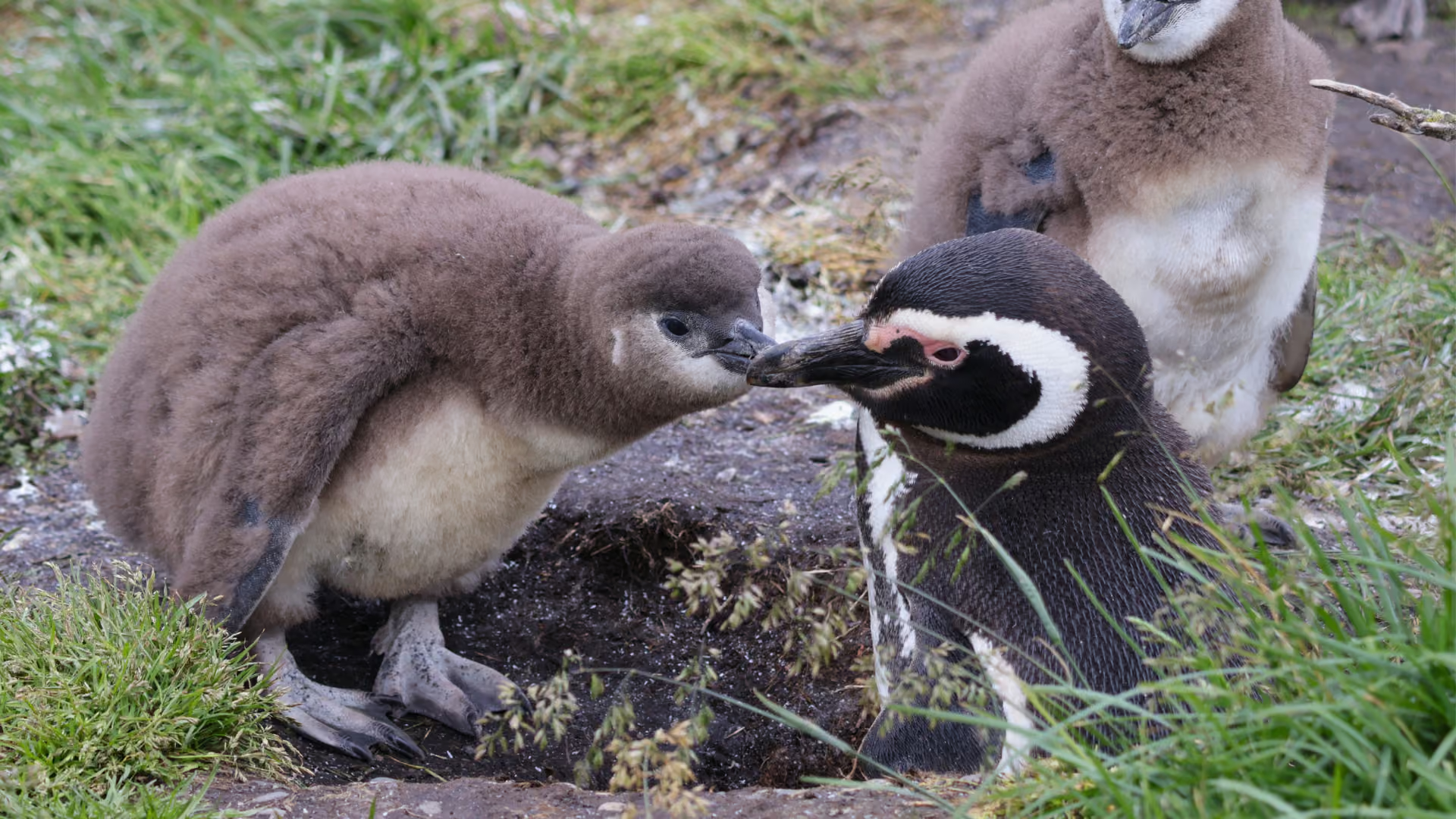
What makes them endlessly watchable is behavior. Magellanic Penguins are vocal, social, and completely unintimidated by human presence when habituated to visitors. They call constantly, a loud braying that carries across the entire colony. They dig burrows up to two meters deep in the soil and return to the same burrow year after year. At the right site in December or January, you will watch adults arriving with full crops to feed their chicks, partners changing incubation shifts, juveniles testing their independence at the colony edge, and the constant social negotiation of a breeding colony at full intensity.
Colony 1: Punta Tombo, Chubut Province, Argentina
Punta Tombo is the largest Magellanic Penguin colony in the world accessible to visitors, and possibly the most extraordinary wildlife spectacle in all of Argentine Patagonia. Up to one million penguins use this narrow coastal peninsula during the breeding season, arriving from September and departing by April.
The scale is the defining feature. Penguins are everywhere. They line the paths, nest under every bush, waddle across your feet, and fill the air with constant braying. The marked walking trails keep visitors on designated routes, but the penguins themselves respect no boundaries and will walk directly past you at a distance of centimeters. In December, the nests are full of eggs and early chicks, and the adult traffic between the ocean and the colony is relentless and fascinating.
Punta Tombo is located approximately 100 kilometers south of Trelew and 180 kilometers south of Puerto Madryn in Chubut province. Most visitors combine it with a trip to Peninsula Valdes. It is accessible by car or organized tour from Puerto Madryn and Trelew, and the road to the reserve is fully paved.
Best for: Anyone who wants to experience the sheer scale of a Magellanic Penguin colony at its most overwhelming. The one million bird figure is not a rough estimate. It is what the experience actually feels like.
Best timing: December for nesting and early chicks. February for large, nearly fledged chicks at very close range. January is excellent but crowds at the colony and on the roads are at their peak.
Birding bonus: The surrounding Monte desert scrub holds several Patagonian specialty species. White-throated Cacholote, Sandy Gallito, and Patagonian Canastero are all present in the scrub around the reserve. The coastal cliffs hold nesting seabirds including Neotropic Cormorant and Olrog's Gull.
Colony 2: Seno Otway, Magallanes Region, Chile
Seno Otway is the most accessible penguin colony from Punta Arenas, located roughly 65 kilometers north of the city by road. It is a much smaller colony than Punta Tombo, holding several thousand breeding pairs rather than hundreds of thousands, and the experience is correspondingly more intimate.
The relative smallness of Seno Otway is not a disadvantage. The paths are quieter, the birds are less habituated to crowds and therefore slightly more natural in their behavior, and the surrounding wetland and steppe habitat provides good general birding alongside the penguins. Birders who have visited describe the experience as feeling less managed than the larger colonies, more like genuinely being in the penguins' territory rather than walking a wildlife park circuit.
The colony is open from October to March and is managed by a private operator. Access is straightforward from Punta Arenas by rental car or organized tour.
Best for: Visitors based in Punta Arenas who want a convenient, uncrowded penguin experience combined with the broader Magallanes birding circuit.
Best timing: November to January for full breeding activity. December is particularly good for vocal activity and nest attendance.
Birding bonus: The road from Punta Arenas to Seno Otway passes through excellent open steppe. Lesser Rhea, Upland Goose, and Black-chested Buzzard-Eagle are all present on this corridor. Build time into the drive both ways.
Colony 3: Isla Magdalena, Strait of Magellan, Chile
Isla Magdalena is accessed by boat from Punta Arenas across the Strait of Magellan, and that boat crossing is part of what makes it special. The island sits in the middle of the strait, accessible only by sea, and the combination of the crossing through a historically charged waterway with the arrival at a remote island colony gives Isla Magdalena a quality the road-accessible colonies cannot replicate.
The colony holds around 120,000 breeding pairs of Magellanic Penguins, making it a substantial site by any measure. A historic lighthouse stands at the center of the island, and the penguins nest throughout the surrounding grassland and scrub in enormous numbers. Visitors walk a circular route around the lighthouse with the penguins moving around and between them throughout.
The boat trip from Punta Arenas takes roughly two hours each way, and the time on the island is limited by tour operators to protect the colony. Seabirds on the crossing include Southern Giant Petrel, Black-browed Albatross in season, and several species of cormorant and gull. For a birder, the crossing alone is worth the time.
Best for: Those who want a more adventurous, remote colony experience and are happy to commit a full day to the trip. The boat crossing and island setting make this the most atmospheric of the four colonies.
Best timing: December and January for peak breeding activity. November is also excellent if you want fewer visitors on the island.
Birding bonus: The Strait of Magellan crossing is a genuine mini-pelagic. Scan continuously during the crossing for albatrosses, petrels, and dolphins alongside the boat. Commerson's Dolphin is regularly seen in the strait.
Colony 4: Isla Martillo, Tierra del Fuego, Argentina
Isla Martillo near Ushuaia is the most southerly of the four main colonies and the one with the most extraordinary supporting cast. The island hosts Magellanic Penguins as its primary species but also holds a small and growing colony of Gentoo Penguins, the only breeding population of Gentoo in mainland South America, and occasional King Penguins. Seeing three penguin species in a single colony visit is a genuine rarity anywhere in the world outside of Antarctica and the Falklands.
Access is from Ushuaia via Estancia Harberton, the oldest working farm in Tierra del Fuego, founded in 1886. The boat crossing takes roughly 15 minutes from the Harberton jetty. Only one operator, Piratours, holds the concession to land visitors on the island, which limits group sizes and keeps the experience genuinely intimate. The walk among the penguins lasts one hour and follows a marked route through the colony with a bilingual naturalist guide.
In December and January, the colony is at full breeding intensity. Magellanic Penguins are on eggs and early chicks. Gentoo Penguins are nesting in the more open grassland areas, their bright orange bills distinctive against the dark soil. And the occasional King Penguin, enormous and improbably colorful, appears unpredictably among the colony and sometimes even at the boat ramp before the crossing begins.
The broader Beagle Channel boat trip from Ushuaia, which visits sea lion colonies, cormorant islands, and the Les Eclaireurs lighthouse before reaching Martillo, adds considerable birding value. Imperial Shag, Magellanic Cormorant, Neotropic Cormorant, Dolphin Gull, South American Tern, Southern Giant Petrel, and Kelp Gull are all present on the channel crossing.
Best for: Birders and wildlife travelers who want the richest single penguin colony experience available in Patagonia. Three species, intimate access, extraordinary setting.
Best timing: December and January for breeding activity. Book the Piratours concession well in advance as spots are genuinely limited and sell out during peak season.
Birding bonus: Combine the colony visit with a full Beagle Channel day. The channel holds excellent seabirds, and the drive east from Ushuaia to Estancia Harberton passes through excellent Nothofagus forest with Magellanic Woodpecker and Thorn-tailed Rayadito.
Side by Side Comparison
Punta Tombo: Largest colony in the world, one million birds, overwhelming scale, road-accessible, Argentine Patagonia, best paired with Peninsula Valdes.
Seno Otway: Small and intimate, 65 kilometers from Punta Arenas, quiet and uncrowded, good surrounding steppe birding, Chilean Patagonia.
Isla Magdalena: 120,000 pairs, boat access across the Strait of Magellan, remote island setting, seabird-rich crossing, Chilean Patagonia.
Isla Martillo: Three penguin species, most intimate access, extraordinary Beagle Channel setting, limited group sizes, book early, Argentine Tierra del Fuego.
What to Bring to Any Penguin Colony
Binoculars. Even at close-access colonies like Martillo, binoculars let you watch individual behavioral interactions across the colony in detail. At Punta Tombo, they are useful for scanning the dense colony from the paths.
A zoom lens if you photograph. The penguins at habituated colonies will come very close, but a 100 to 400mm range gives you flexibility for both tight portraits and colony overview shots.
Layers and windproof outer shell. All four colonies are coastal and exposed. Even in December and January the wind can be sharp and temperatures drop quickly near the water.
Patience. Arrive early, stay late, and watch behavior rather than collecting sightings. A penguin colony in full breeding season is a behavioral study, and the longer you stay in one spot the more you understand the social dynamics playing out around you.
Our Honest Verdict
If you are visiting Ushuaia, Isla Martillo is non-negotiable. Three species, intimate access, the Beagle Channel setting, and the extraordinary context of being at the southern tip of the Americas with penguins walking past your feet. Book the Piratours concession as soon as your dates are confirmed.
If you are in Punta Arenas, go to Isla Magdalena for the boat crossing and the island atmosphere, and add Seno Otway if time allows for the contrast in scale and intimacy.
If you are in Argentine Patagonia for Peninsula Valdes, add Punta Tombo without hesitation. One million penguins is a figure that only makes sense when you are standing inside it.
.avif)