The Complete Northern Cardinal Identification and Habitat Guide
Learn how to identify the northern cardinal by crest, bill, and song. Discover habitat, range, and tips to attract these red birds to your backyard feeder.
Few backyard visitors inspire the kind of quiet awe a northern cardinal does. The male's blazing scarlet plumage against a snowy branch is one of North American birdwatching's most iconic images. Yet the female cardinal, with her warm buff tones and rose-red accents, is every bit as beautiful - and easier to miss. Whether you are a first-time feeder-watcher or an experienced birder curious about recent range expansions, this northern cardinal identification guide covers everything you need: field marks, habitat clues, song patterns, nesting behavior, and practical tips to draw these birds right to your yard.
Northern Cardinal Identification Features
The northern cardinal (Cardinalis cardinalis) is a medium-sized songbird measuring 8 to 9 inches in length and weighing roughly 1.5 ounces - about the size of a house sparrow but noticeably chunkier. Two features immediately set it apart: a prominent pointed crest on the head and a thick, cone-shaped orange-red bill perfectly engineered for cracking open seeds.
Male vs Female Cardinal: Key Differences
Male and female cardinals look strikingly different, a phenomenon called sexual dimorphism. Learning both is essential for confident northern cardinal identification in the field.
- Male northern cardinal: Vivid, all-red plumage with a black mask that extends from the face down the throat. The crest, back, wings, and tail are all varying shades of red, with the breast being the most intense. Bill is orange-red.
- Female northern cardinal: Warm buffy-brown overall with soft reddish tinges on the crest, wings, and tail. The black mask is present but much less defined - appearing as a subtle dusky smudge around the bill and eyes. Her bill is the same sturdy orange-red as the male's.
- Juvenile cardinal: Both sexes start out with a brownish plumage similar to the female. Young males begin showing red patches through their first fall and winter, and the black mask develops gradually. The bill in juveniles starts dark before transitioning to the adult orange-red.
The thick orange-red bill is one of the best field marks for both sexes - it is markedly heavier than the bills of similar-sized sparrows and gives cardinals a distinctively bull-headed profile.
Northern Cardinal vs Pyrrhuloxia: How to Tell Them Apart
In the arid scrublands of the southwestern United States and northern Mexico, birders sometimes confuse northern cardinals with pyrrhuloxias (Cardinalis sinuatus), the so-called desert cardinal. Key differences to watch for:
- Bill shape: The pyrrhuloxia has a noticeably curved, parrot-like yellow bill. The northern cardinal's bill is straight-sided and orange-red.
- Overall tone: Male pyrrhuloxias are grayish with rose-red highlights, not the full red of a male northern cardinal. Females are gray-brown with minimal red.
- Range overlap: Pyrrhuloxias are restricted to desert Southwest habitats. If you are in the eastern United States, Canada, or Central America, you are almost certainly looking at a northern cardinal.
Northern Cardinal Habitat and Range
Northern cardinals are year-round, non-migratory residents across a vast stretch of North America. They do not migrate, making them reliable backyard visitors in all seasons. Understanding their preferred habitats helps you find them more consistently in the field.
Cardinals thrive in woodland edges, hedgerows, brushy thickets, suburban gardens, and overgrown fields - essentially any environment that combines dense shrubs for cover and nesting with open ground or feeders for foraging. They are well adapted to human-modified landscapes and are among the most common birds at backyard feeders throughout the eastern and central United States.
Their core range extends from southern Canada south through the eastern United States, the Great Plains, the Southwest, Mexico, and into Belize and Guatemala. The species was historically absent from New England and Canada, but northern cardinal habitat preferences have proven flexible, and the bird has been steadily pushing northward.
Winter Sightings and Range Expansion Into Canada
One of the most remarkable wildlife stories of the past half-century is the northern cardinal's ongoing colonization of Canada. Data from the Breeding Bird Survey recorded a roughly 4% annual increase in Canadian cardinal populations between 1970 and 2022. Where the species was once a rarity in southern Ontario and Quebec, it is now a regular backyard visitor in cities like Toronto, Ottawa, and Montreal.
Two intertwined factors drive this northward push: the proliferation of backyard bird feeders, which provide reliable winter food, and a gradual warming of winter temperatures linked to climate change, which reduces cold-season mortality. For birders in Quebec and Ontario, sunflower seed feeders are now the single most reliable way to find northern cardinals in winter. Look for them foraging low in dense conifers and cedar hedges between feeder visits.
Where to find northern cardinals in winter: Focus on dense shrub cover near seed feeders. Thick evergreens, privet hedges, and multiflora rose tangles are favored roost sites. Cardinals tend to arrive at feeders in the low light of dawn and dusk rather than midday.
Northern Cardinal Behavior and Song
The northern cardinal is a territorial, non-migratory songbird with a rich vocal repertoire that is among the most recognizable sounds of North American suburbia. Cardinals are among the few North American songbird species in which both males and females sing - a trait called duet singing.
Northern Cardinal Song Variations
Researchers have documented more than 16 distinct call types in the northern cardinal. The bird's most famous song is a loud, clear whistle often transcribed as 'cheer-cheer-cheer' or 'what-cheer, what-cheer,' delivered from an exposed perch at the top of a shrub or small tree. Both sexes use this song, and mated pairs sometimes engage in vocal exchanges - the female singing from within dense cover, the male responding from a prominent perch above.
Other common vocalizations include:
- A sharp, metallic 'chip' note used as an alarm call or contact call.
- A softer, more varied warble used during close-range interactions between mates.
- An aggressive series of rapid chips and slurred whistles during territorial disputes.
Cardinals sing year-round, but singing activity peaks in late winter and early spring as males establish territories ahead of the breeding season. Hearing a clear, repeated whistle from a treetop on a late-February morning is often the first sign that spring is on the way.
Cardinal song identification tip: The territorial song typically consists of 2 to 3 repeated phrases, each phrase 3 to 8 notes long. The 'cheer-cheer-cheer' pattern is diagnostic - no other common North American songbird matches it.
Nesting and Feeding Habits
Understanding northern cardinal nesting and feeding behavior deepens your appreciation of these birds and helps explain when and where to look for them throughout the year.
Northern Cardinal Nest Building Timeline
Cardinals typically raise two to three broods per season, from March through August. The nest-building timeline unfolds roughly as follows:
- Late February to March: Pair formation intensifies. Males begin courtship feeding, offering seeds bill-to-bill to females - a behavior that reinforces the pair bond and demonstrates the male's ability to provision offspring.
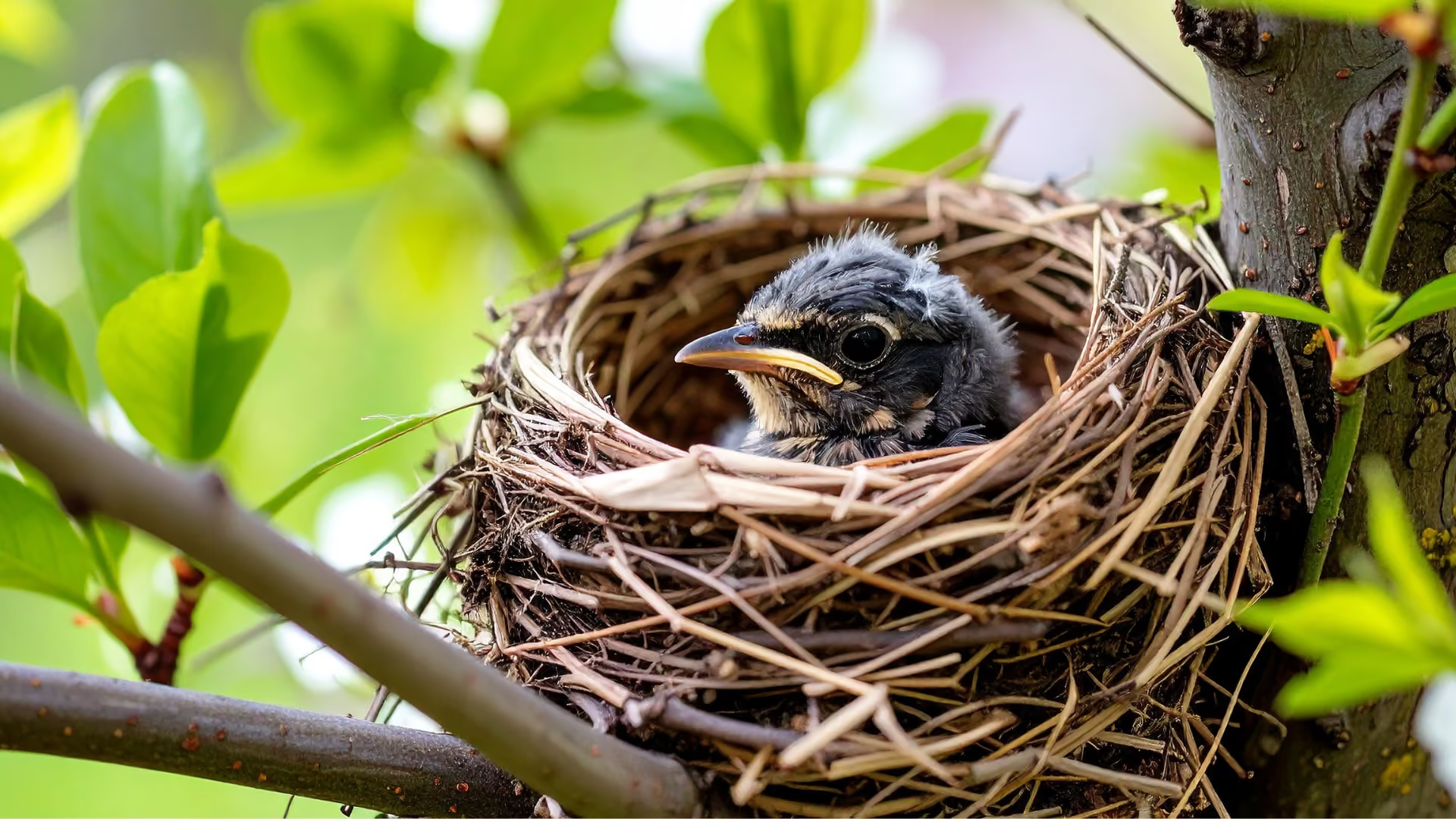
- April: Nest construction begins, led almost entirely by the female. She weaves a cup-shaped nest of twigs, grasses, bark strips, and leaves, typically placed 3 to 10 feet off the ground in a dense shrub, vine tangle, or small tree.
- April to May: First clutch of 2 to 5 eggs is laid. Incubation lasts approximately 11 to 13 days, with the female doing most of the sitting.
- May to June: Nestlings fledge roughly 9 to 11 days after hatching. The male often takes primary care of fledglings while the female begins a second nest, the same brood handoff American Robins use between clutches.
- June to August: Second and sometimes third broods follow the same pattern.
Cardinal nests are not reused between seasons, though pairs often return to the same general territory year after year.
Cardinal Diet and Feeding
The northern cardinal is primarily a seed eater, with sunflower seeds, safflower seeds, and cracked corn making up the bulk of its diet. Its large, powerful bill allows it to crack open seeds that smaller finches cannot manage. During the breeding season, cardinals supplement their diet with insects - a critical source of protein for growing nestlings. Berries, wild fruits, and weed seeds round out their menu year-round.
How to Attract Northern Cardinals to Your Yard
Cardinals are one of the most sought-after backyard birds in North America, and attracting them is straightforward if you understand their preferences.
- Offer black-oil sunflower seeds: This is the single most effective food for northern cardinals. They strongly prefer platform feeders or large hopper feeders where they can perch and feed comfortably.
- Add safflower seeds: Cardinals love safflower, and it has the added benefit of being less attractive to squirrels and starlings.
- Plant native shrubs: Dense native plantings like dogwood, serviceberry, viburnum, and holly provide both food and the thick cover cardinals use for nesting and roosting.
- Provide water: A shallow birdbath, especially one with a dripper or mister to create movement, attracts cardinals reliably, particularly in winter.
- Minimize outdoor cats: Cats are among the leading causes of songbird mortality. Keeping cats indoors dramatically improves survival rates for ground-foraging birds like cardinals.
- Place feeders near dense cover: Cardinals are skittish and prefer to dash from cover to feeder and back. Position feeders within 10 feet of shrubs or trees so birds feel secure.
If you are in southern Canada and asking how to attract northern cardinals in winter, the same principles apply with extra emphasis on high-energy foods - sunflower and safflower seeds - and protected feeder locations that offer wind shelter.
Frequently Asked Questions About the Northern Cardinal
What does a northern cardinal look like?
The male northern cardinal is unmistakable: a brilliant all-red bird with a pointed crest, a black mask around the face and throat, and a heavy orange-red bill. Females are warm buffy-brown with reddish tinges on the crest, wings, and tail, and share the same distinctive crest and orange bill. Both sexes are 8 to 9 inches long.
Do northern cardinals migrate?
No. Northern cardinals are year-round residents throughout their range and do not migrate. They are one of the most reliable winter feeder birds in North America. Their range has been expanding northward into Canada over recent decades due to warmer winters and the widespread availability of backyard feeders.
What sound does a northern cardinal make?
The cardinal's signature sound is a loud, clear, repeated whistle often described as 'cheer-cheer-cheer' or 'what-cheer, what-cheer.' Both males and females sing, and they have more than 16 recognized call types including sharp metallic chip notes used as alarm calls. Singing peaks in late winter and spring.
Where do northern cardinals live?
Northern cardinals prefer woodland edges, dense shrublands, suburban gardens, and overgrown fields throughout eastern and central North America. They are well adapted to urban and suburban environments and are common backyard feeder visitors. Their range extends from southern Canada south through the eastern United States, the Southwest, Mexico, and into Central America.
Northern cardinal vs pyrrhuloxia - how do I tell them apart?
The easiest distinction is the bill: the northern cardinal has a straight-sided, orange-red bill while the pyrrhuloxia has a curved, yellow, parrot-like bill. Male pyrrhuloxias are grayish with rose-red accents rather than the full crimson red of a male northern cardinal. The two species' ranges overlap only in the desert Southwest.
How do you attract northern cardinals to your yard?
Offer black-oil sunflower seeds or safflower seeds on a platform or hopper feeder placed near dense shrub cover. Plant native berry-producing shrubs like dogwood and viburnum. Provide a birdbath with moving water. Cardinals are non-migratory, so a well-stocked feeder can attract them year-round, including through the coldest winters in southern Canada.