
Bird Identification for Beginners: A 4-Step Field Method
Master bird identification with the 4 keys: size and shape, color pattern, behavior, and habitat. A practical Cornell Lab-based guide for all skill levels.
Every birder has experienced it: a bird pops into view, your binoculars come up, and before you can focus, it's gone. The secret to identifying more birds in less time lies in four fundamental concepts developed by the Cornell Lab of Ornithology. Known as the 4 keys to bird identification, this framework trains your eye to read the most informative clues in a quick look, well before you ever open a field guide.
These four keys are size and shape, color pattern, behavior, and habitat. Together they narrow down possibilities faster than any single field mark. Beginners learn to trust them quickly; advanced birders apply them almost unconsciously. Understanding how they work and how to practice them will transform the way you observe birds in the field.
Key 1: Size and Shape
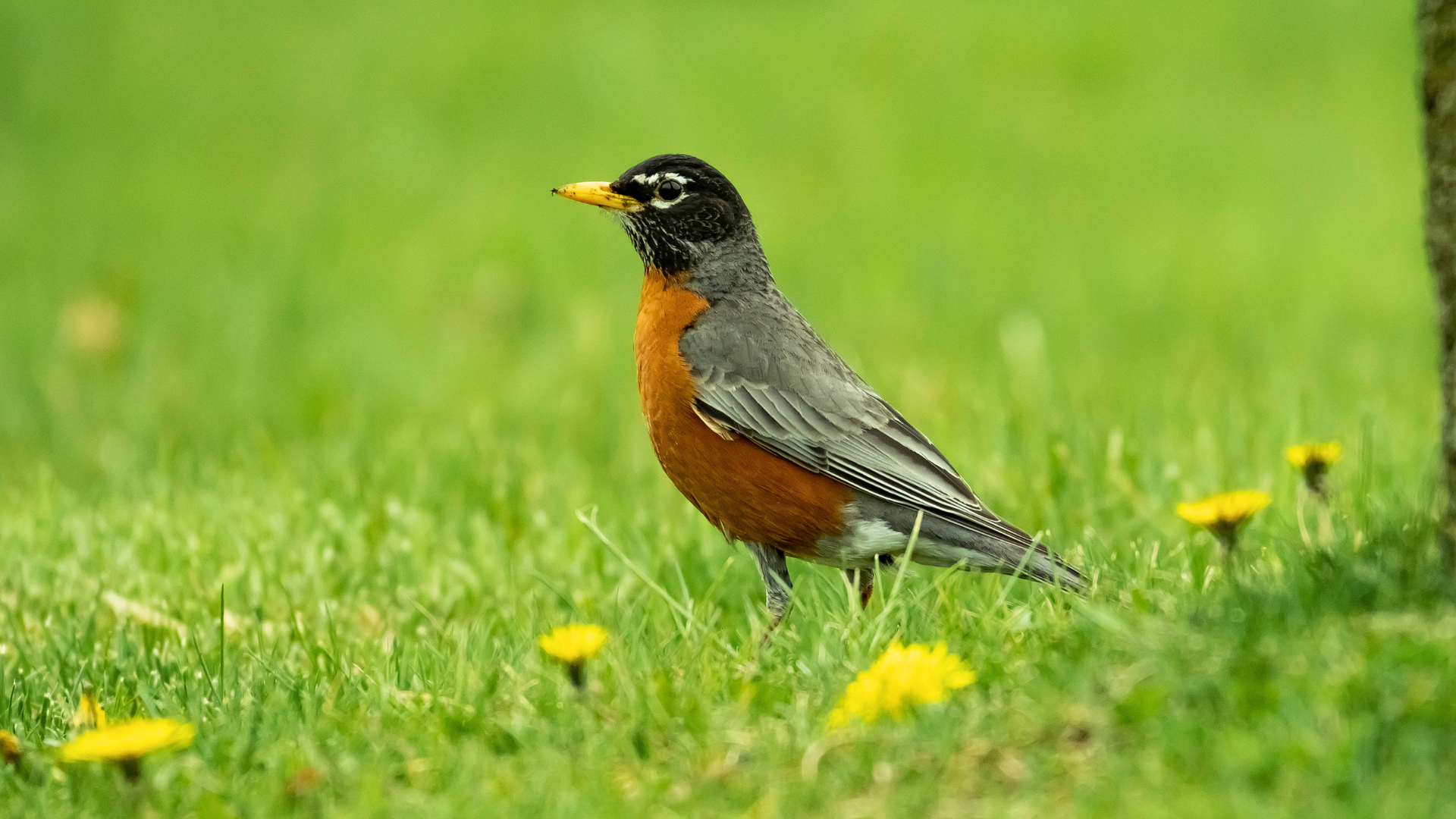
Size is the first thing your brain registers when a bird appears, but raw size is hard to judge in isolation. A better approach is to compare: is this bird smaller than a sparrow, roughly robin-sized, or crow-sized? This relative sizing gives you an instant shortcut to major groups.
Shape is even more informative than size. Body proportions, bill length relative to the head, wing length, tail shape, and neck thickness all narrow identification before a single color is processed. The classic example is the Downy versus Hairy Woodpecker. Both are pied black-and-white woodpeckers, but the Hairy has a bill nearly as long as its head while the Downy's bill is stubbier and shorter. Once you train your eye to bill-to-head ratio, these species separate themselves instantly even at a distance.
Proportions vs. Absolute Size
Focus on structural proportions rather than trying to guess inches. Ask: Does the tail seem long or short relative to the body? Is the neck long and slender or compact? Does the bird hold its wings loosely drooped or tight? A long-primary projection suggests a strong migratory flier; a round-winged, short-tailed shape suggests a skulker in dense brush. These gestalt impressions build up over time into reliable quick-ID instincts.
- Compare against a known reference species like the American Robin or House Sparrow
- Note bill shape: seed-cracker, insect probe, hooked raptor bill, or flat flycatcher bill
- Check tail shape: forked, rounded, graduated, or squared off
- Assess neck length: herons and egrets versus compact diving ducks
Key 2: Color Pattern
Color is often the first thing birders look for, but it can be the most misleading key in poor light or during molt. The framework shifts focus from hue to pattern structure: where colors appear and how boldly they contrast. A bird with a bold eye stripe and wing bars gives different information than one with faint, washed tones throughout.
Bold vs. Faint Patterns
Bold patterns are visible at distance and in brief looks. High-contrast marks like the Red-winged Blackbird's red shoulder patch or the White-throated Sparrow's crisp head stripes register quickly. Faint, blended plumages like Empidonax flycatchers require close study. Recognizing boldness versus subtlety tells you how much time you need to invest in a second look.
Light conditions dramatically change apparent color. An orange-tinged bird in warm late-afternoon sun could be a goldfinch, an oriole, or a tanager. Rely more on pattern location and contrast than on hue alone. Ask: Does it have wing bars? An eye ring? A supercilium? Streaking on the breast? These pattern elements are more consistent than color under variable lighting.
- Check for head patterns: cap, mask, eye ring, supercilium
- Look at underparts: solid, streaked, spotted, or barred
- Note wing markings: wing bars, speculum, wing stripe
- Observe tail patterns: white outer tail feathers, terminal band, or rufous base
Key 3: Behavior
How a bird moves is one of the most underused identification tools in a beginner's toolkit. Behavior patterns are often species-specific and consistent enough to ID a bird from a silhouette alone. Posture, movement style, and social habits all provide rapid clues.
Posture and Movement
Horizontal posture versus vertical perching separates major groups immediately. Flycatchers tend to sit upright on exposed perches. Thrushes stand more horizontally on the ground. A bird seen creeping headfirst down a tree trunk is almost certainly a nuthatch; no other North American bird does this regularly. Creepers spiral upward, woodpeckers brace with stiff tails, rails pump their heads as they walk.
Foraging style is equally telling. Does the bird hover before diving? Does it hawk insects in the air and return to a perch? Does it probe mud, pick berries, or scratch at leaf litter? Each foraging behavior links to a relatively short list of species. A bird pumping its tail up and down while perched narrows to Palm Warbler, wagtail, or phoebe depending on region.
- Watch for tail bobbing, pumping, or fanning
- Note whether the bird forages on the ground, in mid-canopy, or at the treetop
- Observe flight style: undulating, direct, soaring, or hovering
- Check social cues: does it flock, mob predators, or travel alone?
Key 4: Habitat
Before you raise your binoculars, the habitat around you has already eliminated hundreds of species. A bird in a boreal spruce forest is not going to be a shorebird. A bird wading in a coastal marsh will not be a mountain chickadee. Habitat is the master filter that limits which birds are even possible in a given spot.
Narrowing by Location
Think in layers within a habitat. In a woodland, the ground layer hosts different species than the understory, mid-canopy, or treetops. Edge habitat where forest meets open field concentrates species that use both. Wetland edges attract species from both aquatic and terrestrial zones. Training your expectations to match the microhabitat you are standing in gives every observation a head start.
Combining habitat with season tightens the field even further. Warblers that pass through in May on migration may not breed locally. Shorebirds that appear in August are often already moving south. Knowing which species are resident, which are seasonal migrants, and which are rare wanderers in your region transforms habitat knowledge into predictive birding power.
- Note the dominant vegetation: open grassland, shrubby edge, mature forest, wetland
- Identify water features: standing pond, running stream, tidal flat, marsh
- Consider elevation and region: boreal, temperate, coastal, desert
- Cross-reference with eBird bar charts to confirm seasonal presence
Practice Examples: Common Backyard Birds
Applying the four keys together is a skill that improves with deliberate practice. Start with birds you already know. Next time a Dark-eyed Junco appears at your feeder, run through the keys: small sparrow-sized body with a round head, bold white outer tail feathers on a dark gray-and-white bird, hops and scratches at the ground, in forest edges or suburban yards in winter. Each key confirms the same answer. Now do the same for an unknown bird and let the keys narrow your options before you flip to a field guide page.
Using the Merlin Bird ID app alongside this framework is excellent for beginners. Merlin uses eBird data and precisely these kinds of attribute filters to suggest species matches. Think of the app as a tutor that reinforces your growing intuitions about size, shape, and behavior.
Frequently Asked Questions
What are the 4 keys to bird identification?
The four keys developed by the Cornell Lab of Ornithology are size and shape, color pattern, behavior, and habitat. Used together they allow birders to rapidly narrow identification possibilities before checking fine field marks.
How do you identify birds by size and shape in the field?
Compare the unknown bird against a familiar reference species such as an American Robin or House Sparrow. Focus on proportions like bill length relative to head, tail length, and wing shape rather than trying to estimate absolute measurements in inches or centimeters.
How does behavior help identify birds?
Behaviors like foraging style, posture, tail pumping, and flight pattern are often species-specific. A bird creeping headfirst down a tree is almost certainly a nuthatch, while a bird hovering over water before diving points to a kingfisher or tern. Behavior narrows the field quickly without requiring clear color views.
What role does habitat play in bird identification?
Habitat acts as the master filter before you even raise your binoculars. A bird in a boreal spruce bog, a coastal salt marsh, and a suburban backyard represents three entirely different pools of possible species. Matching habitat layer and microhabitat to your location eliminates unlikely candidates and focuses your attention on probable species.
Can I use apps like Merlin with the 4 keys approach?
Yes. Merlin Bird ID from the Cornell Lab uses size, shape, color, behavior, and location filters that map directly onto the 4 keys framework. Using both together accelerates learning and helps beginners build reliable field intuitions over time.
Train Your Eye One Key at a Time
The 4 keys to bird identification are not a shortcut but a discipline. Each outing is an opportunity to practice one key deliberately. Spend a morning focused only on shape, another on behavior, another on habitat filtering. Over time the keys merge into a single rapid read that happens faster than conscious thought. That is the moment birding becomes genuinely exciting, when an unfamiliar shape at the edge of a thicket resolves into a known species before the bird even moves.
The allure of off-the-beaten-path travel
Lorem ipsum dolor sit amet, consectetur adipiscing elit ut aliquam, purus sit amet luctus venenatis, lectus magna fringilla urna, porttitor rhoncus dolor purus non enim praesent elementum facilisis leo, vel fringilla est ullamcorper eget nulla facilisi etiam dignissim diam quis enim lobortis scelerisque fermentum dui faucibus in ornare quam viverra orci sagittis eu volutpat odio facilisis mauris sit amet massa vitae tortor.

Unveiling the charm of lesser-known Destinations
Orci sagittis eu volutpat odio facilisis mauris sit amet massa vitae tortor condimentum lacinia quis vel eros donec ac odio tempor orci dapibus ultrices in iaculis nunc sed augue lacus.
- Lorem ipsum dolor sit amet consectetur facilisi etiam dignissim diam quis enim
- Mauris aliquet faucibus iaculis dui vitae ullamco sit amet luctus
- Posuere enim mi pharetra neque proin dic rhoncus dolor purus non enim
- Dui faucibus in ornare posuere enim mi pharetra neque proin dicit
Finding solitude in hidden gem locations
Lorem ipsum dolor sit amet, consectetur adipiscing elit ut aliquam, purus sit amet luctus venenatis, lectus magna fringilla urna, porttitor rhoncus dolor purus non enim praesent elementum facilisis leo, vel fringilla est ullamcorper eget nulla facilisi etiam dignissim diam quis enim lobortis scelerisque fermentum dui faucibus in ornare quam viverra orci sagittis eu volutpat odio facilisis mauris sit amet massa vitae tortor condimentum lacinia quis vel eros donec ac odio tempor orci dapibus ultrices.
The thrill of discovering untouched natural beauty
Dolor sit amet, consectetur adipiscing elit ut aliquam, purus sit amet luctus venenatis, lectus magna fringilla urna, porttitor rhoncus dolor purus non enim praesent elementum facilisis leo, vel fringilla est ullamcorper eget nulla.
- Lorem ipsum dolor sit amet consectetur tempor orci dapibus ultrices
- Mauris aliquet faucibus iaculis dui vitae ullamco elementum facilisis
- Posuere enim mi pharetra neque proin dic fermentum dui faucibus in ornare
- Purus sit amet luctus posuere enim mi pharetra neque proin dic
“Ut enim ad minim veniam, quis nostrud exercitation ullamco laboris nisi ut aliquip ex ea commodo consequat uis aute irure dolor in reprehenderit in voluptate velit”
Exploring cultural marvels off the tourist radar
Donsectetur adipiscing elit ut aliquam, purus sit amet luctus venenatis, lectus magna fringilla urna, porttitor rhoncus dolor purus non enim praesent elementum facilisis leo, vel fringilla est ullamcorper eget nulla facilisi etiam dignissim diam quis enim lobortis scelerisque fermentum dui faucibus in ornare quam viverra orci sagittis eu volutpat odio facilisis mauris sit amet massa vitae tortor condimentum lacinia quis vel eros donec ac odio tempor orci dapibus ultrices in iaculis nunc sed.