
Ethical Birding Distance Rules: How to Bird Without Disturbing Wildlife
Learn ethical birdwatching distance rules: ABA code guidelines, raptor and nest distances, playback limits, and how to recognize bird stress signals in the field.
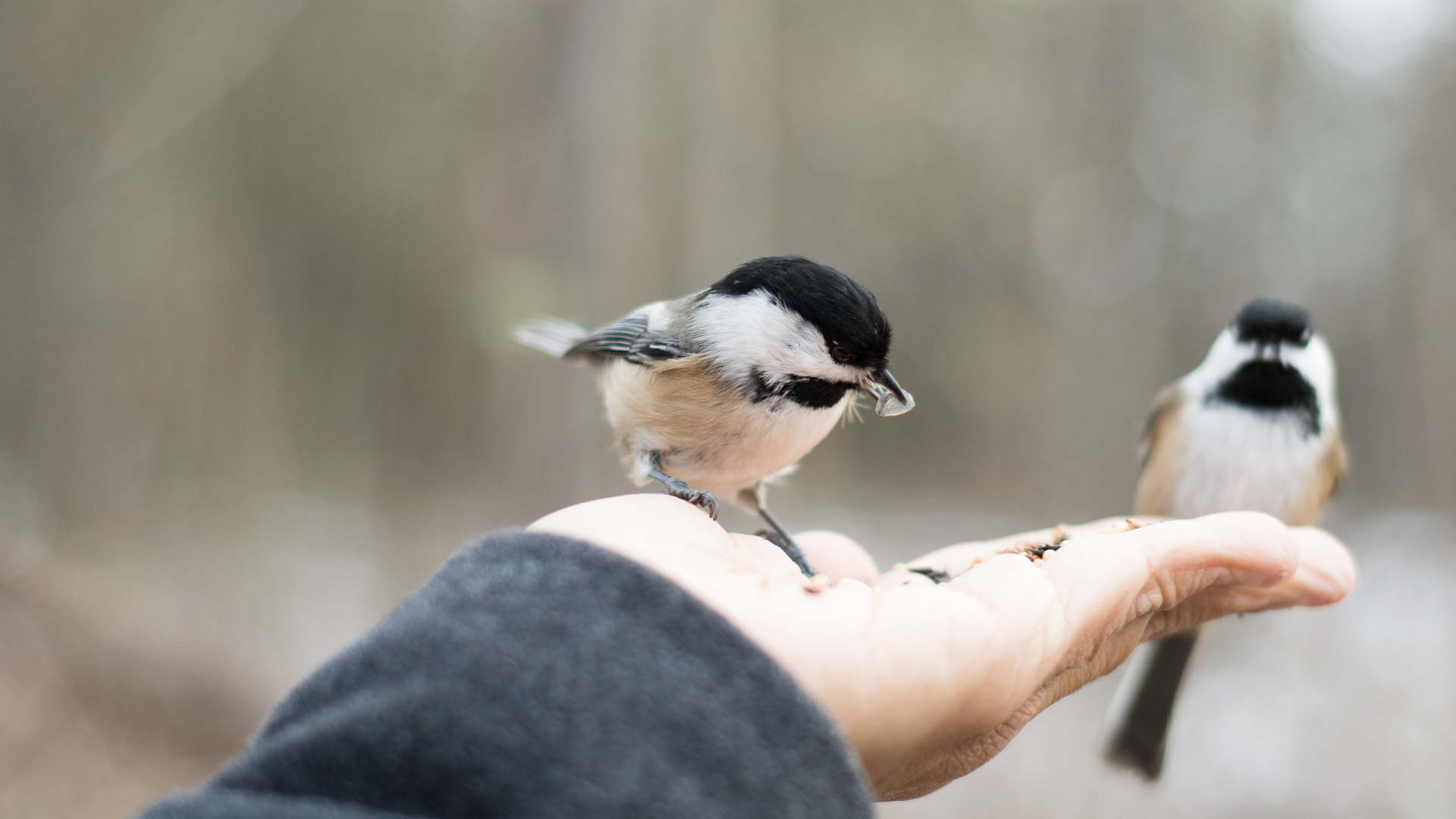
Every birder faces a moment of temptation: the rare owl is perched just a little closer if you take a few more steps, the nesting warbler would make a perfect photo if you could just part the branches slightly. These are the moments that define what kind of birder you are. Ethical birdwatching is not a set of arbitrary rules imposed from outside; it is a recognition that birds are living animals with real physiological and behavioral needs, and that our presence as observers has real consequences for their welfare. The good news is that ethical birding almost always produces better birding. Birds that are not flushed or stressed behave naturally, reveal more of their repertoire, and provide far more satisfying observation than birds pushed to the edge of tolerance.
This guide covers the American Birding Association Code of Ethics, practical distance guidelines for different bird types, specific rules around playback and nest disturbance, and the signs that tell you a bird is already feeling stressed by your presence.
The ABA Code of Ethics: Core Principles
The American Birding Association's Code of Ethics is the foundational document for responsible birding in North America. Its central principle is straightforward: the welfare of birds and their habitat always takes precedence over the desires and convenience of birders. This principle applies whether you are alone on a remote trail or part of a large group at a popular twitch.
Birds Canada and the National Audubon Society endorse similar frameworks, and the core guidelines are consistent across all major North American birding organizations. The principles are not merely idealistic: scientific research consistently shows that human disturbance at nest sites reduces breeding success, that repeated flushing of roosting birds depletes their fat reserves, and that playback overuse can disrupt territory establishment and mate attraction in breeding birds.
Signs That a Bird Is Being Stressed by Your Presence
Understanding stress signals is the most practical application of ethical knowledge. A bird that has detected your presence but has not yet reached its flight threshold will typically show one or more of the following: alert posture with head raised and neck extended, repeated alarm calls directed toward you, cessation of foraging, crouching and wing-dropping in ground-nesting species, and head-bobbing or tail-flicking in shorebirds. When you see these signals, you are at or beyond the ethical boundary regardless of absolute distance. The correct response is to retreat slowly, not to freeze in place and wait for the bird to settle.
- Alert posture: head raised, neck extended, direct eye contact toward you
- Alarm calling: repeated alarm chips or scolding directed at your position
- Cessation of foraging: bird stops eating and focuses attention on your position
- Lateral body orientation: bird turns broadside to make itself appear larger
- Wing dropping in ground-nesting species: distraction display indicating nest proximity
Practical Distance Guidelines by Bird Type
Distance guidelines are not rigid rules that work equally in all conditions: a bird flushed from a bush at 30 feet is more disturbed than a bird that watches you calmly from 15 feet. But distance guidelines provide useful starting points, particularly in dense habitat where behavioral signals can be hard to read until you are already too close.
For raptors including eagles, ospreys, large hawks, and nesting falcons, a minimum approach distance of 100 yards is a widely cited standard during nesting season. Many professionals and serious birders maintain 150 yards or more at active eyries. For owls at roost, 50 to 100 feet is a reasonable starting point but the behavioral signals matter more than the measurement. If an owl begins to bob and lean forward, that is a pre-flight signal indicating you are already too close regardless of distance.
For nesting songbirds, wading birds, and colonial waterbirds, avoid entering habitat where you can see a nest. Disturbance at a nest triggers alarm behavior that can attract predators, cause nest abandonment in sensitive species, and interrupt feeding of nestlings. The standard recommendation from most conservation organizations is to stay well outside the visual range of nest sites for sensitive species.
- Raptors at nests: minimum 100 yards, preferably 150 yards for eagles and large falcons
- Roosting owls: begin at 50 feet and read behavioral signals carefully; retreat at any pre-flight behavior
- Nesting songbirds: do not approach within sight of an active nest; observe from the habitat edge
- Colonial waterbirds: stay well clear of colonies; even brief disturbance can cause mass flushing with nest predation consequences
- Shorebirds on beaches: stay at the wrack line or above; running birds are already stressed
Playback and Recorded Call Use
Using recorded bird calls to attract or provoke responses from birds is one of the most contested ethical issues in modern birding. Playback can be highly effective for detecting cryptic species like rails and some owls, and it is used extensively in scientific research. For recreational birding, its use requires careful ethical judgment.
The American Birding Association recommends limiting playback to two minutes or less per session, using it only when no visual or auditory contact with the target species has already been achieved, and never using it repeatedly at the same location on the same day. During breeding season from May through July in most of North America, playback of territorial songs can disrupt territory establishment, draw birds out of their territories into confrontation with neighbors, and in some studies has been linked to reduced reproductive success in heavily visited areas.
- Limit each playback session to two minutes or less with pauses
- Do not use playback once you have already located the target bird by sight or sound
- Avoid playback entirely during active nesting season at known breeding sites
- Never use playback at well-visited hotspots where birds may be subjected to it many times daily
- Do not use playback for already-disturbed or stressed individual birds
Raptor and Owl Viewing Etiquette
Raptors and owls deserve particular ethical attention because they are often the specific targets of large groups of birders and photographers, amplifying disturbance pressure on individual birds. A roosting Short-eared Owl at a popular winter site may be approached by dozens of birders and photographers on a single day, and the cumulative disturbance across a winter can significantly deplete the bird's fat reserves needed for migration or cold-weather survival.
When approaching a roosting raptor or owl, approach at an angle rather than directly toward the bird, stop at the first sign of alertness, and view from that position without attempting to get closer. If the bird flushes, do not follow it to its new perch. Share location information for roosting raptors responsibly, noting the level of sensitivity required, and consider whether sharing precise GPS coordinates on social media serves the bird's welfare.
Frequently Asked Questions
How close can I ethically approach a bird?
There is no single universal distance that applies to all situations. The more useful rule is behavioral: stop advancing when a bird shows alertness signals such as raised posture, alarm calling, or cessation of foraging, and retreat slowly if it begins pre-flight behavior. As rough starting points: 100 yards for raptors at nests, 50 feet for roosting owls (with immediate retreat at any alert behavior), and stay outside visual range of any active songbird nest.
What are the rules for using playback calls?
The American Birding Association recommends limiting playback to two minutes or less per session, using it only when the target species has not already been located visually or auditorily, and avoiding it entirely during active nesting season at known breeding sites. Repeated use at heavily visited public birding hotspots is particularly problematic because of cumulative disturbance effects on individual birds over time.
How do I avoid disturbing nesting birds?
Do not approach active nest sites. If you observe distraction displays such as a bird dragging its wing along the ground or repeatedly alarm-calling while moving away from a specific spot, you are near an active nest and should retreat immediately. Observe from habitat edges rather than entering breeding habitat during nesting season, and resist the temptation to part vegetation for a better look at a nest or nestlings.
Is ethical birding different in Canada versus the United States?
The core principles endorsed by the American Birding Association, Birds Canada, and the National Audubon Society are consistent across North America. Some provincial and state regulations add specific legal protections for certain species and habitats beyond the ethical guidelines. Quebec and other Canadian provinces follow Birds Canada's Code of Conduct, which aligns closely with the ABA code and applies the same fundamental principle that bird welfare takes precedence over birder convenience in all circumstances.
Good Ethics and Good Birding Are the Same Thing
The most important insight about ethical birdwatching is that it produces better experiences, not worse ones. A bird that has not been stressed by your approach behaves naturally: it forages, vocalizes, interacts with other birds, and reveals the full texture of its life in ways that a flushed or alarmed bird never will. The patience required to approach ethically and the attentiveness required to read behavioral signals both develop exactly the observational skills that make great birders. Treat every bird as worth protecting, and your field craft will improve alongside your ethics.
The allure of off-the-beaten-path travel
Lorem ipsum dolor sit amet, consectetur adipiscing elit ut aliquam, purus sit amet luctus venenatis, lectus magna fringilla urna, porttitor rhoncus dolor purus non enim praesent elementum facilisis leo, vel fringilla est ullamcorper eget nulla facilisi etiam dignissim diam quis enim lobortis scelerisque fermentum dui faucibus in ornare quam viverra orci sagittis eu volutpat odio facilisis mauris sit amet massa vitae tortor.

Unveiling the charm of lesser-known Destinations
Orci sagittis eu volutpat odio facilisis mauris sit amet massa vitae tortor condimentum lacinia quis vel eros donec ac odio tempor orci dapibus ultrices in iaculis nunc sed augue lacus.
- Lorem ipsum dolor sit amet consectetur facilisi etiam dignissim diam quis enim
- Mauris aliquet faucibus iaculis dui vitae ullamco sit amet luctus
- Posuere enim mi pharetra neque proin dic rhoncus dolor purus non enim
- Dui faucibus in ornare posuere enim mi pharetra neque proin dicit
Finding solitude in hidden gem locations
Lorem ipsum dolor sit amet, consectetur adipiscing elit ut aliquam, purus sit amet luctus venenatis, lectus magna fringilla urna, porttitor rhoncus dolor purus non enim praesent elementum facilisis leo, vel fringilla est ullamcorper eget nulla facilisi etiam dignissim diam quis enim lobortis scelerisque fermentum dui faucibus in ornare quam viverra orci sagittis eu volutpat odio facilisis mauris sit amet massa vitae tortor condimentum lacinia quis vel eros donec ac odio tempor orci dapibus ultrices.
The thrill of discovering untouched natural beauty
Dolor sit amet, consectetur adipiscing elit ut aliquam, purus sit amet luctus venenatis, lectus magna fringilla urna, porttitor rhoncus dolor purus non enim praesent elementum facilisis leo, vel fringilla est ullamcorper eget nulla.
- Lorem ipsum dolor sit amet consectetur tempor orci dapibus ultrices
- Mauris aliquet faucibus iaculis dui vitae ullamco elementum facilisis
- Posuere enim mi pharetra neque proin dic fermentum dui faucibus in ornare
- Purus sit amet luctus posuere enim mi pharetra neque proin dic
“Ut enim ad minim veniam, quis nostrud exercitation ullamco laboris nisi ut aliquip ex ea commodo consequat uis aute irure dolor in reprehenderit in voluptate velit”
Exploring cultural marvels off the tourist radar
Donsectetur adipiscing elit ut aliquam, purus sit amet luctus venenatis, lectus magna fringilla urna, porttitor rhoncus dolor purus non enim praesent elementum facilisis leo, vel fringilla est ullamcorper eget nulla facilisi etiam dignissim diam quis enim lobortis scelerisque fermentum dui faucibus in ornare quam viverra orci sagittis eu volutpat odio facilisis mauris sit amet massa vitae tortor condimentum lacinia quis vel eros donec ac odio tempor orci dapibus ultrices in iaculis nunc sed.