
Scanning Tips for Spotting Owls in the Field
Master owl spotting with expert scanning tips: find great horned and barred owls using pellets, whitewash, mobbing birds, and dusk-dawn techniques.
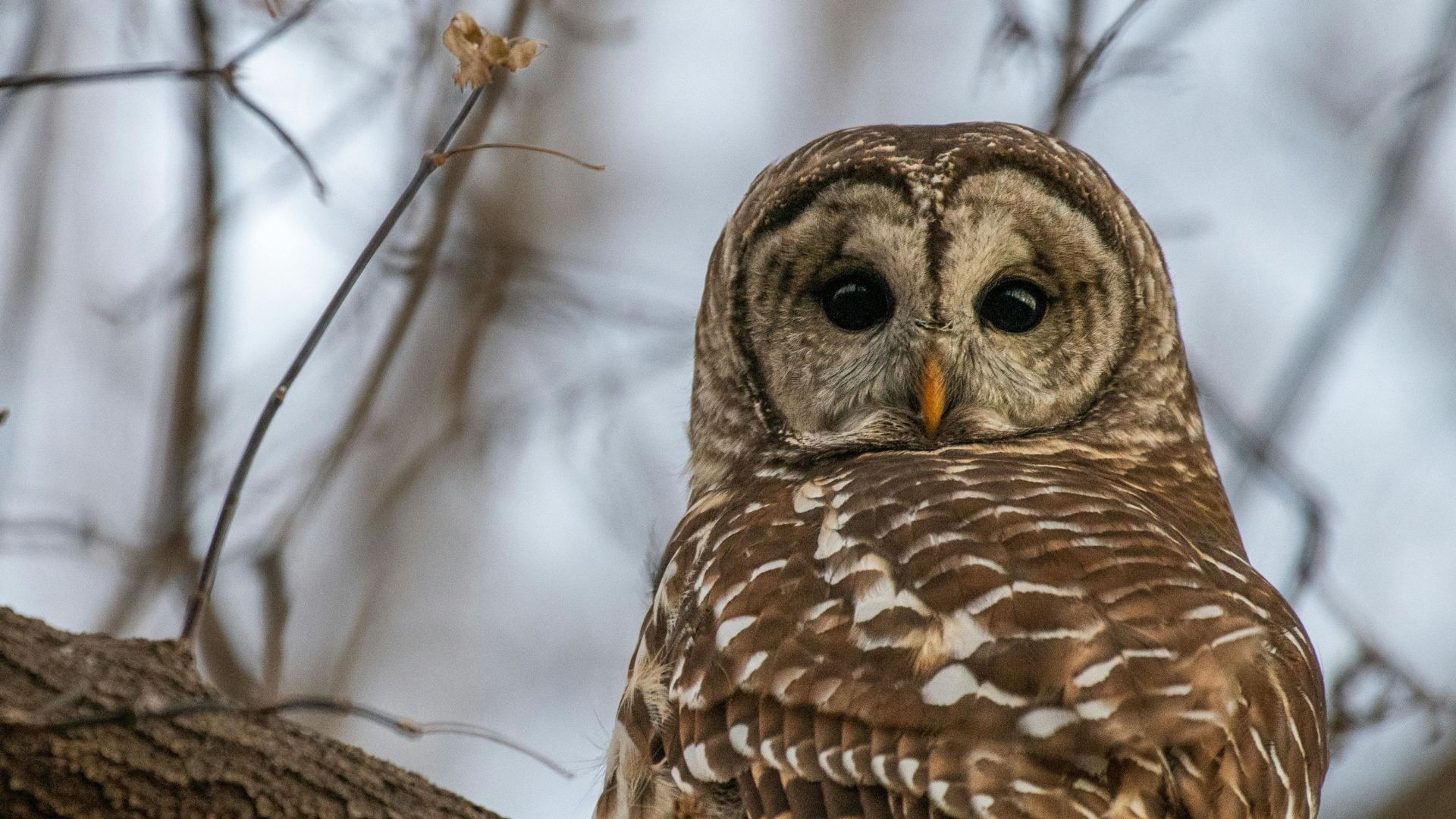
Finding owls is one of the most satisfying challenges in birding. These birds are masters of camouflage, roosting motionless against bark patterns that seem designed to defeat human eyes. Yet with the right scanning techniques and an understanding of the signs owls leave behind, finding these birds in the field becomes a learnable skill rather than a matter of pure luck. Whether you are hunting for a Great Horned Owl on a cold January morning or hoping to locate a Barred Owl at dusk, the approach is remarkably systematic.
This guide covers the best times and places to find owls, the signs that reveal roost locations, practical scanning techniques for leafless winter trees and dense summer canopies, and ethical guidelines for approaching roosting birds without causing disturbance.
Best Times and Places to Find Owls
Timing matters enormously when searching for owls. Most North American owl species are primarily nocturnal, but many can be found at roost during daylight hours if you know where to look. Two windows are especially productive: dusk and dawn. In the hour before full darkness, owls begin to stir and may vocalize from roost before departing to hunt. At first light, owls returning from a night of hunting often call briefly before settling into a day roost.
Dusk and Dawn Strategy
Position yourself at a known owl territory edge about thirty minutes before sunset or sunrise. Stay still and listen. Great Horned Owls begin calling well before dark in late winter when courtship is active, and their deep resonant hoots carry considerable distances through leafless trees. Barred Owls are famously vocal at dusk with their distinctive who cooks for you call echoing through bottomland forests. Eastern Screech-Owls produce a descending whinny or a long tremolo that blends startlingly with other night sounds until your ear is trained to it.
Winter offers a major advantage for daytime owl searching. Leafless deciduous trees remove the canopy that hides roosting birds during summer. A Great Horned Owl that is invisible in August becomes findable in December when only a silhouette against the sky betrays its presence in an oak crown.
- Visit known territories at dusk and dawn during late winter courtship season
- Listen from a stationary position rather than walking, which masks distant calls
- Check eBird for recent owl reports at local hotspots before going out
- Use eBird alerts to receive notifications when owls are reported near you
Signs That Reveal Owl Roost Locations
Owls are messy roosters in the best possible way for birders. They leave behind a remarkable set of physical evidence that pinpoints roost trees with high accuracy. Learning to read these signs transforms a random search through the woods into a focused investigation.
Owl Pellets and Whitewash
Owl pellets are compact masses of indigestible material, including bones, fur, feathers, and insect exoskeletons, that owls regurgitate roughly six to ten hours after a meal. Unlike hawk pellets, owl pellets often contain nearly complete small mammal skeletons because owls lack the highly acidic stomach environment that dissolves bone in raptors. Fresh pellets are dark and moist; older pellets are grayish and dried. Finding pellets on the ground beneath a tree is one of the strongest indicators of a regular roost site.
Whitewash is the white liquid excrement owls project outward from the roost. Over time, a heavily used roost tree accumulates visible white streaking on the trunk and surrounding branches, often extending to the ground below. Look for white staining at the base of large trees in areas with suitable owl habitat. Once you locate whitewash, scan upward in that tree and the immediately surrounding canopy for the roosting bird.
- Search the ground beneath large trees for pellets and whitewash staining
- Pellets from Great Horned Owls are large, up to four inches long, and often contain meadow vole skulls
- Smaller pellets near dense evergreens may indicate Long-eared or Short-eared Owls in winter
- Fresh pellets indicate recent use; check the area on multiple mornings for consistency
Scanning Techniques for Locating Roosting Owls
Knowing where to look is only half the challenge. Owls blend into their environment with extraordinary effectiveness, pressing tight against vertical bark, orienting their streaked plumage to match tree texture, and closing or narrowing their eyes when they sense observation. Effective scanning requires systematic technique rather than casual glancing.
High Tree Scanning
Start by scanning large conifers and mature deciduous trees from a distance before approaching. At distance, look for breaks in the silhouette of branches: an asymmetrical lump, a rounded bump near a trunk junction, or an ear-tuft outline against the sky. Binoculars are essential for this work; a spotting scope helps in open habitats. Move your gaze methodically from the base of a tree upward rather than scanning randomly. Owls tend to roost in the lower third of a conifer's interior or on a large horizontal branch close to the main trunk of a deciduous tree, where structural support and canopy cover coincide.
Pay special attention to the base of large branches where they meet the trunk. This junction offers the owl both support and a visual break that disrupts its outline. Scan slowly enough that a motionless bird registers as a shape anomaly rather than being glossed over as bark texture.
- Use 8x or 10x binoculars and scan methodically from ground level upward
- Look for asymmetrical outlines and lumps at trunk junctions and horizontal branch bases
- Check the interior of dense evergreens where Long-eared Owls cluster in winter
- Note any small birds gathering and scolding in one area, a classic sign of a roosting owl
Using Mobbing Behavior as a Guide
One of the most reliable ways to locate a roosting owl is to follow mobbing behavior. When small birds like chickadees, nuthatches, Blue Jays, crows, and American Robins discover a roosting owl, they converge and produce loud persistent alarm calls. This mobbing serves to harass the owl into moving and to advertise its location to other birds in the area. For the observant birder, a concentrated cluster of agitated small birds scolding intensely at one spot in the canopy is almost always worth investigating. Approach slowly and scan the focus of their attention for the owl's silhouette.
Species Examples: North American Owls Worth Searching
While every owl species has its own habitat preferences and behavioral patterns, a few are particularly accessible to North American birders developing their owl-finding skills.
The Great Horned Owl is the continent's most widespread and adaptable owl, found in forests, suburban parks, and even urban cemeteries. It begins calling in January and February, earlier than almost any other breeding bird, making it an excellent target for winter evening listening sessions. The Barred Owl favors mature bottomland and mixed forest near water and is reliably vocal at dusk and dawn. Short-eared and Long-eared Owls concentrate at communal winter roosts in dense conifers or multiflora rose thickets, sometimes in groups of a dozen or more individuals, and are among the most spectacular winter birding finds in northeastern North America.
Frequently Asked Questions
When is the best time to find owls?
Dusk and dawn are the most productive windows for finding owls, particularly during late winter when courtship calling peaks. Winter daytime searching in leafless deciduous forest is also highly effective because the bare canopy reveals roosting silhouettes that would be hidden by summer foliage.
What do owl pellets look like and where do I find them?
Owl pellets are compact gray or dark brown masses of fur, feathers, and bone, typically cylindrical or oval in shape. Size varies by species from under an inch for small owls to four inches or more for Great Horned Owls. Find them by searching the ground beneath large trees, particularly conifers, in areas where whitewash staining is visible on the trunk.
How do I spot a roosting owl during the day?
Scan large trees systematically from the base upward using binoculars. Look for asymmetrical lumps or outlines near trunk junctions and horizontal branch bases. Check beneath trees for pellets and whitewash first to identify active roost sites. Follow any concentrated mobbing behavior by small birds, as they reliably pinpoint hidden roosting owls.
Why do small birds mob owls?
Mobbing is an active defensive behavior that serves multiple functions: it harasses the predator into relocating, warns other birds in the area of the danger, and may allow young birds to learn to recognize predators through observation. For birders, a mobbing flock is one of the most reliable indicators of a roosting owl or hawk in the immediate area.
How close should I get to a roosting owl?
Maintain at least 50 to 100 feet from any roosting owl and avoid prolonged direct approach. If the owl begins to lean forward, flatten its feathers, stare intensely, or shift its weight repeatedly, it is stressed and on the verge of flushing. Retreating slowly at this point protects both the bird and the viewing opportunity.
Patience and Pattern Recognition Pay Off
Owl finding rewards systematic effort over luck. Learn your local species' calls and begin with evening listening in known owl territories during late winter courtship. Then expand to daytime searches using pellets, whitewash, and mobbing behavior as your guides. Each owl you find leaves behind a set of clues that teach you something applicable to the next search. Over time, the forest stops looking like a uniform tangle of branches and starts resolving into a readable landscape of signs, and owls stop hiding and start appearing.
The allure of off-the-beaten-path travel
Lorem ipsum dolor sit amet, consectetur adipiscing elit ut aliquam, purus sit amet luctus venenatis, lectus magna fringilla urna, porttitor rhoncus dolor purus non enim praesent elementum facilisis leo, vel fringilla est ullamcorper eget nulla facilisi etiam dignissim diam quis enim lobortis scelerisque fermentum dui faucibus in ornare quam viverra orci sagittis eu volutpat odio facilisis mauris sit amet massa vitae tortor.

Unveiling the charm of lesser-known Destinations
Orci sagittis eu volutpat odio facilisis mauris sit amet massa vitae tortor condimentum lacinia quis vel eros donec ac odio tempor orci dapibus ultrices in iaculis nunc sed augue lacus.
- Lorem ipsum dolor sit amet consectetur facilisi etiam dignissim diam quis enim
- Mauris aliquet faucibus iaculis dui vitae ullamco sit amet luctus
- Posuere enim mi pharetra neque proin dic rhoncus dolor purus non enim
- Dui faucibus in ornare posuere enim mi pharetra neque proin dicit
Finding solitude in hidden gem locations
Lorem ipsum dolor sit amet, consectetur adipiscing elit ut aliquam, purus sit amet luctus venenatis, lectus magna fringilla urna, porttitor rhoncus dolor purus non enim praesent elementum facilisis leo, vel fringilla est ullamcorper eget nulla facilisi etiam dignissim diam quis enim lobortis scelerisque fermentum dui faucibus in ornare quam viverra orci sagittis eu volutpat odio facilisis mauris sit amet massa vitae tortor condimentum lacinia quis vel eros donec ac odio tempor orci dapibus ultrices.
The thrill of discovering untouched natural beauty
Dolor sit amet, consectetur adipiscing elit ut aliquam, purus sit amet luctus venenatis, lectus magna fringilla urna, porttitor rhoncus dolor purus non enim praesent elementum facilisis leo, vel fringilla est ullamcorper eget nulla.
- Lorem ipsum dolor sit amet consectetur tempor orci dapibus ultrices
- Mauris aliquet faucibus iaculis dui vitae ullamco elementum facilisis
- Posuere enim mi pharetra neque proin dic fermentum dui faucibus in ornare
- Purus sit amet luctus posuere enim mi pharetra neque proin dic
“Ut enim ad minim veniam, quis nostrud exercitation ullamco laboris nisi ut aliquip ex ea commodo consequat uis aute irure dolor in reprehenderit in voluptate velit”
Exploring cultural marvels off the tourist radar
Donsectetur adipiscing elit ut aliquam, purus sit amet luctus venenatis, lectus magna fringilla urna, porttitor rhoncus dolor purus non enim praesent elementum facilisis leo, vel fringilla est ullamcorper eget nulla facilisi etiam dignissim diam quis enim lobortis scelerisque fermentum dui faucibus in ornare quam viverra orci sagittis eu volutpat odio facilisis mauris sit amet massa vitae tortor condimentum lacinia quis vel eros donec ac odio tempor orci dapibus ultrices in iaculis nunc sed.