
Texas Gulf Coast Spring Birding: High Island and Bolivar Flats
High Island and Bolivar Flats spring birding: sanctuaries, fallout timing, and shorebird spectacles.
There are birding days, and then there are High Island days. The distinction is not one of degree. It is one of kind.
The most spectacular bird viewing is during a spring northerly storm, which causes a fallout at High Island. During these storms, the migrating birds encounter strong head winds and a prolonged and energy-draining flight over the Gulf. Every bird that comes off the Gulf near High Island is then exhausted, and immediately seeks a dry land perch. In such conditions, the beaches of the Bolivar Peninsula can be covered with tens of thousands of birds. With its wooded areas and more ample feeding opportunities, almost every tree and open space in High Island is covered with exhausted birds.
But the Texas Gulf Coast in spring is not only about fallouts. Thirty minutes down the peninsula from High Island, Bolivar Flats holds one of the most important shorebird concentrations on the continent: a Globally Important Bird Area and an International Site in the Western Hemisphere Shorebird Reserve Network, where hundreds of thousands of shorebirds converge on the flats to feed on the shrimp, small fish and crabs teeming in the shallows of the marsh.
This guide covers both. Because on a great spring trip to the upper Texas Coast, you do not have to choose between the two.
Why High Island Exists: The Salt Dome Secret
High Island is a salt dome and mineral spring set at the edge of the Gulf. The habitat rises 32 feet above the surrounding marshes, providing soil conditions favorable to trees and shrubs.
This elevation is everything. The upper Texas Coast is a vast expanse of flat marsh, prairie, and coastal scrub extending hundreds of kilometers in every direction. A wooded patch that rises even 30 feet above this level is visible from altitude and irresistible to migrants that have been flying over open water and featureless marsh for hours. High Island, with its substantial wooded areas unlike elsewhere on the upper Texas coast, is a natural refuge for migrating birds making their perilous way across the Gulf of Mexico from the Yucatan Peninsula of Mexico into their northern summering grounds in the United States and Canada.
The Gulf crossing itself is the ordeal that makes High Island meaningful. Birds that depart the Yucatan after dark on favorable southerly winds are flying a minimum of 900 to 1,000 kilometers of open water with no place to land. If winds remain favorable and skies clear, many overshoot the Texas coast entirely and end up far inland. But when a cold front sweeps down from the north and intercepts the migration, birds caught over the Gulf face a choice between turning back, which many cannot do on depleted fuel reserves, and pressing on against the headwind. The birds that make it to the coast land immediately in the first available cover. At High Island, that cover is four Houston Audubon sanctuaries.
The Four Sanctuaries: What Each One Offers
Houston Audubon has four sanctuaries at High Island: Boy Scout Woods, Smith Oaks, Eubanks Woods, and the S.E. Gast Red Bay Sanctuary. Boy Scout Woods is the headquarters, staffed by volunteers from mid-March to mid-May. Smith Oaks is the largest sanctuary and home to the Rookery.
All four sanctuaries are open 365 days a year, dawn to dusk. The admission price is $10 for a day pass or $35 for an annual patch. Kiosk dates: Smith Oaks March 7 through May 2, Boy Scout Woods March 27 through May 2.
Boy Scout Woods is where most first-time visitors spend the majority of their time, and for good reason. Boy Scout Woods has bleachers set up next to water features, so you can post up for a while and study bird behavior up close. On a fallout morning, the drip area at Boy Scout Woods can hold 30 warbler species simultaneously in a space the size of a tennis court.
Smith Oaks is 177 acres of oak woodland, wetlands, and ponds, including the Rookery at Claybottom Pond. The canopy walkway gives elevated views into the tree canopy where species that stay high at other sites are suddenly at eye level. The sanctuary is made up of oak mottes, ponds, wetlands, and coastal prairie, and a rookery in the middle of Claybottom Pond that provides roosting and nesting for thousands of waterbirds.
Eubanks Woods is the overlooked sanctuary that rewards the birder who takes the time. The oaks in Eubanks Woods are rather young, and therefore migrants are often seen here at eye level, a welcome break from the neck stretching at Smith Oaks. When Boy Scout Woods and Smith Oaks are crowded, Eubanks Woods offers the same migrants in a quieter setting.
S.E. Gast Red Bay Sanctuary is the western edge sanctuary, perched above the coastal prairie with a small willow-lined pond at the entrance that is a wonderful spot to look for migrants.
The Afternoon Arrival Advantage: High Island's Unique Timing Rule
This is the insight that catches first-time visitors off-guard and that almost no mainstream guide explains clearly.
For High Island in particular, afternoons can be more active than mornings depending on the right weather conditions. Migrants traveling across the Gulf of Mexico arrive in the mid-to-late afternoon, so activity can increase dramatically and suddenly in what is referred to as a fallout.
Unlike most migration hotspots where dawn is the unambiguous peak window, High Island operates on Gulf crossing timing. Birds that departed the Yucatan the previous night are still arriving through the morning and into the afternoon as they complete their crossing. A sanctuary that was quiet at 8 AM can be extraordinary at 2 PM if a cold front has been funneling exhausted migrants to the coast through the day.
Typically, a cold front with north winds accompanied by rain or scattered showers will force birds to land in High Island for food and water after an exhausting journey. On the other hand, a strong south wind will carry birds further inland, making activity a little more sparse throughout the sanctuaries.
The practical implication: do not pack up and leave for Bolivar Flats at noon. Check BirdCast for the evening before and morning migration intensity. If the live map shows birds still crossing the Gulf during daylight hours, stay at High Island through the afternoon and watch the fallout build.
Peak Season and What to Expect
Peak spring migration season is from mid-March to mid-May. Numbers are highest during a fallout, which sometimes occurs with a fast-moving cold front.
Spring migration peaks in late April, bringing over a billion birds through Texas, many of which stop at High Island. A strong migration day without a fallout still delivers impressive variety. In this area, birders can dizzy themselves with well over 100 species far before it's time to break out lunch.
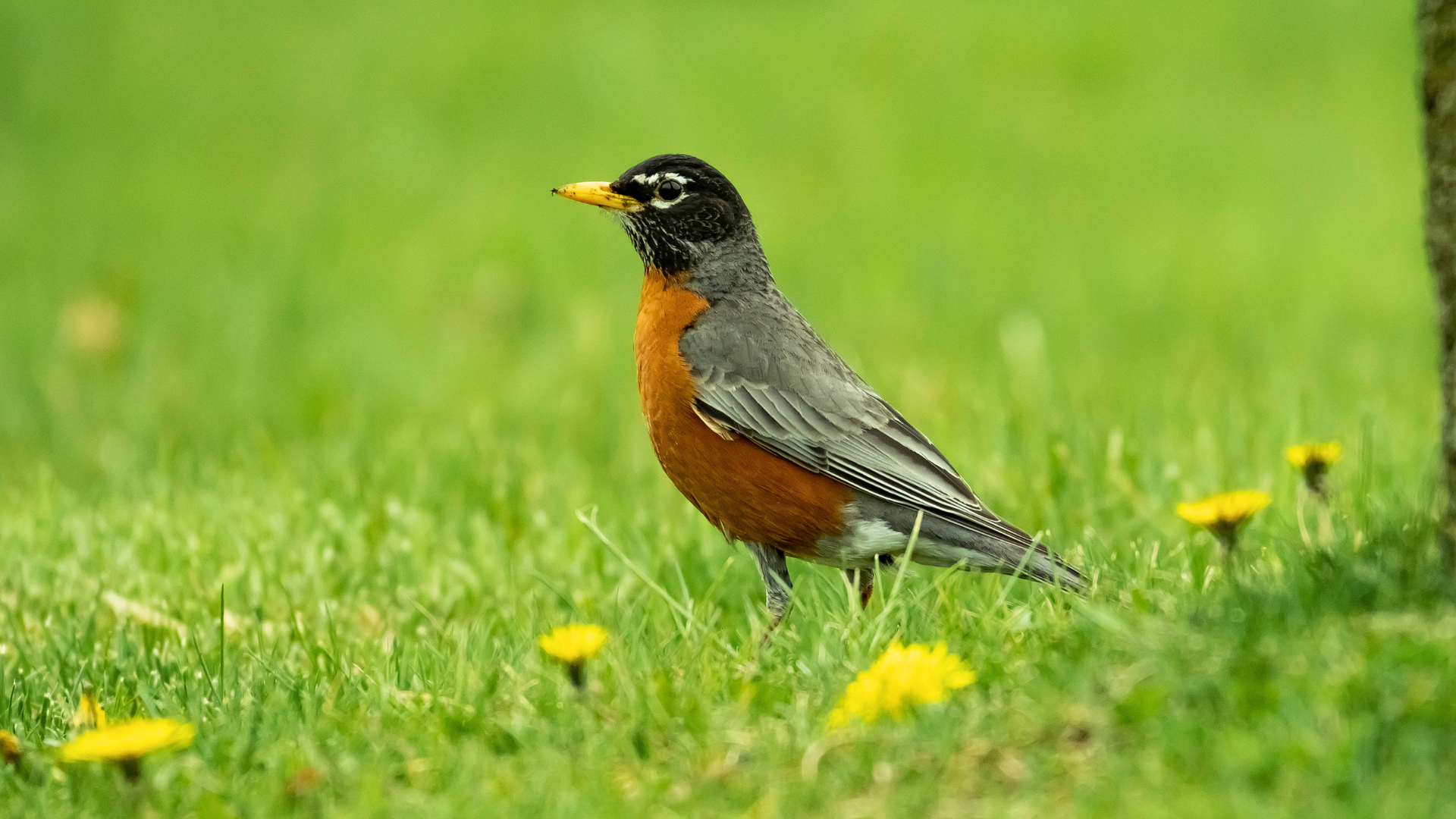
The species list covers the full depth of eastern landbird migration: thrushes, vireos, warblers, tanagers, orioles, buntings, grosbeaks, flycatchers, and the Gulf Coast specialties that are harder to find elsewhere, including Painted Bunting (Passerina ciris), Prothonotary Warbler (Protonotaria citrea) glowing gold from the willows, and Swainson's Warbler (Limnothlypis swainsonii) shuffling through leaf litter at the base of the drip. Nearly 400 species have been documented on Houston Audubon's properties at High Island.
The Smith Oaks Rookery: Plan for Sunset
The Rookery at Claybottom Pond is not a migration spectacle. It is something different and equally extraordinary, and most visitors treat it as a mid-morning add-on when it deserves its own dedicated visit timed to sunset.
In the spring and summer herons, egrets, cormorants and spoonbills build their nests and raise their chicks on the predator-free island in Claybottom Pond. The most spectacular time of day to visit the rookery is the last hour before dark when the birds are coming in for the night.
The show starts about an hour before sunset when the first birds trickle in, soon it is small flocks, then big flocks, then they pour in from all directions. Roseate Spoonbills (Platalea ajaja) arriving in the evening light, their pink turning deep rose against the darkening sky. Great Egrets in full breeding plumage. Tricolored Herons hovering over the water to retrieve sticks for their nests. And the alligators below, lying motionless at the island's edge.
There are always a few night-heron nests in the rookery and night-herons are predators. They regularly visit neighboring nests, grab unwatched chicks and take them back to their own chicks. The Rookery at sunset is one of the most complete wildlife experiences available anywhere on the upper Texas Coast.
Visit the sanctuaries for migrants at dawn and mid-morning. Return to Smith Oaks Rookery an hour before sunset. That is the High Island day done properly.
Bolivar Flats: The World-Class Shorebird Site
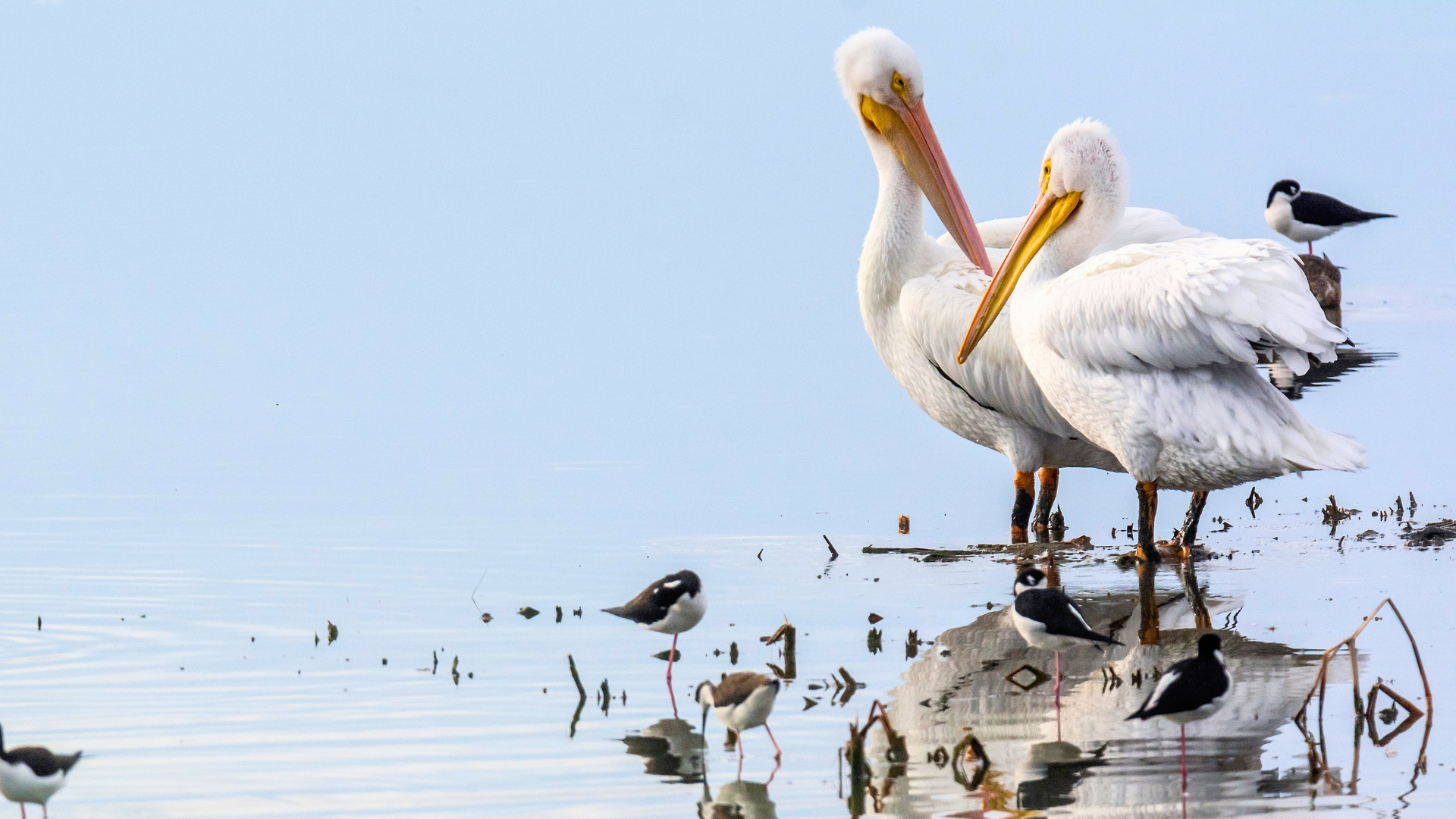
Bolivar Flats sits at the base of the North Jetty, which protects the entrance to Galveston Bay. The jetty traps the longshore sediments that are carried along the coast, and the result is an extensive tidal flat. Tens of thousands of gulls, terns, and shorebirds feed here at low tide, and immense flocks roost here when the tide is high.
Several thousand American Avocets (Recurvirostra americana) spend the winter on the flats, joined by dozens of Piping Plovers (Charadrius melodus). Willets (Tringa semipalmata), Wilson's Plovers (Charadrius wilsonia), Least Terns (Sternula antillarum), and Horned Larks (Eremophila alpestris) are among the breeders here. During spring migration, the species list expands dramatically: Whimbrel (Numenius phaeopus), Long-billed Curlew (Numenius americanus), Marbled Godwit (Limosa fedoa), all the Calidris sandpipers, both yellowlegs, and during peak migration, the possibility of a Ruff (Calidris pugnax) or other rarity.
Nelson's Sparrows (Ammospiza nelsoni) winter in the cordgrass, and Peregrine Falcons (Falco peregrinus) frequently stoop on the shorebird flocks out on the flats. A Peregrine stoop on a flock of 20,000 Dunlin is one of the defining spectacles of the upper Texas Coast.
Getting to Bolivar Flats: Continue southwest on TX 87 to Loop 108/Rettilon Road. Go south on Rettilon Road to the beach, then turn west and parallel the shoreline on the wet, packed sand to Bolivar Flats Shorebird Sanctuary. Park near the vehicular barrier. A $10 beach parking sticker is required, available locally.
The flats are most productive at low tide and for the two hours on either side of it, when birds are actively feeding on exposed mudflat. At high tide, the shorebirds roost in tight flocks above the waterline and numbers are easier to count but behavior is less varied. Check tide tables for Bolivar before arriving.
The Daily Routing Decision
The practical question every visitor faces is whether to spend their day at High Island or Bolivar Flats. The answer, if you have a full day, is both, structured around what each site does best at different times.
Morning: High Island sanctuaries from first light through mid-morning. This is the primary window for passerine migrants at Boy Scout Woods and Smith Oaks. If there has been a migration night followed by a north wind, stay longer.
Midday: Drive the 12 kilometers down TX-87 to Rettilon Road and Bolivar Flats. Midday is excellent for shorebirds because tidal timing is often favorable and light is highest. Also check the Bolivar Peninsula back roads as you turn onto Rettilon Road, scanning either side for excellent wetland habitat.
Afternoon: Return to High Island if the wind has shifted northerly and a fallout is building. The afternoon window at High Island is entirely real and often better than the morning.
Sunset: Smith Oaks Rookery. Non-negotiable.
Anahuac National Wildlife Refuge: The Third Leg
From High Island, head north on TX-124 and turn left on Whites Ranch Road to reach Anahuac National Wildlife Refuge. Pay keen attention to the fields on either side of the road, which can be outstanding habitat for migrating shorebirds of all varieties.
Anahuac adds freshwater marsh habitat and coastal prairie to the mix of High Island woodland and Bolivar tidal flats. It is particularly productive for rails, bitterns, and freshwater shorebird species that are less common on the salt flats. A full upper Texas Coast trip includes all three.
Practical Logistics
Location: High Island is on the Bolivar Peninsula, approximately 75 miles east of Houston via I-10 and TX-124 south. It can also be reached using the free Galveston-Bolivar ferry and proceeding up the coast on Hwy. 87.
Hours: All four sanctuaries are open 365 days a year, dawn to dusk.
Accommodation: The Bolivar Peninsula has limited lodging. Crystal Beach, Gilchrist, and Port Bolivar offer options on the peninsula. High Island is 90 minutes from Houston, making a city-based trip feasible for a two-to-three day visit.
Weather monitoring: Keep Windy and BirdCast open through your visit. A north wind forecast for the afternoon is your signal to stay at High Island rather than routing to Bolivar. For the complete weather decision system, see our guide on how to read weather radar for bird migration, and our guide on how to find a fallout during spring migration.
The Short Version
Peak spring migration at High Island is mid-March to mid-May, with the highest numbers during a fallout triggered by a fast-moving cold front. Arrive at Boy Scout Woods at first light. Watch the drip area. Stay through the afternoon if north winds are arriving. Visit the Smith Oaks Rookery at sunset. Drive Rettilon Road to Bolivar Flats at midday for shorebirds at low tide.
Bolivar Flats is a Globally Important Bird Area with tens of thousands of shorebirds on a good day. High Island is where North American migration comes to earth after a thousand kilometers over open water. You do not have to choose between the two.
The allure of off-the-beaten-path travel
Lorem ipsum dolor sit amet, consectetur adipiscing elit ut aliquam, purus sit amet luctus venenatis, lectus magna fringilla urna, porttitor rhoncus dolor purus non enim praesent elementum facilisis leo, vel fringilla est ullamcorper eget nulla facilisi etiam dignissim diam quis enim lobortis scelerisque fermentum dui faucibus in ornare quam viverra orci sagittis eu volutpat odio facilisis mauris sit amet massa vitae tortor.
Unveiling the charm of lesser-known Destinations
Orci sagittis eu volutpat odio facilisis mauris sit amet massa vitae tortor condimentum lacinia quis vel eros donec ac odio tempor orci dapibus ultrices in iaculis nunc sed augue lacus.
- Lorem ipsum dolor sit amet consectetur facilisi etiam dignissim diam quis enim
- Mauris aliquet faucibus iaculis dui vitae ullamco sit amet luctus
- Posuere enim mi pharetra neque proin dic rhoncus dolor purus non enim
- Dui faucibus in ornare posuere enim mi pharetra neque proin dicit
Finding solitude in hidden gem locations
Lorem ipsum dolor sit amet, consectetur adipiscing elit ut aliquam, purus sit amet luctus venenatis, lectus magna fringilla urna, porttitor rhoncus dolor purus non enim praesent elementum facilisis leo, vel fringilla est ullamcorper eget nulla facilisi etiam dignissim diam quis enim lobortis scelerisque fermentum dui faucibus in ornare quam viverra orci sagittis eu volutpat odio facilisis mauris sit amet massa vitae tortor condimentum lacinia quis vel eros donec ac odio tempor orci dapibus ultrices.
The thrill of discovering untouched natural beauty
Dolor sit amet, consectetur adipiscing elit ut aliquam, purus sit amet luctus venenatis, lectus magna fringilla urna, porttitor rhoncus dolor purus non enim praesent elementum facilisis leo, vel fringilla est ullamcorper eget nulla.
- Lorem ipsum dolor sit amet consectetur tempor orci dapibus ultrices
- Mauris aliquet faucibus iaculis dui vitae ullamco elementum facilisis
- Posuere enim mi pharetra neque proin dic fermentum dui faucibus in ornare
- Purus sit amet luctus posuere enim mi pharetra neque proin dic
“Ut enim ad minim veniam, quis nostrud exercitation ullamco laboris nisi ut aliquip ex ea commodo consequat uis aute irure dolor in reprehenderit in voluptate velit”
Exploring cultural marvels off the tourist radar
Donsectetur adipiscing elit ut aliquam, purus sit amet luctus venenatis, lectus magna fringilla urna, porttitor rhoncus dolor purus non enim praesent elementum facilisis leo, vel fringilla est ullamcorper eget nulla facilisi etiam dignissim diam quis enim lobortis scelerisque fermentum dui faucibus in ornare quam viverra orci sagittis eu volutpat odio facilisis mauris sit amet massa vitae tortor condimentum lacinia quis vel eros donec ac odio tempor orci dapibus ultrices in iaculis nunc sed.