
Best Time of Day to Spot Spring Warblers: A Complete Daily Guide
The best time for spring warblers is early morning, but each window of the day matters.
The early birder gets the birds. It is not just a saying. It is an empirical observation made every spring morning by the birder who is already in the park when everyone else is still having breakfast.
There is a specific quality to a city park or woodlot at first light during spring migration that you cannot replicate later in the day. You arrive in near-darkness to something close to silence, and then the chorus begins to build. Thrushes first, from somewhere low in the understory. Then sparrows, then the first warblers, species still moving and feeding with the urgency of birds that may have been flying all night. The park is yours. No dog walkers, no joggers with headphones, no children calling to each other across the grass. Just you and whatever came down from the sky in the last few hours.
That experience is the reward for showing up early. But spring warbler activity does not end when the chorus quiets. Each window of the day has its own character, its own species behavior, its own opportunities that the previous window does not offer. This guide covers all of them.
Why Spring Migration Changes Everything About Daily Timing
Before getting into the windows, one context that changes everything: warblers migrate at night, from dusk to dawn the next morning during spring and fall. During the day they stop to feed. This is when birders get to see them, from dawn all day until they take off at dusk and continue their migration.
This means spring warbler activity does not follow normal bird behavior rules. A migrant warbler that landed in your local park at 3 AM after six hours of flying is a hungry, temporarily grounded bird looking for insects in every available layer of vegetation. It is not secretive. It is not territorial. It is fuel-loading, and it will work through shrubs, mid-canopy, and treetops with an urgency that makes it far more visible than the same species on its breeding territory.
In spring, you get a triple dose of birds: the year-round resident birds, your usual summer birds returning from their warm weather vacation, and certain species that bred further north passing through on their way back north. This concentration, layered across every window of the spring day, is why warbler season is unlike any other birding season.
Window 1: Pre-Dawn to First Light (4:30 to 5:30 AM)
This is the window most birders skip, and it is the window that delivers the most surprising experiences.
Arrive before first light and your ears do the work your eyes cannot yet do. Dawn and dusk are the most productive times, as many migrants travel at night and stop to rest and feed in the early morning. The last migrants of the night are still dropping in at this hour, landing in the trees around you in darkness. You can hear them moving in the branches, the soft thud of a landing thrush, the chip notes of warblers settling into the canopy.
In city parks particularly, this pre-dawn window is transformative. Central Park, Mount Royal, High Park in Toronto: these urban green spaces fill with migrant warblers overnight, and the birder who arrives at 4:30 AM experiences a concentration of birds that will disperse and spread through the park as the morning progresses and foot traffic builds. The birds you find at first light in a city park on a strong migration morning are often within arm's reach, feeding low, unaware and unconcerned.
Another advantage of being out this early is that not everyone likes getting up that early, so you can often find yourself alone with just you and the birds, meaning they are less likely to be disturbed and you can observe their natural behaviour.
The calls to listen for in this window: soft chip notes from multiple species moving through the canopy, the liquid notes of Swainson's Thrushes (Catharus ustulatus) still aloft, and the occasional clear song of an early-singing male who has found a perch and begun establishing his temporary territory for the day.
Window 2: The Dawn Chorus (5:30 to 7:00 AM)
The dawn chorus is the few hours around sunrise when birds are most active and singing robustly, especially in spring. Birds eat early to replenish the energy they lose overnight.
The dawn chorus builds in layers, and understanding the sequence helps you navigate it. Thrushes sing first, before full light, their fluted phrases carrying in the still air before the temperature begins to change. Sparrows follow, chipping and trilling from low vegetation. Then the warblers, first one or two males that arrived overnight and have already found a perch, then a growing chorus as the light builds and more birds activate simultaneously.
The dawn chorus is one of the greatest experiences in nature. But it also presents a practical challenge: when twenty species are singing simultaneously from multiple directions and distances, the sensory load is significant. The technique that works best in this window is to stand still rather than walk, let the chorus come to you, and focus on isolating individual singers from the mix before moving toward them.
The dawn chorus window is when song identification matters most. A warbler you hear but cannot see in dense canopy can be tracked by its song to a singing perch. For a complete framework on separating warbler songs, see our guide on how to identify warblers by song in spring.
Window 3: The Mid-Morning Feeding Window (7:00 to 10:00 AM)
This is the window most guides undervalue, and it is often the most visually productive window of the entire day.
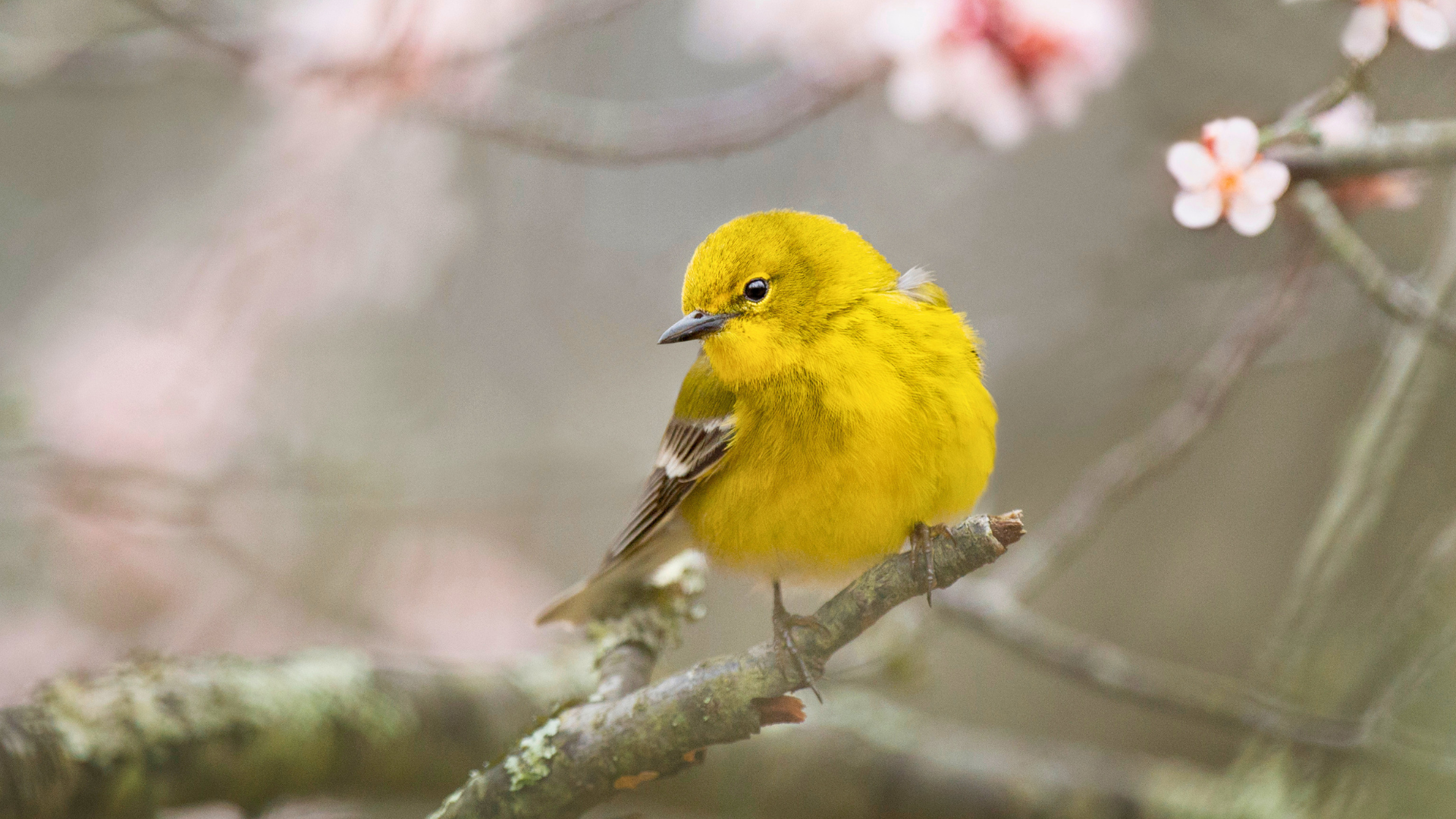
Here is what happens between 7 and 10 AM on a good migration morning. The frenzy of first light feeding settles into a more methodical foraging pattern. Warblers that were chasing insects through the upper canopy in the dawn urgency begin working lower, moving through the mid-canopy and into the shrub layer where insects are warming up in the sun. A Yellow Warbler (Setophaga petechia) that was 20 meters up at 6 AM may be at eye level at 8 AM, working through a willow thicket 4 meters in front of you.
On cold mornings, remember that warblers will gravitate to sunny patches, often high in trees on the eastern edge of the woods, where insects will be warmer and more active. This is one of the most actionable timing tips in spring warbler watching. On a cold April morning, position yourself at the eastern edge of a woodland before 8 AM. As the sun clears the treeline and hits the eastern faces of the tallest trees, watch those sun-warmed patches. Warblers will work through them systematically, chasing insects that become active minutes before insects in the shaded interior do.
The mid-morning window is also when behavior becomes most observable. A male Chestnut-sided Warbler (Setophaga pensylvanica) delivering his full song from a low exposed perch. A pair of Yellow Warblers building a nest in a willow, making repeated trips with plant fibers. A Blackburnian Warbler (Setophaga fusca) catching insects by sallying from a high perch, then returning to the exact same branch. These behavioral observations require relaxed, active birds, and relaxed active birds require the 7 to 10 AM window.
Window 4: Mid-Day (10:00 AM to 2:00 PM)
Mid-day sun and afternoon heat are generally considered the doldrums. Birds are quiet. Some suggest that at that time of day you should pay attention to butterflies, not birds.
This is largely true, but with important qualifications for spring migration specifically.
Migrant warblers on stopover do not follow resident bird patterns precisely. A migrant that needs to refuel before departing tonight does not have the luxury of resting through mid-day the way a resident bird can. On days of high migration pressure, mid-day warbler activity in good habitat can be surprisingly productive, particularly in years when cold weather has suppressed insect availability and birds are behind on their energy budget.
The mid-day window is also when concentration points become most obvious. A dripping water source in a park, a patch of fruiting shrubs, a sheltered south-facing slope where insects are most active: birds that have dispersed through the morning converge on these resources in the hours when activity generally slows. A drinking and bathing station in a city park between 11 AM and 1 PM on a warm spring day can produce 10 species of warbler in an hour.
If you choose to bird mid-day in spring, shift your strategy from covering ground to working known concentration features. Find the water, find the fruit, find the sheltered sun traps, and wait.
Window 5: The Late Afternoon Window (3:00 to 6:00 PM)
This window is genuinely underused and underreported in warbler literature.
The mechanism is straightforward: birds that have rested through the hottest part of the afternoon begin a second feeding bout before roosting. At the close of day, birds search for a final meal before settling in for their evening rest.
For spring warblers specifically, the late afternoon window has an additional dimension. Birds that will depart tonight on migration are topping off their fuel reserves in the hours before dusk. This creates a second period of active, visible feeding that can rival the morning in intensity, particularly at productive stopover sites near the departure edge: lake shores, forest boundaries facing large open areas, city parks surrounded by development.
Warblers migrate at night, from dusk to dawn the next morning. The late afternoon feed is the last meal before departure. Birds are motivated. The activity it produces is real, and the birder who returns to a productive morning patch at 4 PM on a strong migration day is often rewarded.
The late afternoon also offers the best light of the day for warbler observation. The low angle sun from the west or southwest illuminates the eastern-facing sides of trees and shrubs, throwing the colors of a Blackburnian or a Magnolia Warbler (Setophaga magnolia) into sharp relief against the green. The photography window at 5 PM on a clear spring day is better than anything the harsh midday light offers.
The Urban Park Advantage
One insight that applies to every window above: city parks during spring migration are not a compromise for birders who cannot reach better habitat. They are often the single best warbler concentration points available.
There is less human disturbance from recreationists, dog walkers, and others during early morning hours. In city parks, this difference is amplified. A park that will be busy with joggers and cyclists by 8 AM is a private reserve at 5:30 AM. The warbler you are watching feeding 3 meters away from you at first light would have flushed 15 minutes earlier if the park were crowded.
The structural reason city parks concentrate warblers is the same reason Point Pelee and Magee Marsh do: green habitat surrounded by inhospitable matrix. A warbler descending over a city at 3 AM and looking for somewhere to land has few options. It lands in the park. Every bird over that neighborhood lands in the same park. The concentration that results can rival the famous migration sites when conditions are right.
Go early. Go before the crowds. The birds will be there. The only question is whether you are.
How Weather Modifies Every Window
Every timing rule above shifts with weather, and two conditions are worth knowing specifically for spring warblers.
After a cold front: Warblers that were grounded by north winds and rain will be compressed into a concentrated feeding window on the first clear morning. All five windows collapse into one sustained feeding frenzy that can last from pre-dawn through mid-morning before activity normalizes. On post-frontal mornings, stay out longer than you normally would. The 10 AM lull that arrives on a normal day may not appear until noon.
On cold mornings: Warblers will gravitate to sunny patches, often high in trees on the eastern edge of the woods, where insects will be warmer and more active. Your mid-morning window becomes your most productive window, and the cold morning technique of positioning at the eastern woodland edge before the sun reaches it is the most reliable single tactic for finding warblers in early spring.
For the full decision system on how weather conditions translate into birding timing, see our guide on how to read weather radar for bird migration.
The Short Version
Arrive at your best local habitat before first light during peak migration weeks. Let the chorus build around you. Work the eastern sunny edges once the sun clears the treeline. Stay through the mid-morning feeding window when birds drop into the shrub layer and become visible. Return in late afternoon if conditions were productive in the morning.
In city parks, the single greatest variable is how early you arrive relative to the crowds. The same park that feels picked-over at 8 AM can feel like a migration spectacle at 5:30 AM. The early birder does get the birds. The data supports it, the experience confirms it, and the silence of a park at dawn confirms it most of all.
The allure of off-the-beaten-path travel
Lorem ipsum dolor sit amet, consectetur adipiscing elit ut aliquam, purus sit amet luctus venenatis, lectus magna fringilla urna, porttitor rhoncus dolor purus non enim praesent elementum facilisis leo, vel fringilla est ullamcorper eget nulla facilisi etiam dignissim diam quis enim lobortis scelerisque fermentum dui faucibus in ornare quam viverra orci sagittis eu volutpat odio facilisis mauris sit amet massa vitae tortor.
Unveiling the charm of lesser-known Destinations
Orci sagittis eu volutpat odio facilisis mauris sit amet massa vitae tortor condimentum lacinia quis vel eros donec ac odio tempor orci dapibus ultrices in iaculis nunc sed augue lacus.
- Lorem ipsum dolor sit amet consectetur facilisi etiam dignissim diam quis enim
- Mauris aliquet faucibus iaculis dui vitae ullamco sit amet luctus
- Posuere enim mi pharetra neque proin dic rhoncus dolor purus non enim
- Dui faucibus in ornare posuere enim mi pharetra neque proin dicit
Finding solitude in hidden gem locations
Lorem ipsum dolor sit amet, consectetur adipiscing elit ut aliquam, purus sit amet luctus venenatis, lectus magna fringilla urna, porttitor rhoncus dolor purus non enim praesent elementum facilisis leo, vel fringilla est ullamcorper eget nulla facilisi etiam dignissim diam quis enim lobortis scelerisque fermentum dui faucibus in ornare quam viverra orci sagittis eu volutpat odio facilisis mauris sit amet massa vitae tortor condimentum lacinia quis vel eros donec ac odio tempor orci dapibus ultrices.
The thrill of discovering untouched natural beauty
Dolor sit amet, consectetur adipiscing elit ut aliquam, purus sit amet luctus venenatis, lectus magna fringilla urna, porttitor rhoncus dolor purus non enim praesent elementum facilisis leo, vel fringilla est ullamcorper eget nulla.
- Lorem ipsum dolor sit amet consectetur tempor orci dapibus ultrices
- Mauris aliquet faucibus iaculis dui vitae ullamco elementum facilisis
- Posuere enim mi pharetra neque proin dic fermentum dui faucibus in ornare
- Purus sit amet luctus posuere enim mi pharetra neque proin dic
“Ut enim ad minim veniam, quis nostrud exercitation ullamco laboris nisi ut aliquip ex ea commodo consequat uis aute irure dolor in reprehenderit in voluptate velit”
Exploring cultural marvels off the tourist radar
Donsectetur adipiscing elit ut aliquam, purus sit amet luctus venenatis, lectus magna fringilla urna, porttitor rhoncus dolor purus non enim praesent elementum facilisis leo, vel fringilla est ullamcorper eget nulla facilisi etiam dignissim diam quis enim lobortis scelerisque fermentum dui faucibus in ornare quam viverra orci sagittis eu volutpat odio facilisis mauris sit amet massa vitae tortor condimentum lacinia quis vel eros donec ac odio tempor orci dapibus ultrices in iaculis nunc sed.