
Peninsula Valdés Birding Guide: The Complete Zone by Zone Breakdown
The complete zone by zone birding guide to Peninsula Valdés. Coastal sites, steppe interior, and the hidden species most visitors completely miss.
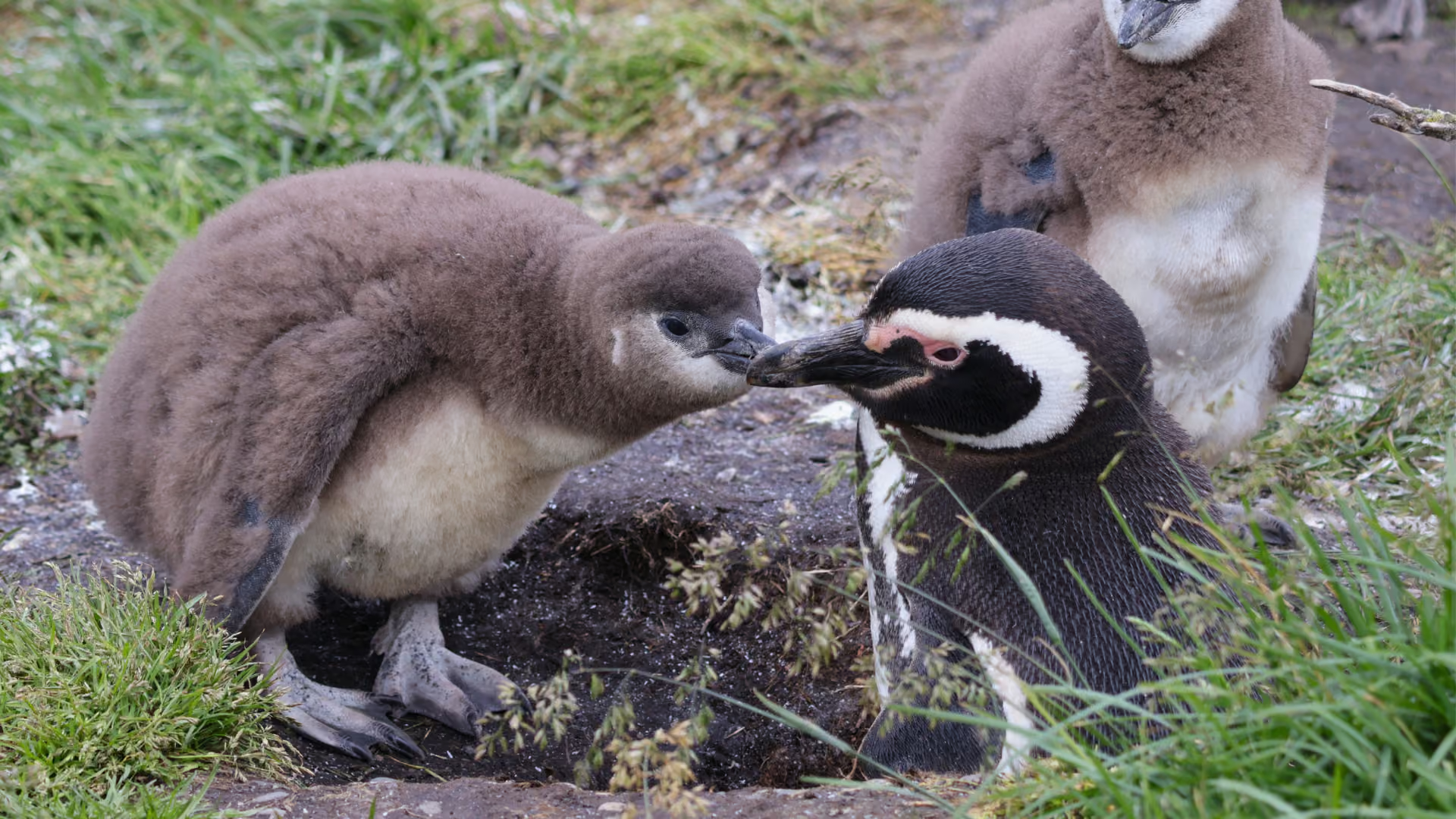
Peninsula Valdes is the kind of place that ruins other wildlife destinations. Once you have stood at Caleta Valdes watching Magellanic Penguins stream past a Southern Elephant Seal hauled out ten meters away, with oystercatchers working the tideline in front and a Southern Right Whale blowing on the horizon behind, the idea of visiting a site that only offers one of those things starts to feel a little thin.
This is the defining quality of Peninsula Valdes as a birding destination. The birds here are genuinely outstanding on their own terms, over 250 recorded species across marine, coastal, and Patagonian steppe habitats in a single UNESCO World Heritage Site. But they exist inside a layered wildlife experience that nothing else in South America quite replicates. The birding is not distracted by the whales and the seals. It is made richer by them. This guide covers the peninsula zone by zone, with full species breakdowns, honest timing advice, and one section on the species that almost every visitor misses entirely.
Why Peninsula Valdes Belongs on Every Patagonian Birding Itinerary
The peninsula sits on the Atlantic coast of Chubut province in Argentine Patagonia, roughly 80 kilometers from Puerto Madryn. It covers approximately 3,600 square kilometers and encompasses an extraordinary range of habitats: open Patagonian Monte desert steppe with low thorny scrub, coastal cliffs, tidal flats, saline lagoons, shingle beaches, and the marine environment of the Golfo San Jose and Golfo Nuevo on either side.
That habitat diversity produces a species list that no inland steppe site and no purely coastal site in Patagonia can match on its own. Combining a Valdes visit with Punta Tombo to the south creates the finest Atlantic coast birding circuit in Argentine Patagonia, as we cover in our Magellanic Penguin Colony Guide.
Best Time to Go: December and January
December and January are our recommended window for Peninsula Valdes, and the reasoning is straightforward. Breeding activity across all habitat types is at its peak. Magellanic Penguins are on eggs and early chicks at Caleta Valdes and Punta Norte. The steppe passerines are territorial and vocal, making them far easier to locate and identify. Shorebirds are present in good numbers on the tidal flats. The days are long, the light is good, and the peninsula's road network is fully accessible.
The one consideration worth knowing is that October and November offer the extraordinary bonus of Southern Right Whales in the gulfs alongside the early penguin season. If combining whale watching with birding is a priority, that window is genuinely exceptional. For pure birding focus, December is the stronger month. As we explain in our Best Time to Go Birding in Patagonia guide, December consistently delivers the best combination of breeding activity, weather reliability, and manageable crowds across the entire region.
Zone 1: Isla de los Pajaros
Isla de los Pajaros sits in the Golfo San Jose and is the most concentrated seabird site on the peninsula. It is a strict reserve with no public landing, but the observation tower on the mainland causeway provides excellent views across the island with a spotting scope.
The island holds breeding colonies of Imperial Cormorant, Rock Cormorant, Kelp Gull, South American Tern, and Chilean Flamingo. In December the flamingo numbers are often at their highest and the colonial seabird activity is intense. The causeway approach road also passes good steppe habitat where the drive alone can produce Lesser Rhea, Elegant-crested Tinamou, and various raptor species.
A spotting scope is essential here. As covered in our Best Field Guides and Digital Tools for Patagonia, the eBird hotspot for Isla de los Pajaros has detailed recent checklists worth checking before visiting.
Key species: Chilean Flamingo, Imperial Cormorant, Rock Cormorant, Kelp Gull, South American Tern, Snowy Sheathbill.
Zone 2: Puerto Piramides and the Sea Lion Colony
Puerto Piramides is the only settlement inside the peninsula and the main base for whale watching operations. The cliffs and shores around Puerto Piramides and the Punta Loma sea lion colony near Puerto Madryn are both highly productive coastal sites for birds.
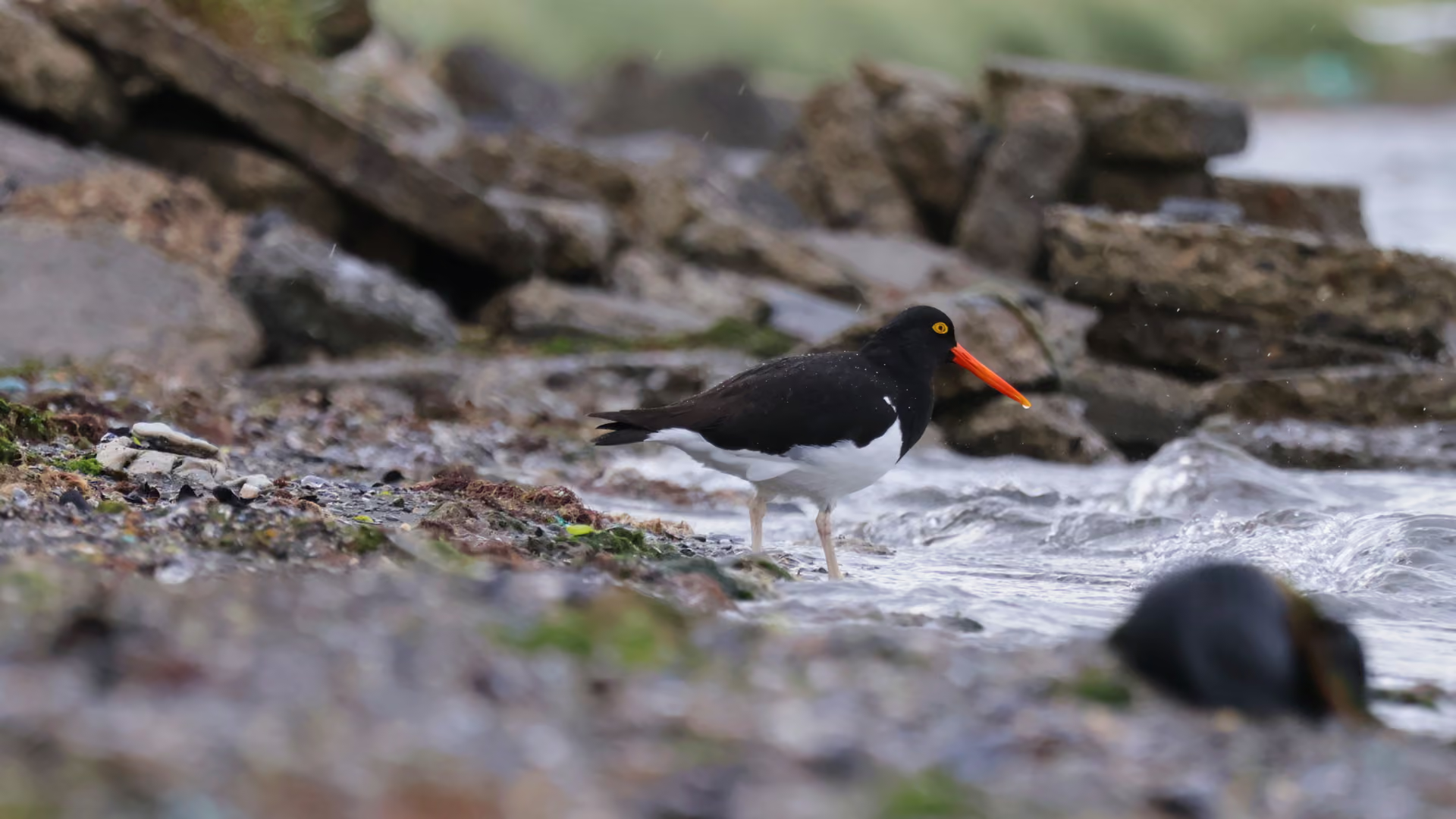
The sea lion colony is one of the most reliable sites on the peninsula for Snowy Sheathbill, Dolphin Gull, Blackish Oystercatcher, and American Oystercatcher. The two oystercatcher species often feed side by side on the rocky shores, providing an excellent direct comparison. Magellanic Cormorant and Imperial Cormorant both roost on the cliffs. Offshore seawatching from the cliff tops can produce Southern Giant Petrel, White-chinned Petrel, and Black-browed Albatross in season.
Key species: Snowy Sheathbill, Dolphin Gull, Blackish and American Oystercatcher, Magellanic and Imperial Cormorant, Southern Giant Petrel.
Zone 3: Caleta Valdes and the Coastal Cliffs
Caleta Valdes on the eastern coast is one of the finest single birding and wildlife sites in all of Argentine Patagonia. The estuary holds a large Magellanic Penguin colony, a breeding colony of Southern Elephant Seals, and the cliff system above provides excellent raptor and seabird watching.
In December the penguin colony is at full breeding intensity. The layered scene here, penguins crossing in front of elephant seals, with cormorants and terns working the tidal channels and raptors patrolling the cliff edges above, is precisely what makes Peninsula Valdes irreplaceable as a combined wildlife experience.
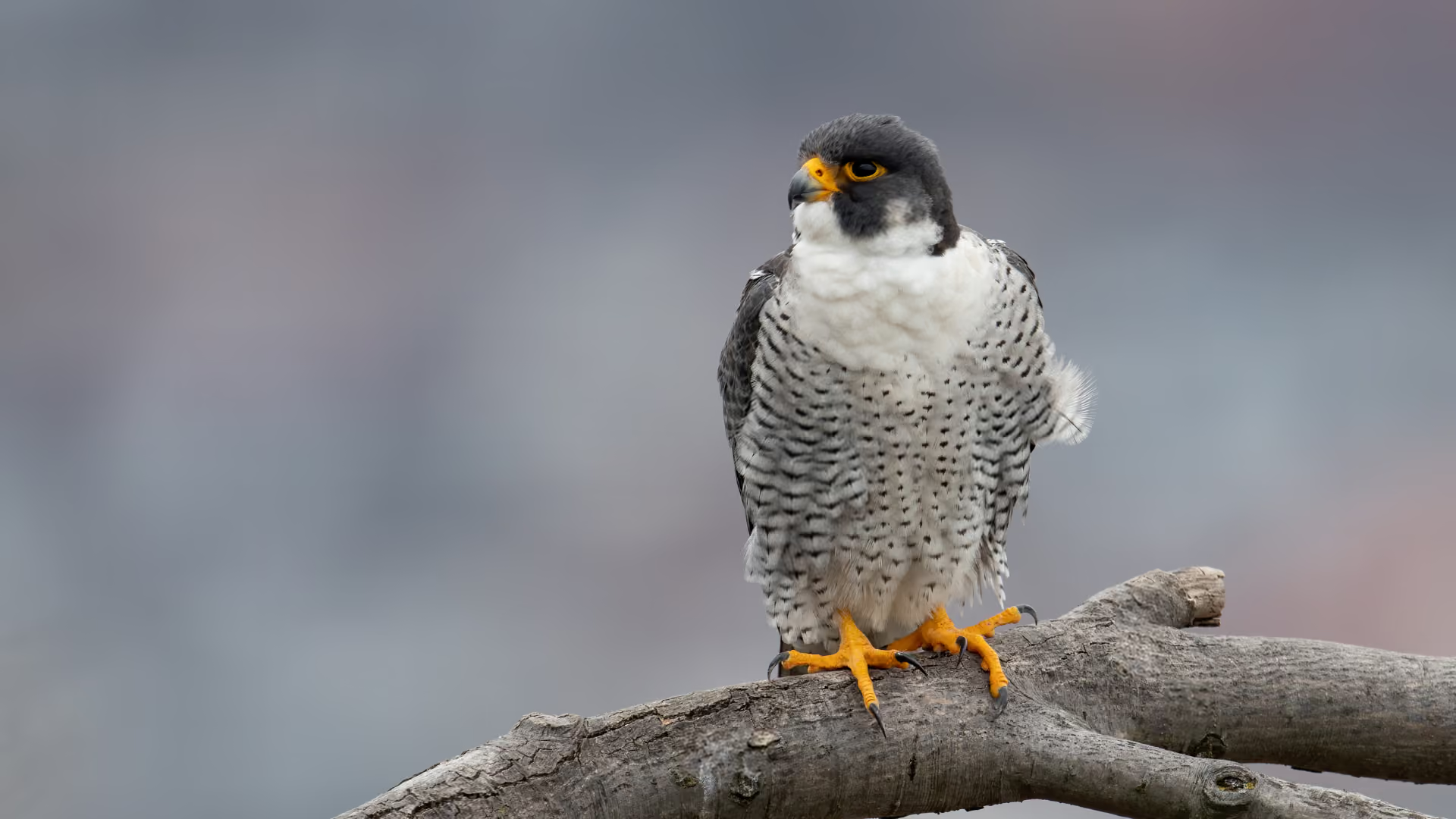
The cliffs hold nesting Peregrine Falcon. Black-chested Buzzard-Eagle soars the thermal columns above. White-headed Steamer-Duck works the calmer inshore waters. The drive along the coastal road between Puerto Piramides and Caleta Valdes passes through some of the best steppe habitat on the peninsula. Stop at every rocky section and dry watercourse for the Monte desert specialists.
Key species: Magellanic Penguin, White-headed Steamer-Duck, Peregrine Falcon, Black-chested Buzzard-Eagle, Neotropic Cormorant, South American Tern.
Zone 4: Punta Norte
Punta Norte at the northern tip of the peninsula is famous for the orca intentional stranding behaviour, where killer whales beach themselves to hunt sea lion pups, one of the most dramatic wildlife events on Earth. For birders it is also an outstanding coastal site with one of the largest Magellanic Penguin colonies on the peninsula.
The concentration of marine mammals creates a scavenging bonanza for opportunistic birds. Southern Giant Petrel, Chimango Caracara, and Southern Crested Caracara gather consistently around seal haul-out areas. Kelp Gull and Dolphin Gull work the shoreline. In the scrub behind the beach, the steppe species are present in good numbers throughout the day.
Key species: Magellanic Penguin, Southern Giant Petrel, Dolphin Gull, Chimango and Southern Crested Caracara, Magellanic Oystercatcher.
Zone 5: The Interior Steppe
The interior of Peninsula Valdes is classic Patagonian Monte desert: low thorny scrub, dry seasonal watercourses, and flat open expanses. Most visitors drive through on the way to the coastal sites and stop very little. This is a significant mistake.
The steppe interior holds the richest selection of Argentine endemic and near-endemic passerines on the peninsula. Patagonian Canastero works the low scrub constantly. White-throated Cacholote is noisy and conspicuous in denser scrub. Patagonian Mockingbird perches openly on bush tops. Band-tailed Earthcreeper probes dry creek margins. Carbonated Sierra Finch feeds on the ground in open areas. Burrowing Parakeet flies noisily between nesting cliffs and feeding areas. Lesser Rhea and Elegant-crested Tinamou are both present throughout the interior throughout the day.
Key species: Patagonian Canastero, White-throated Cacholote, Band-tailed Earthcreeper, Burrowing Parakeet, Lesser Rhea, Elegant-crested Tinamou, Carbonated Sierra Finch.
The Hidden Gem: Sandy Gallito
There is one species at Peninsula Valdes that most visitors never see, rarely look for, and almost no general travel content mentions. The Sandy Gallito (Teledromas fuscus) is endemic to Argentina, found only in the Monte desert scrub of Patagonia and the dry interior provinces to the north, and Peninsula Valdes holds one of its most accessible populations.
The Sandy Gallito is a bizarre and compelling bird. It runs across open sandy ground between scrub patches like a small, pale roadrunner, pumping its tail and moving with an urgency that makes it look perpetually late for something. It is cryptically coloured in sandy buff tones that blend perfectly with the dry soil, which is why most visitors driving at speed across the steppe interior never register it at all.
Finding one requires stopping the car in open sandy sections of the Monte scrub, scanning the ground between bushes rather than the bushes themselves, and listening for its distinctive call. The peninsula's interior roads, particularly the sections furthest from the main tourist circuit, are the most productive. Early morning is the most reliable time. For a birder visiting Peninsula Valdes, the Sandy Gallito is the species that separates a strong list from an exceptional one.
Practical Guide for Birding Peninsula Valdes
Base yourself in Puerto Madryn. The city has good accommodation at all price points and is well positioned for day trips to all zones. Alternatively, staying inside the peninsula at an estancia allows for very early morning and late evening access that day-trippers cannot match.
Rent a car. The peninsula covers a large area and the sites are spread across its full extent. A rental car from Puerto Madryn is the most effective approach. Bus tours reach the main coastal sites but miss the steppe interior entirely.
Allow two full days minimum. One day covers the main coastal circuit: Isla de los Pajaros, Piramides, Caleta Valdes, Punta Norte. The second day should be dedicated to the steppe interior, driven slowly with frequent stops. The species lists for these two days will overlap very little.
Go to the steppe before the coast. Most visitors prioritize the coast and treat the steppe as incidental. Reverse that on at least one morning. The steppe passerines and tinamous are most active in the first two hours of light.
Check eBird before each outing. The Peninsula Valdes hotspots on eBird are well maintained and updated regularly by visiting birders. Recent checklists will tell you exactly which species have been active at each site in the past week.
What Peninsula Valdes Delivers That Nowhere Else Can
The honest answer to why Peninsula Valdes belongs on every Patagonian birding itinerary is not any single species or site. It is the cumulative effect of spending two days in a landscape where extraordinary birds and extraordinary mammals coexist at such density that you are constantly choosing where to look next.
A birder standing at Caleta Valdes in December is simultaneously watching a Peregrine Falcon stoop above the cliffs, counting penguin chicks waddling toward the tideline, and registering a Sandy Gallito crossing the track twenty meters away. That combination does not exist anywhere else on the continent in a single accessible location. It is the reason Peninsula Valdes, despite being less famous than Torres del Paine and less dramatic than Tierra del Fuego, is the destination serious wildlife birders consistently rank among their finest experiences in South America.