
Birding Discord Servers: Rare Bird Alerts Across the US, Canada, and Beyond
The fastest word on a local rarity now travels on Discord. Here is a directory of birding servers by region across the US and Canada, plus a few international and special-interest ones.
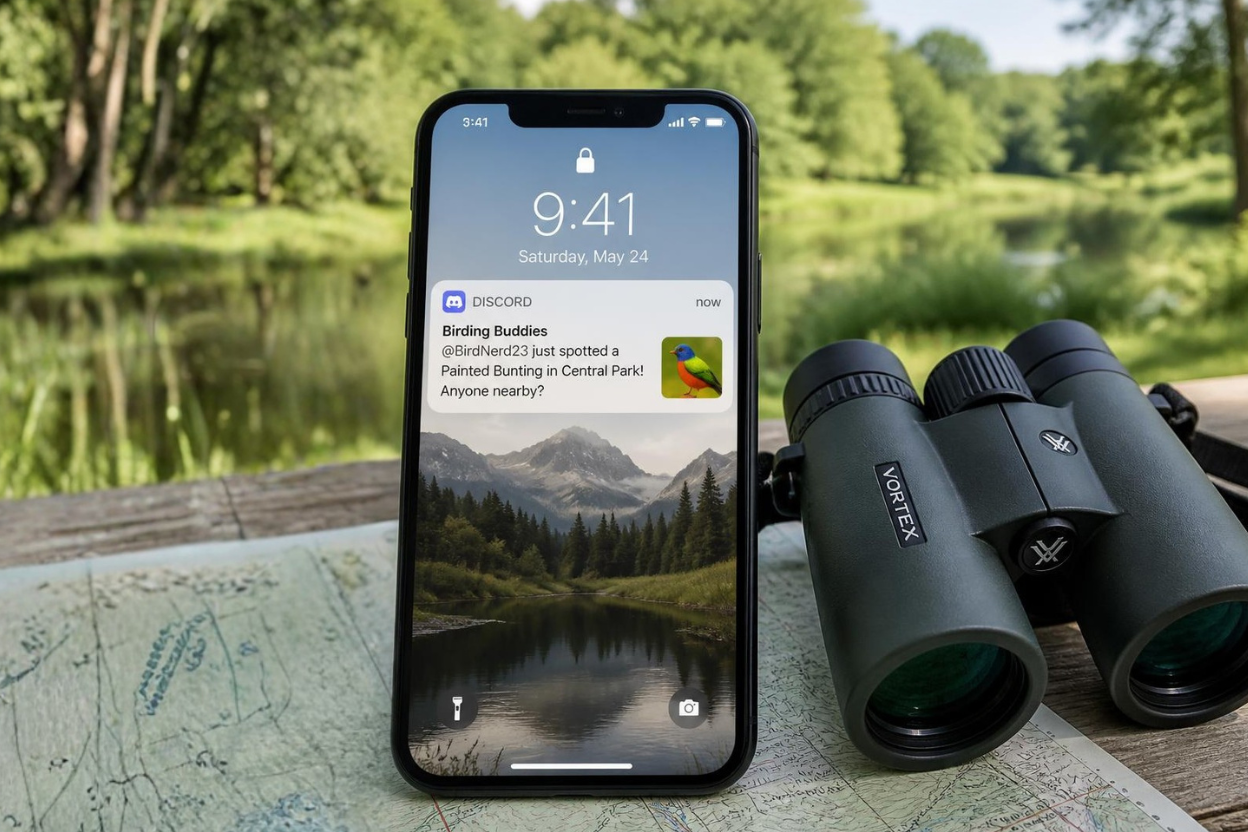
In How to Find Rare Birds we made the case that the fastest word on a local rarity no longer comes from eBird, but from regional birding Discord servers, where someone refinds a bird, drops a photo and a pin, and posts a live update within minutes. This is the companion to that post: a working directory of the servers worth joining, organized by region across the United States and Canada, with a few international and special-interest servers at the end. Join the ones that cover your patch, keep them muted until you need them, and you will hear about the good birds while they are still being seen.
How to use this list
Each of these is a volunteer-run community with its own culture and rules, so join, read the pinned rules, and watch how the regulars post before you jump in. Most keep a dedicated channel for rare bird alerts or sightings, separate from general chat, which is the one to watch. Carry one field habit over to the screen: use the same restraint with genuinely sensitive birds online that you would in person, the nesting birds, the private land, anything a crowd could harm, which we get into in How to Document and Report Vagrant Birds. One note on the links themselves. Discord invites can expire or be rotated by a server's admins, so if one has gone stale by the time you reach it, a quick search for the server name, or an ask in a neighboring server, will usually turn up a current one.
United States: the Northeast
The densely birded Northeast is thoroughly covered. Working down from the top, there is Maine Birding, Vermont, Rhode Island RBA & Chat, Connecticut Rare Birds and Discussion, and the fast-moving Massachusetts Rare Bird Alert. Inland and south, New York Birding covers everything from the city to the Adirondacks, New Jersey Birders & RBA handles a small but rarity-rich state, and PA Birds tracks Pennsylvania.
United States: the Mid-Atlantic and Appalachia
In the Mid-Atlantic and central Appalachians, Delaware Bird Chat, Maryland & DC Birds, and Virginia Birds cover the coastal plain and piedmont, while WV Birds follows the mountains of West Virginia.
United States: the Southeast and South
Across the South, Birding in North Carolina runs from the mountains to the vagrant trap of the Outer Banks, Florida Birding covers a peninsula that collects strays from every direction, and Kentucky Birding and Arkansas Birders hold the interior South. Texas Rare Birds and Discussion follows one of the richest and most vagrant-prone states in the country.
United States: the Great Lakes and Upper Midwest
The Great Lakes and upper Midwest are well served, with Ohio Bird Alert, Indiana Birding, Michigan Birds, and Birding Illinois covering the lake states, and WI Birds and Minnesota County Listers carrying the northern tier, the latter with a distinctly county-listing bent.
United States: the Mountain West and Southwest
Through the Mountain West and Southwest, Colorado Birding RBA & Discussion, New Mexico Birding, Utah Birding, and Arizona Rare Birds cover a region whose desert oases and canyons pull in strays from Mexico and beyond.
United States: the West Coast and Pacific
On the West Coast, California Birding, Oregon Birding, and Washington Birding run the length of the Pacific flyway, and out in the ocean Birding Hawai'i covers the islands, a place where an Old World vagrant is only ever a stiff wind away.
Canada
North of the border, coverage runs coast to coast. British Columbia Birding follows the west, Prairie Birding spans Alberta, Saskatchewan, and Manitoba, Ontario Bird Alert and the French-language Québec Birds carry central Canada, and Atlantic Canada covers the Maritimes and Newfoundland, a region that, as the Little Egret and other transatlantic strays in this cluster show, punches far above its weight for Old World vagrants.
Beyond North America
A couple of servers reach further afield. Wildlife Australia and New Zealand Birding cover the Australasian region for anyone birding or traveling down under.
By interest, not place
Some of the best servers are organized around a subject rather than a region, and they are where the hardest identifications get worked out. Nocturnal Flight Calls is devoted to the specialized art of identifying migrants by their night calls, while North American Gulls and Bird Hybrids take on two of the thorniest corners of identification, the latter directly relevant to the ibis and egret hybrids elsewhere in this cluster. Pelagics Birding North America covers seabirds and boat trips, The Bird Photographer focuses on the craft of images, and iNaturalist gathers the broader naturalist community across every taxon.
Rounding it out
Between them these servers cover most of the continent's active birding regions and a good deal beyond. If your state or province is missing here, it is worth asking in a neighboring server, since someone usually knows whether a local channel exists yet. Set up your eBird alerts as the reliable backbone, add the Discord servers for speed, and you will rarely be the last to know when something good drops in.
FAQ
Yes, and a lot of them. Most US states and Canadian provinces now have a regional birding Discord server, many with a dedicated rare bird alert channel where sightings are posted in real time. They have become one of the fastest ways to hear about a local rarity, often beating eBird alerts by a wide margin, because members post refinds and photos the moment they happen.
Start with a regional directory like this one, then fill the gaps by asking. Neighboring servers usually know whether a nearby state or province has its own channel, and a search for your area plus "birding Discord" often surfaces one. Because invite links expire, the most reliable route to a current link is frequently a member of an adjacent server.
Yes. Discord is free, and these community servers do not charge to join. You follow an invite link, agree to the server's rules, and you are in. The only cost is etiquette: read the pinned guidelines, keep alerts in the right channels, and treat sensitive sightings with the same care you would in the field.
Invite links can be set to expire after a fixed time or number of uses, and server admins sometimes rotate them for moderation. A dead link does not mean the server is gone. Searching the server's name, or asking in a related server, will usually turn up a fresh invite.