
Birding the Carretera Austral: Chile's Greatest Road Trip for Bird Watchers
The complete self-drive birding guide to the Carretera Austral. Four sections covered north to south with species lists and honest driving logistics.
There is a bird that will follow you for three days along the Carretera Austral. You will hear it constantly, a loud, mechanical churring that fills the Valdivian rainforest from the road edge to the forest floor. You will stop the car every time. You will wait. You will watch. The Chucao Tapaculo will never show itself. That is the defining experience of birding Chile's most extraordinary road, and it is a gift. It teaches you to listen to a landscape rather than simply look at it, and once you learn to listen, the Carretera Austral reveals more birds than almost anywhere else in South America.
The Carretera Austral runs 1,240 kilometres from Puerto Montt south to Villa O'Higgins, passing through temperate rainforest, glacial river valleys, Nothofagus woodland, open steppe, and some of the most remote landscape on the planet. For birders it is not a single habitat but a journey through five entirely different ecosystems, each with its own target species and its own pace of discovery. This guide covers the road in four sections, north to south, with the species, the strategy, and the honest logistics you need to drive it well.
Practical Notes Before You Start
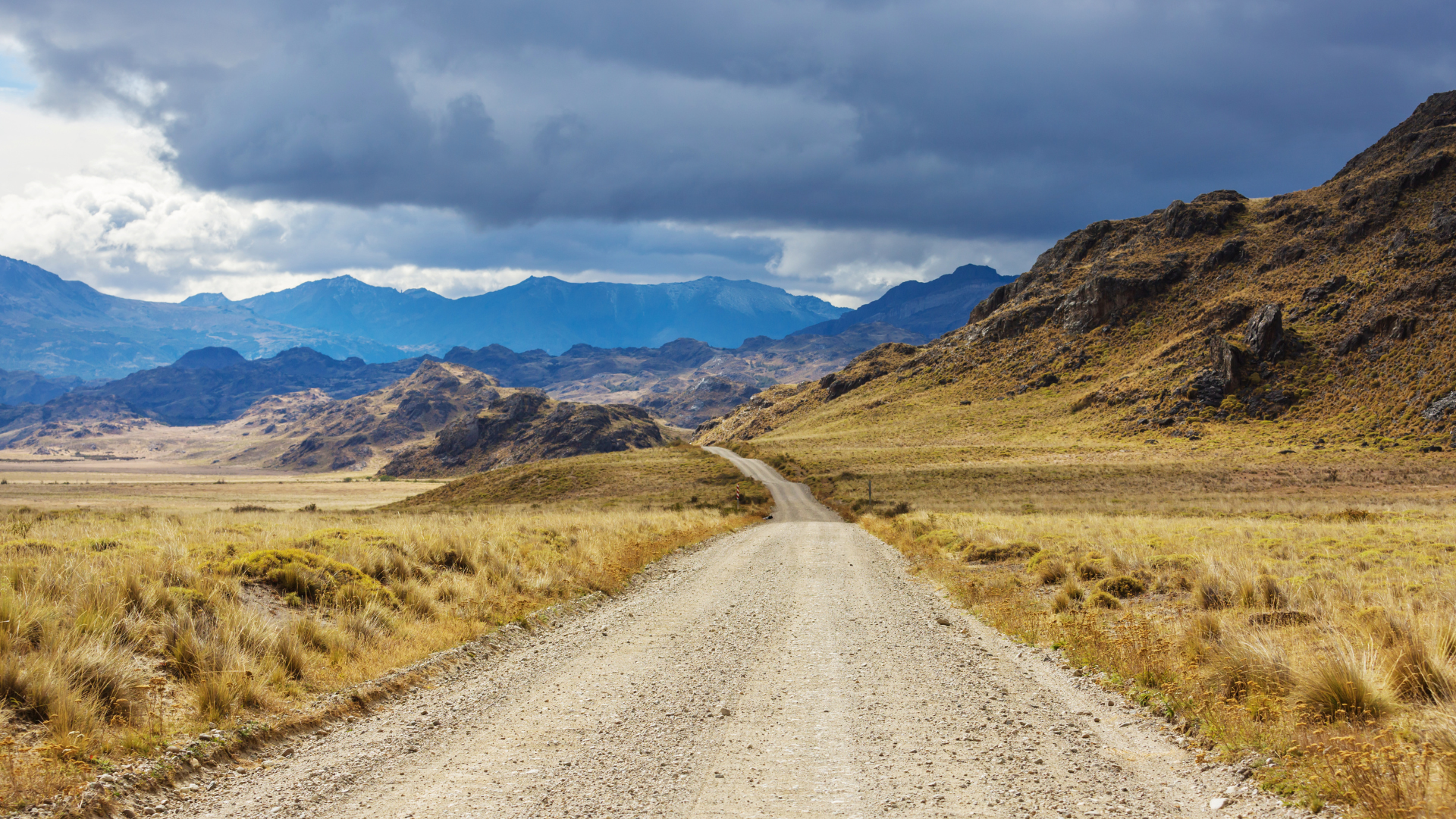
The Carretera Austral is a gravel and dirt road for most of its length. A high-clearance vehicle is essential. Several sections require ferry crossings and schedules must be checked and booked before departure. The full route takes a minimum of ten days driven at any productive speed. A dedicated birding trip of two to three weeks allows you to slow down at productive sections and repeat visits to the most rewarding forest trails.
As we explain in our Best Time to Go Birding in Patagonia guide, October through March is the primary window. Download Merlin offline with the South America bird pack before leaving Puerto Montt. Mobile data coverage is extremely limited and largely absent south of Coyhaique. As we cover in our Best Field Guides and Digital Tools guide, Merlin transforms the experience of birding dense forest by identifying every call in real time.
Section 1: Puerto Montt to Chaiten, Valdivian Rainforest and the Tapaculos
The northern section is the most botanically and ornithologically distinct section of the entire road. This is temperate Valdivian rainforest, a globally rare ecosystem found only in this narrow band of coastal Chile, and its bird community is unlike anything else in Patagonia.
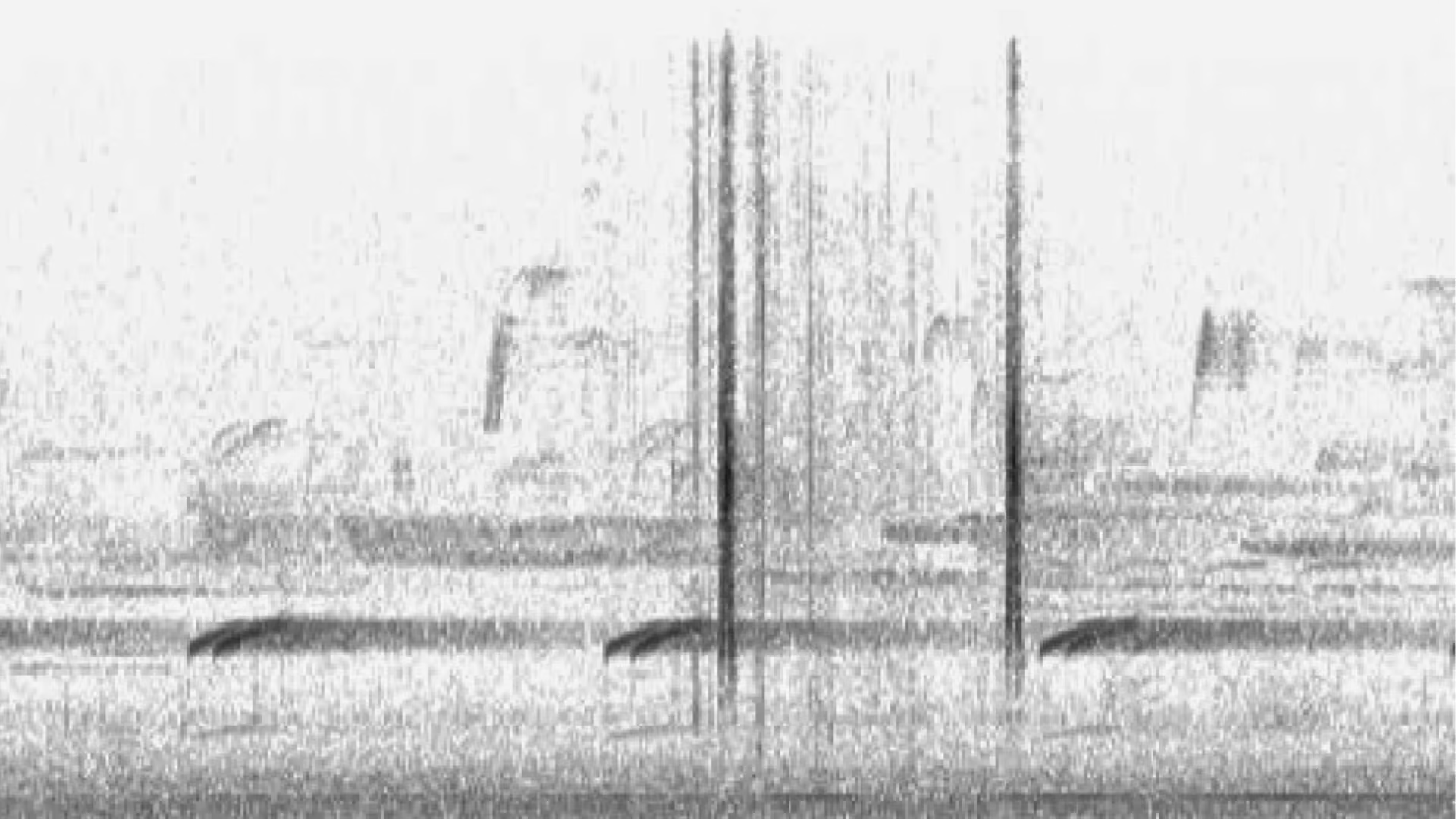
The tapaculos define this section. Three species are present and all three are habitually invisible. The Chucao Tapaculo is the most vocal, its loud territorial calls carrying through the forest continuously from dawn to dusk. The Huet-huet produces a more flute-like series of notes. The Magellanic Tapaculo adds a third voice to the forest soundtrack. All three skulk in dense undergrowth, moving through the leaf litter with the speed and evasiveness of small mammals. The strategy for all three is identical: find a section of dense undisturbed forest edge, stand completely still, and wait. Most of the time you will hear them for three days and see nothing. That is correct. That is what tapaculos do.
The Chucao Tapaculo is the most likely to show briefly, particularly at dawn when birds move to the road edge before retreating into the forest interior. Knowing the call allows you to position yourself ahead of a moving bird and wait rather than follow.
Beyond the tapaculos, the Valdivian forest holds Magellanic Woodpecker in its most dramatic habitat, the giant alerce trees and coigue forest. Chilean Pigeon moves through the canopy silently. Green-backed Firecrown, the southern hummingbird, visits flowering plants at forest edges. The trails through Parque Pumalin provide the best access to the tapaculo zone. Allow minimum two full days in the Parque Pumalin section.
Key species: Chucao Tapaculo, Huet-huet, Magellanic Tapaculo, Magellanic Woodpecker, Chilean Pigeon, Thorn-tailed Rayadito, Green-backed Firecrown.
Driving logistics: Puerto Montt to Chaiten involves a ferry crossing. Allow two to three days for this section with time at Parque Pumalin.
Section 2: Chaiten to Coyhaique, Nothofagus Transition and Forest Specialists
South of Chaiten, the vegetation transitions from Valdivian rainforest into mixed Nothofagus forest. This transition zone is ornithologically rich because it holds species from both forest types simultaneously.
Magellanic Woodpecker is present throughout and significantly easier to observe in the more open lenga and coigue forest than in the dense Valdivian section north. The section between Villa Santa Lucia and La Junta is particularly productive, with mature forest on both sides of the road and the Rio Palena providing wetland and riparian habitat.
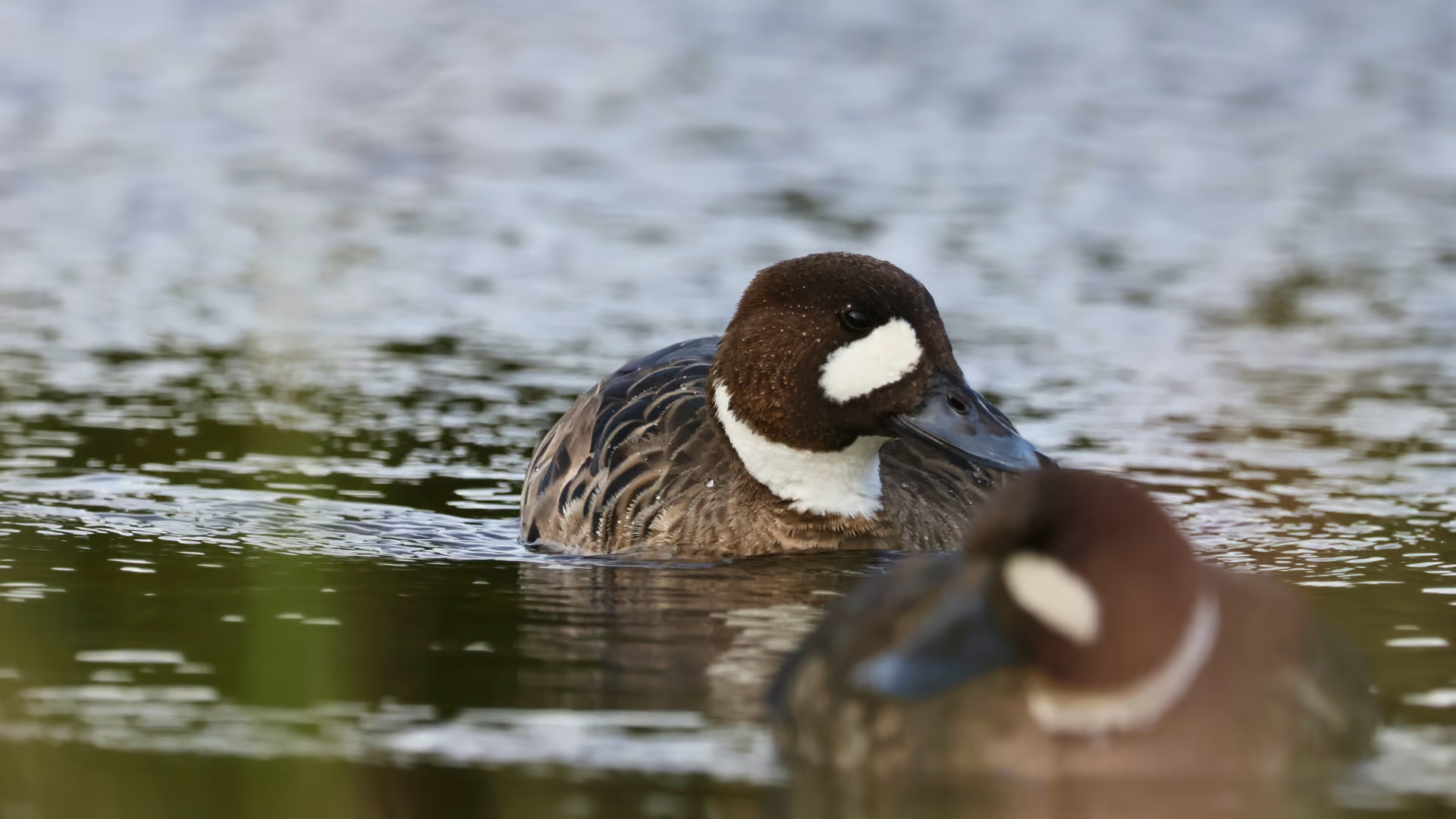
Austral Parakeet flocks are abundant throughout. Fire-eyed Diucon occupies forest edges. White-throated Treerunner spirals up trunks in mature forest. Chilean Flicker forages terrestrially at forest clearings and road edges. The Lago General Carrera section east of Coyhaique holds Spectacled Duck, Flying Steamer-Duck, and Black-necked Swan.
Key species: Magellanic Woodpecker, Austral Parakeet, Fire-eyed Diucon, White-throated Treerunner, Chilean Flicker, Spectacled Duck, Black-necked Swan.
Driving logistics: Chaiten to Coyhaique is approximately 420 kilometres. Allow three to four days with forest stops.
Section 3: Coyhaique to Cochrane, Steppe Opens, Raptors and Flamingos
South of Coyhaique the landscape changes dramatically. Steppe and semi-arid grassland begins to appear, creating a completely different set of species from the forest-dominated north. This section combines the tail end of the Nothofagus zone with the opening steppe and the wetland systems of the Cochrane plateau.
The raptor diversity on this section is the finest of any stretch of the Carretera Austral. Andean Condor is present throughout and the open valley terrain means condors are often visible from the road at low altitude. As we cover in our Andean Condor guide, late afternoon thermal activity in this open terrain produces the most consistent low-altitude soaring views. Black-chested Buzzard-Eagle is abundant. White-throated Caracara increases in frequency south of Cochrane.
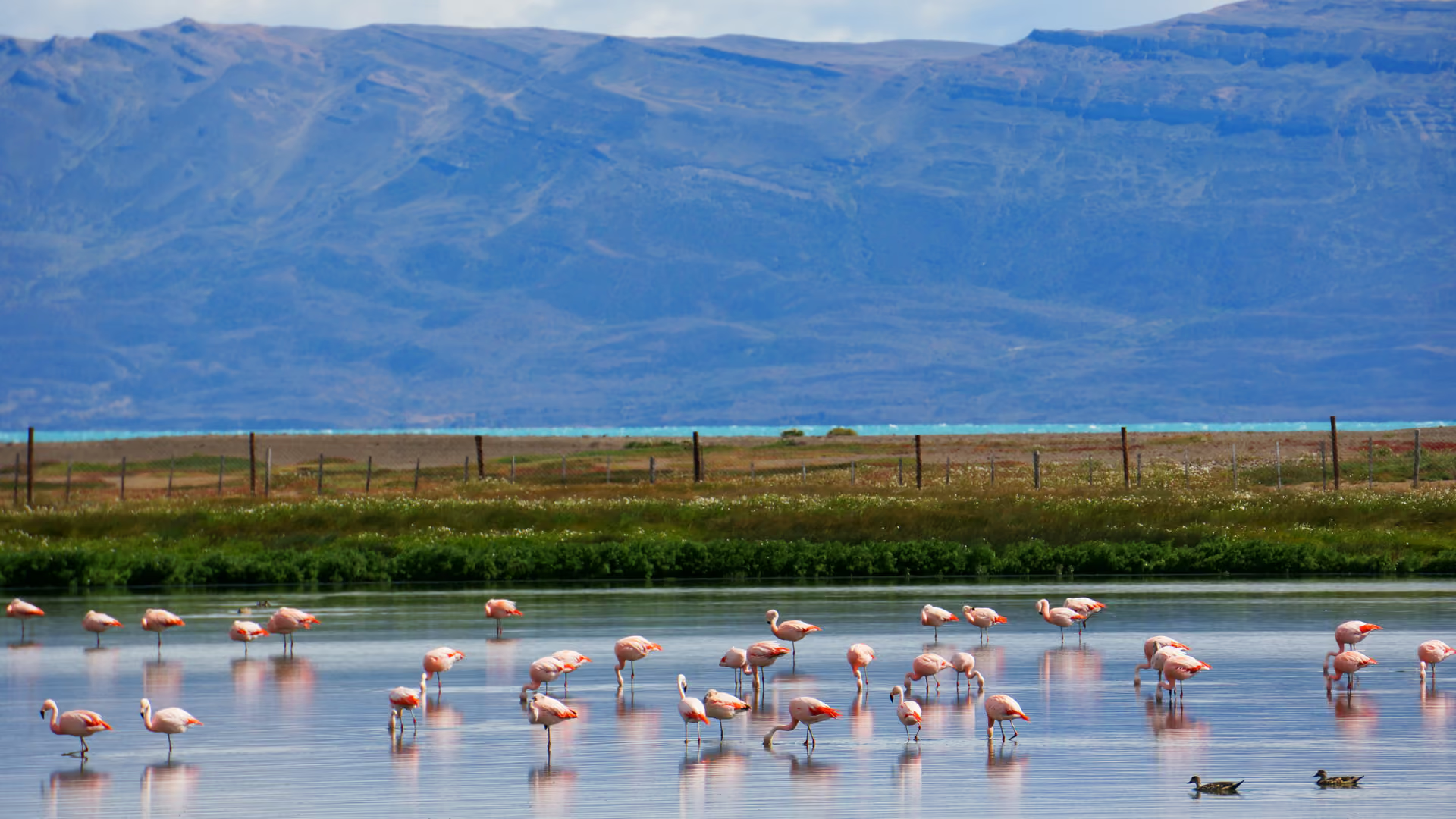
The Lago Cochrane wetlands hold Chilean Flamingo, Black-necked Swan, and good numbers of dabbling ducks. Lesser Rhea is increasingly common on the steppe south of Coyhaique and in December family groups with chicks are regular at roadside. Torrent Duck is present on every fast-flowing river section. The technique of checking every bridge over fast water that we recommend in our Torres del Paine Birding Guide applies even more powerfully here where the rivers are faster and less visited.
Key species: Andean Condor, Black-chested Buzzard-Eagle, White-throated Caracara, Cinereous Harrier, Chilean Flamingo, Lesser Rhea, Torrent Duck, Chiloe Wigeon.
Driving logistics: Coyhaique to Cochrane is approximately 340 kilometres. Allow two days with wetland and river stops.
Section 4: Cochrane to Villa O'Higgins, Remote South, Condors and Rivers
The final section is the most remote stretch of road in Chile and one of the finest birding corridors in all of South America for sheer wilderness quality. The road thins, the traffic disappears, the condors multiply, and the landscape becomes something that no photograph or description fully prepares you for.
Andean Condor is at its most conspicuous in this section. The Rio Baker valley, which the road follows for much of this stretch, creates the perfect thermal architecture for condors, with steep valley walls, strong updrafts, and abundant carrion providing year-round food. On a good morning in this valley, condors can be watched at close range soaring the cliff faces from road level.
The Rio Baker itself is one of the most extraordinary rivers in South America, turquoise blue from glacial melt and fast enough in sections to hold Torrent Duck throughout its length. Every pull-off along the river is a potential Torrent Duck site.
Parque Patagonia protects a large section of the upper Baker basin. Lesser Rhea, Upland Goose, and steppe raptors are all present in the park's open sections. The Lago Cochrane shoreline within the park holds Magellanic Plover on the gravelly margins in summer. Villa O'Higgins at the road's end is surrounded by condor territory and the final approach road along Lago O'Higgins produces waterbirds on the lake and forest species on the slopes above.
Key species: Andean Condor, Torrent Duck, Lesser Rhea, Upland Goose, Magellanic Plover, Black-chested Buzzard-Eagle, White-throated Caracara.
Driving logistics: Cochrane to Villa O'Higgins is approximately 230 kilometres and requires the ferry crossing at Caleta Yungay. Allow two full days minimum.
The Species List You Will Build
A dedicated birding drive of the full Carretera Austral in December, moving at a birder's pace with regular stops and two to three weeks on the road, can produce 180 to 220 species across all habitat types. The northern Valdivian section contributes the unique endemic forest species. The central Nothofagus section adds the widespread forest generalists. The southern steppe and river sections add the open-country specialists and the extraordinary raptor suite. And running through all four sections, from north to south, the tapaculos call from the forest, heard but never quite seen, present but always hidden, the defining soundtrack of one of the finest birding roads in the world.
For the complete list of Patagonian species you might encounter across this route, see our 20 Best Birds to See in Patagonia guide.