
Birding El Calafate: Why Laguna Nimez Is the True Hidden Gem of Patagonia
The complete birding guide to El Calafate. Laguna Nimez, Lago Argentino shoreline, the glacier road, and the urban birds most visitors walk straight past.
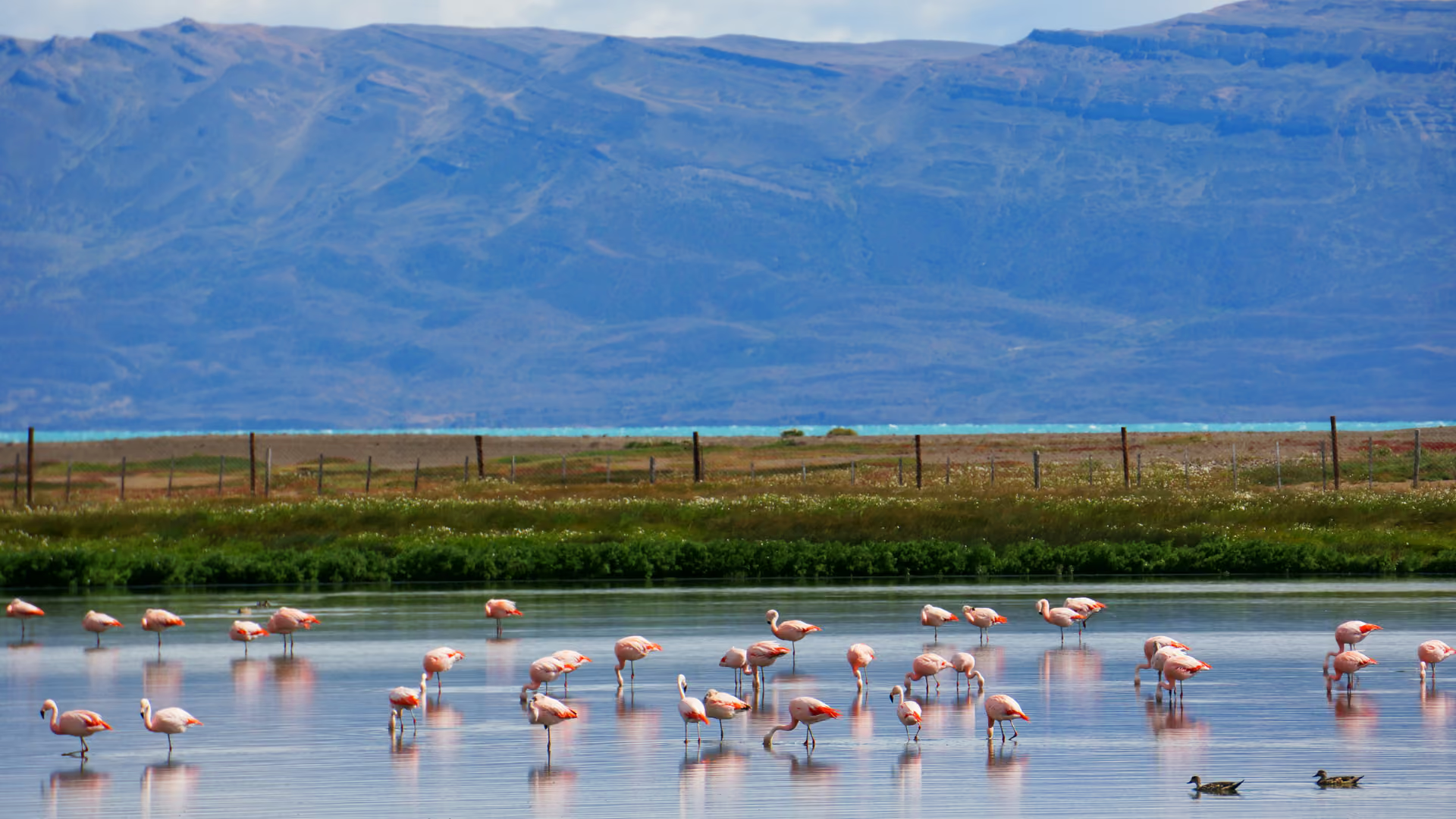
At sunrise, the flamingos turn pink against the gold. By the time most El Calafate visitors are eating breakfast and discussing which glacier tour to book, we are already on our second hour at Laguna Nimez. Rails are calling from the reeds. Andean ducks are moving across the still water. A Yellow-winged Blackbird lands three meters away and does not care. We went back every single day for a week. Every day there was something we had not seen the day before.
Laguna Nimez is not a side trip from El Calafate. It is the reason to stay longer.
El Calafate is famous for one thing: the Perito Moreno Glacier. And the glacier deserves its reputation. But for birders, El Calafate offers something equally extraordinary and almost entirely overlooked: a dense, varied, and endlessly rewarding birding destination spread across four distinct zones, all within easy reach of town.
Zone 1: Laguna Nimez Nature Reserve
Laguna Nimez sits on the southern shore of Lago Argentino, a ten-minute walk from El Calafate's main street. It is a small freshwater lagoon with reed beds, open water, and a network of well-maintained trails that loop around the reserve perimeter. Entry is paid, the infrastructure is good, and the birding is spectacular at virtually any time of year.
The reserve holds Chilean Flamingo year-round and the numbers peak in December and January when birds congregate in the shallower sections in groups of up to a hundred individuals. At close range against the backdrop of the Andes and the blue surface of Lago Argentino, this is one of the finest flamingo views available anywhere in Patagonia.
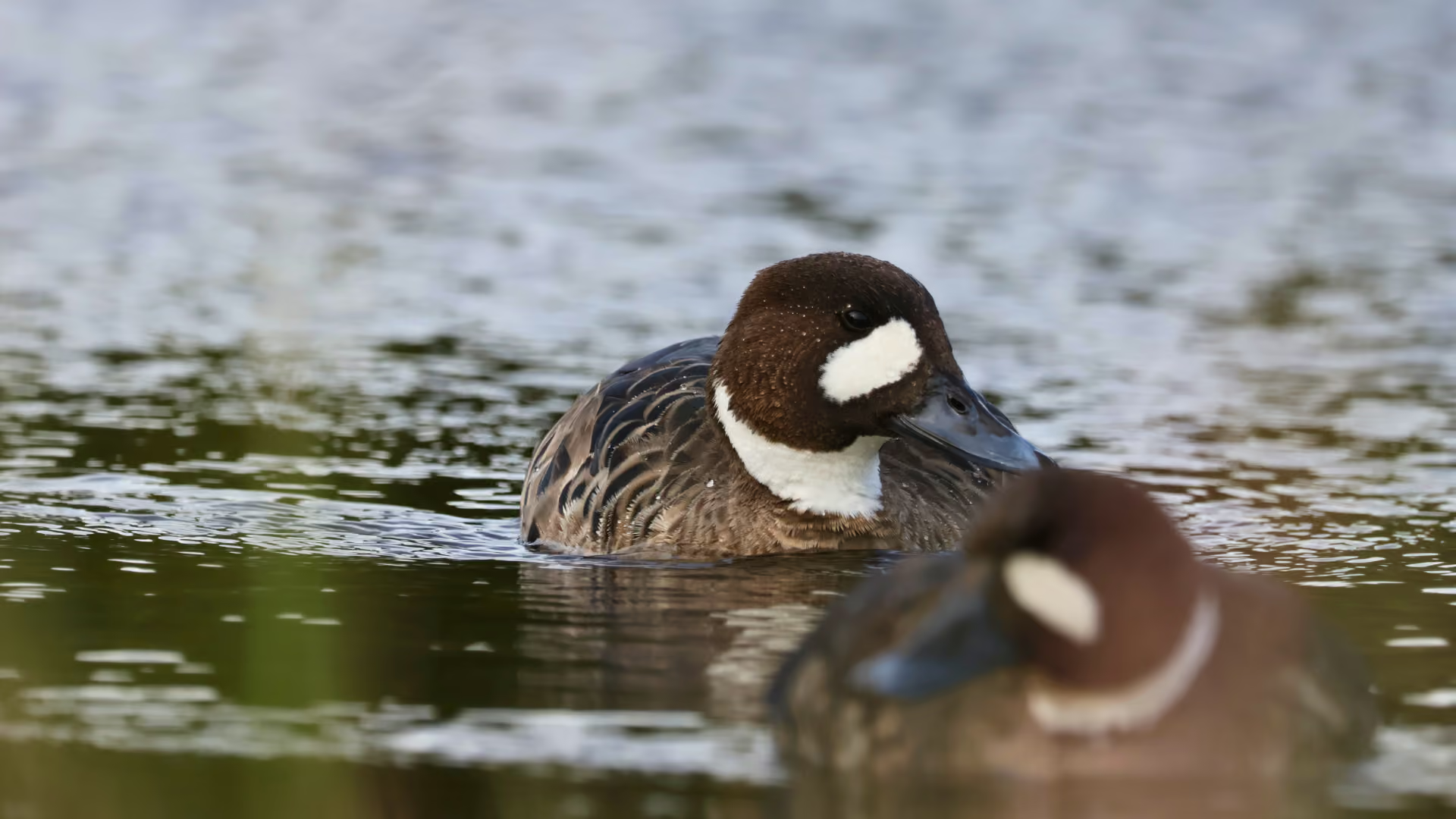
Black-necked Swan breeds in the reserve and in December cygnets are visible on the water, riding on the adults' backs. Coscoroba Swan is also present year-round. Chilean Wigeon, Yellow-billed Teal, Yellow-billed Pintail, Red Shoveler, and Silver Teal all use the open water sections, making Laguna Nimez one of the best single-site duck watching locations in the region.
The reed beds are where Laguna Nimez truly differentiates itself. Austral Rail calls constantly from the dense Phragmites reed margins, and while seeing one requires patience and absolute quiet at the reed edge in the early morning, the calls are unmistakable once learned. This is one of the most accessible sites in Patagonia for this secretive species. White-tufted Grebe and Silvery Grebe breed in the reed margins. Wren-like Rushbird creeps through the reed bases. Many-coloured Rush Tyrant, one of the most spectacularly plumaged small birds in Patagonia, works the reed edges in the breeding season.
Patagonian Mockingbird nests in the reserve's scrubby margins and is visible throughout the day. Yellow-winged Blackbird, its bright yellow shoulders contrasting with glossy black body, is abundant in the wet grassland and approaches very closely. Austral Grass-Wren inhabits the drier scrubby sections and is reliably present throughout the reserve. Long-tailed Meadowlark males sing from fence posts at the reserve boundary throughout the breeding season.
The eBird hotspot for Laguna Nimez is one of the most actively maintained in all of Argentine Patagonia. Check recent checklists at eBird before each visit and you will know exactly which species have been active in the past week.
Key species: Chilean Flamingo, Black-necked Swan, Coscoroba Swan, Austral Rail, Many-coloured Rush Tyrant, Yellow-winged Blackbird, Austral Grass-Wren, Wren-like Rushbird, Patagonian Mockingbird, Long-tailed Meadowlark.
Practical notes: Open daily. Go at dawn and at sunset for the best light and maximum bird activity. Return visits on consecutive days will produce different species each time.
Zone 2: Lago Argentino Shoreline and Shorebirds
The shoreline of Lago Argentino around El Calafate is significantly underbirded and holds some of the most sought-after species in the entire area. The gravelly shores and shallow bays east and west of town provide shorebird habitat that can be exceptional during the November to February window.
Magellanic Plover is the headline species and one of the most sought birds in all of Patagonia. This extraordinary bird, placed in its own family, uses gravelly lake shores as its primary habitat. Its entirely grey and white plumage, pink bill, and habit of turning over stones make it unmistakable when found. The shores of Lago Argentino within a few kilometres of El Calafate are one of the most accessible sites for this species in Argentina. It requires patient scanning of the gravelly shore sections at low water, particularly the exposed points east of town.
Two-banded Plover and Rufous-chested Dotterel both use the lakeshore and surrounding grassland. Baird's Sandpiper and White-rumped Sandpiper are present during the December to February window as part of the southward migration from North American breeding grounds.
Key species: Magellanic Plover, Two-banded Plover, Rufous-chested Dotterel, Baird's Sandpiper, White-rumped Sandpiper, Southern Lapwing.
Practical notes: The gravelly shore sections east of El Calafate between the airport and town are the most productive for Magellanic Plover. Go at low water after calm weather when maximum shoreline is exposed.
Zone 3: The Road to Perito Moreno Glacier
The 80-kilometre road from El Calafate to Perito Moreno Glacier passes through some of the finest open steppe birding in Argentine Patagonia. Most visitors experience this road at speed from a tour bus. Birders with a rental car experience something entirely different.
Lesser Rhea is present throughout and in December the males are leading chick groups across the road. Upland Goose pairs graze the grassland at regular intervals. Black-chested Buzzard-Eagle soars on every thermal. White-throated Caracara is more likely on this road than almost anywhere else accessible from El Calafate. The scrubby sections hold Patagonian Canastero, Dark-bellied Cinclodes, and Band-tailed Earthcreeper. Black-faced Ibis and Buff-necked Ibis are reliably present in the grassland sections and seasonal wet areas.
As the road enters Los Glaciares National Park, the vegetation shifts to Nothofagus forest and open glacier-carved valleys. The forest sections near the glacier car park hold Magellanic Woodpecker, Thorn-tailed Rayadito, and Austral Parakeet. Stop at every small bridge over a fast-moving stream on the final approach. Torrent Duck is present on several of these watercourses and is far less expected here than at Torres del Paine, making a finding on the glacier road feel genuinely earned.
Key species: Lesser Rhea, White-throated Caracara, Black-chested Buzzard-Eagle, Black-faced Ibis, Buff-necked Ibis, Patagonian Canastero, Magellanic Woodpecker, Torrent Duck, Spectacled Duck.
Practical notes: Leave El Calafate by 7am to have the road to yourself before the glacier tour buses depart. The return journey in the afternoon, when you know where to stop, is often as productive as the outward drive.
Zone 4: El Calafate Town
El Calafate's town itself rewards a brief morning walk before the reserve opens. Black-faced Ibis feeds in the irrigated grassland strips along the main avenue and in the town's parks with complete lack of concern for human presence. The scrubby hillside above the town's eastern edge holds Patagonian Mockingbird and Common Miner, the latter excavating burrows in the dry clay banks. Chilean Swallow breeds under the eaves of buildings throughout town.
Key species: Black-faced Ibis, Rufous-collared Sparrow, Chilean Swallow, Barn Swallow, Common Miner, Patagonian Mockingbird.
How to Structure Your Time in El Calafate
One day: Laguna Nimez at dawn for two hours. Lago Argentino shoreline east of town for Magellanic Plover midmorning. Return to Laguna Nimez at sunset.
Two days: Day one as above. Day two: glacier road with early start, stopping throughout for steppe and forest species, returning in the afternoon.
A full week: What we did. Laguna Nimez every morning at dawn and every evening at sunset. Glacier road one full day. Lago Argentino shoreline every low-tide morning. The reserve genuinely rewarded every single return visit with something new.
As we explain in our Best Time to Go Birding in Patagonia guide, December is the optimal month for El Calafate. The breeding activity at Laguna Nimez in December, with cygnets on the water, rails calling from full reed beds, and Yellow-winged Blackbirds in full breeding plumage, is the richest version of the reserve you will experience. For the complete list of species you might encounter across all four zones, see our 20 Best Birds to See in Patagonia guide.
What to Bring
Laguna Nimez is a compact reserve where birds approach closely, making it the one El Calafate site where binoculars alone are genuinely sufficient for most observations. The glacier road steppe sessions benefit from a scope for distant raptor identification. As covered in our Essential Gear for Birding in Patagonia guide, the chest harness and lens pen are particularly useful at Laguna Nimez where you are constantly moving between habitats and picking up dust from the reserve trail.
The Honest Case for Staying Longer
Most El Calafate visitors spend two nights: arrive, do the glacier, depart. The glacier is extraordinary. Do not skip it. But every extra day you give El Calafate beyond the glacier is a day at Laguna Nimez at dawn with no crowds, no buses, and birds that have been waiting all morning for someone who actually knows what they are looking at to arrive.
We went back every day for a week. We are still thinking about the Yellow-winged Blackbird that landed three meters away on day three, or the Austral Rail that walked into full view at the reed edge on day five. Laguna Nimez is the true birding gem of Patagonia. Not because it has the rarest birds or the most dramatic setting. Because it gives something new every single time.