Birds That Hit Windows Most Often in North America
Some birds turn up at the glass far more than others. We name the species most often found after window strikes across North America, and how to recognize them.
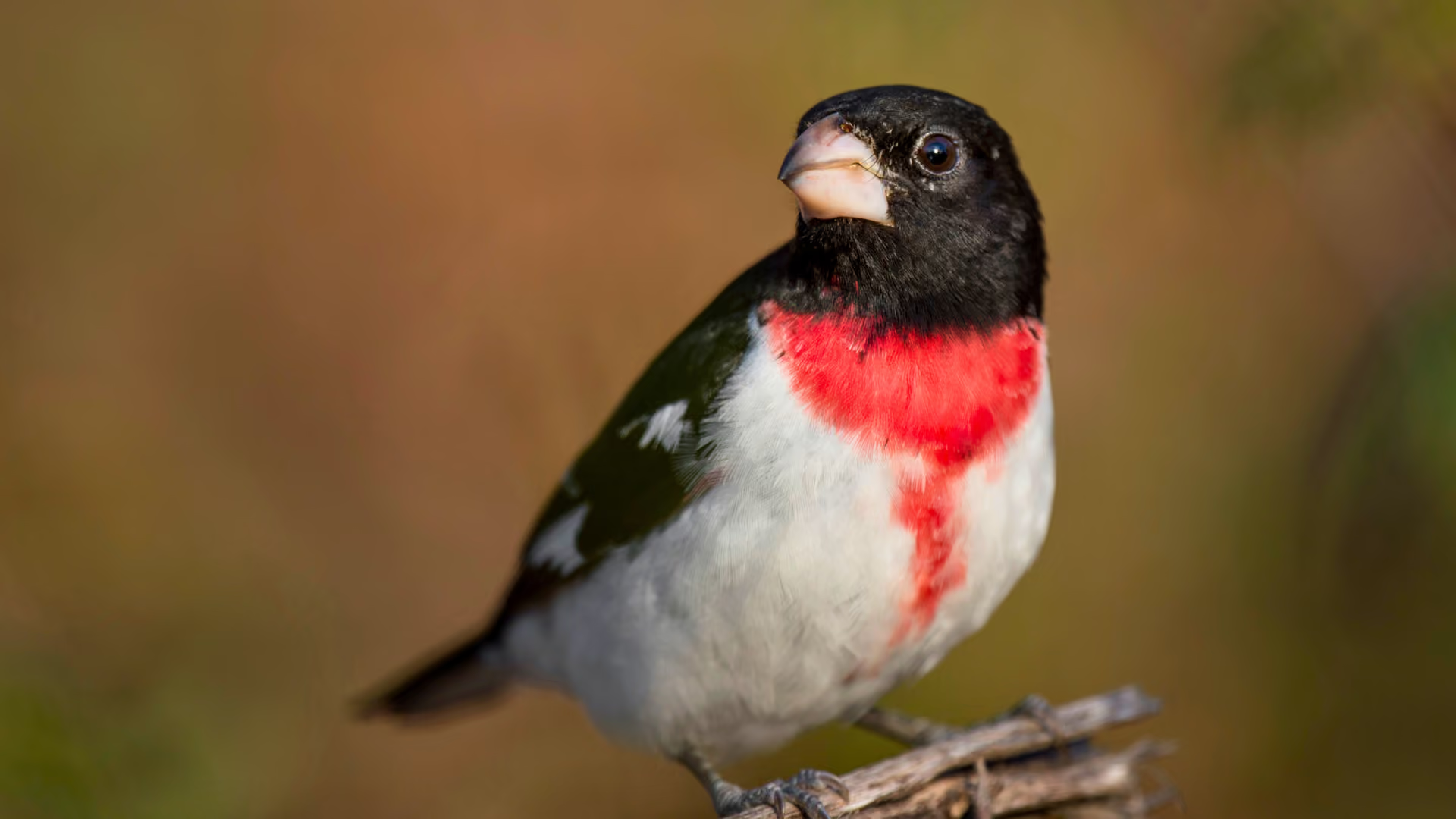
One cold February morning we found a Pine Grosbeak sitting dazed in the snow beneath a picture window, its rosy plumage bright against the white. It had hit the glass while moving between a fruiting tree and a feeder, and for a few long minutes we were sure we had lost it. We kept our distance, gave it room and quiet, and watched. After a while it shook itself, gathered its feet, and lifted off into the spruce as if nothing had happened. Not every bird is that lucky.
Window collisions kill a staggering number of birds across North America, with credible estimates running to roughly a billion a year in the United States alone. Yet the toll is not spread evenly across species. A handful of birds turn up at the glass far more often than the rest, and once you know who they are, you start to recognize them on the patio, under the deck, or at the base of the brightest, cleanest window in the house. This is our field list of the birds that hit windows most often, written for the person who just found one and wants to know what they are looking at.
Why some birds collide far more than others
Three things put a bird near the top of these lists. The first is sheer numbers. The most abundant species in a region show up most in the tallies simply because there are more of them in the air. The second is behavior. Nocturnal migrants that travel in loose flocks and call to each other on the wing pour through our neighborhoods in spring and fall, often unfamiliar with the local layout of glass. Ground foragers and feeder birds spend their time low and close to houses, exactly where reflective windows sit. The third is the glass itself. Large, clean, unobstructed panes are the worst offenders because they mirror the sky and the garden so perfectly, and balcony railings and glass corners create the open flight paths a bird will try to thread.
Migration is the peak. Collisions can happen in any season, but spring and fall move the most birds through unfamiliar ground, and autumn tends to be worse because it carries a wave of young birds making the trip for the first time. We explain the full mechanism behind all of this in why birds hit windows. Here we stay with the who.
White-throated Sparrow
If a single bird wears the unwanted crown, it is the White-throated Sparrow (Zonotrichia albicollis), the species most often recorded at monitored buildings in cities like Toronto, Chicago, and New York. Two things drive that. It is enormously abundant, with a continental population in the order of 140 million, and it is a gregarious ground forager that moves in loose groups through exactly the shrubby, leafy edges where homes meet gardens. Look for the bold black and white head stripes, the clean white throat patch, and a yellow spot before the eye. Some birds show tan stripes rather than white, a natural color difference within the species. You will see them most at feeders and brush piles through winter and on migration, when their numbers near the glass climb sharply.
Dark-eyed Junco
The Dark-eyed Junco (Junco hyemalis), the tidy gray and white sparrow many people call the snowbird, is one of the most numerous birds on the continent and a fixture under winter feeders. That combination of huge numbers and feeder habits puts it high on every collision list. Juncos feed on the ground in small flocks, flushing up suddenly when startled, and a startled flush toward a reflecting window is a classic way to strike. Watch for the crisp slate hood and back, the pale belly, and the white outer tail feathers that flash as the bird flies. Their risk peaks in the colder months when feeders draw them close to the house.
Ruby-throated Hummingbird
It surprises people that a bird this small and agile collides so readily, but the Ruby-throated Hummingbird (Archilochus colubris) is a frequent victim, and at one closely monitored site in Virginia it was the single most common collision species. The reason is the same draw that brings us joy. Hummingbirds zip between nectar feeders and flowering borders set right against the house, and a window reflecting those same flowers reads as a clear route to the next bloom. Look for the iridescent green back, the needle bill, and in adult males the brilliant red throat that flares in the light. These strikes cluster through the warm months, from the spring arrival into late summer when young birds are on the move.
American Robin
The American Robin (Turdus migratorius) reaches these lists by two different routes. Like other common birds it strikes windows by accident, but robins are also the bird most people mean when they describe one that attacks the glass again and again each spring. That is reflection aggression. A territorial robin sees its own image as a rival and lunges at it, sometimes for days. The behavior looks alarming but it is seldom fatal, and it fades as the breeding season settles. The robin needs no introduction with its gray back, brick orange breast, and upright stance on the lawn. If a robin is battling your window through spring, you are watching territory, not a true collision, and we cover the difference in why birds hit windows.
Cedar Waxwing
The Cedar Waxwing (Bombycilla cedrorum) is a flocking fruit eater, and that habit drives its window strikes. Waxwings descend on a berry tree in tight, restless groups, and when that tree stands near glass the whole flock can move at once toward a reflection. They collide in disproportionate numbers in fall and winter, the seasons when they roam widely after fruit. Few birds are more elegant up close, with the smooth fawn body, the black mask, the soft crest, and the waxy red droplets on the wing that give the family its name, finished by a yellow band at the tail tip. Where you have fruiting ornamentals near a window, you have waxwing risk.
Ovenbird
The Ovenbird (Seiurus aurocapilla) is a warbler that walks the forest floor rather than flitting in the canopy, and it ranks among the very top collision species in city monitoring. As a nocturnal migrant it passes through developed areas in large numbers in spring and fall, and as a ground dweller it spends its time at exactly the height where reflective windows wait. It is more often heard than seen on territory, with a ringing song, but in the hand or on the pavement you can know it by the olive back, the heavily streaked white breast, and the orange crown stripe bordered in black. Almost all of its collisions fall in the two migration windows.
Common Yellowthroat
The Common Yellowthroat (Geothlypis trichas) is one of the first window casualties found each spring, often turning up as migration gets going in April. It is a small warbler of marsh edges, weedy fields, and damp thickets, a skulker that works low in the vegetation where glass at ground level catches it. The male is unmistakable with his black bandit mask and glowing yellow throat. The female is plainer, brown above with a yellow throat and undertail and no mask. Its collisions track migration closely, heaviest as birds arrive in spring and again as they leave in fall.
Song Sparrow
The Song Sparrow (Melospiza melodia) rounds out the list as one of the most widespread and familiar sparrows on the continent, common in gardens, hedgerows, and brushy edges right around our homes. It is partly resident and partly migratory depending on the region, so it can turn up at windows across much of the year, with the usual rise during migration. Look for the heavily streaked brown breast that gathers into a dark central spot, a long rounded tail, and a habit of pumping that tail in flight. Its everyday closeness to houses is exactly what keeps it on these lists.
What to do if you find one
If you find a bird stunned beneath a window, give it the same quiet chance our Pine Grosbeak got. Keep pets and people away, and if you must move it, ease it into a ventilated box in a dark, quiet place and resist the urge to handle or feed it. Many birds that seem merely dazed are carrying internal injuries, so a bird that flies off is not guaranteed to survive, and one that does not recover within an hour or two needs a licensed wildlife rehabilitator rather than home care. Never attempt to nurse a wild bird yourself.
Recognizing the species at risk is the first step. The next is making sure it does not happen again. Learn the mechanism in why birds hit windows, see the fixes that actually work in how to stop birds from hitting windows, and place all of this in the bigger picture of the causes of bird deaths in North America. Small changes at one window, multiplied across a neighborhood, add up to a great many birds that get to fly back into the spruce.
FAQ
The White-throated Sparrow is the species recorded most often at monitored buildings in several North American cities, including Toronto, Chicago, and New York. Its very large population and its habit of foraging in loose flocks at the shrubby edges where homes meet gardens put it at the top of the tallies. Local lists vary by region and season, so the exact order shifts from place to place.
Yes. The Ruby-throated Hummingbird is a frequent collision victim, and at one closely monitored site it was the most common species found. Hummingbirds move quickly between flowers and nectar feeders placed near the house, and a window reflecting those same blooms reads to them as an open path. Placing feeders either very close to the glass or well away from it both help reduce the risk.
Collisions happen all year, but they peak during spring and fall migration, when the greatest number of birds are moving through unfamiliar areas. Autumn is often the worst stretch because it includes many young birds making their first journey. In winter, seed eating feeder birds make up a larger share of strikes, since that is when most people are feeding and drawing birds close to windows.
Some do, but many that fly off still die later. A bird can look merely stunned while carrying internal bleeding or a brain injury, so flying away is not proof of recovery. Give any stunned bird quiet and shelter, keep pets away, and contact a licensed wildlife rehabilitator if it does not recover within an hour or two.
A bird that returns to the same window day after day, often a robin or a cardinal in spring, is usually not colliding by accident. It is attacking its own reflection, mistaking the image for a rival on its territory. This reflection aggression looks dramatic but rarely harms the bird, and it eases as the breeding season passes. Breaking up the reflection on the outside of the glass is the quickest way to stop it.