
The Causes of Bird Deaths in North America
What actually kills the most birds, from outdoor cats to glass and traffic, and the small changes at home that add up across a continent.
We once kept a feeder at the edge of a city yard, the kind of small kindness that fills a winter morning with chickadees and juncos. Within a few weeks it had become something else entirely, the most reliable food market for every cat in the neighborhood. They learned the schedule before we did, waiting in the cover of a hedge for the moment a bird dropped to the ground. What we had meant as a gift had quietly turned into a hunting blind. That is the uncomfortable shape of bird mortality in North America. The harm is rarely dramatic, it is ordinary, close to home, and multiplied by millions of yards just like ours.
People often ask what actually kills the most birds, expecting a single villain. The honest answer comes in two parts, and we think it is worth getting right before we rank anything.
The honest big picture
The largest forces behind bird decline are not the ones a homeowner can see in the yard. Habitat loss and degradation sit at the top, as forests, grasslands, and wetlands are cleared, drained, and fragmented, and a warming climate shifts the timing and range of the food and seasons birds depend on. These are the slow, structural drivers, and they are why North America has lost billions of breeding birds across the last half century. We hold that context first because it would be dishonest to pin the whole problem on cats and glass.
What follows is the other part of the answer, the direct and countable causes that end individual lives in numbers we can estimate, and that ordinary people can actually do something about. Every figure here is a research estimate with a wide range, not a precise count, and we present them that way on purpose.
Outdoor cats, the largest direct cause
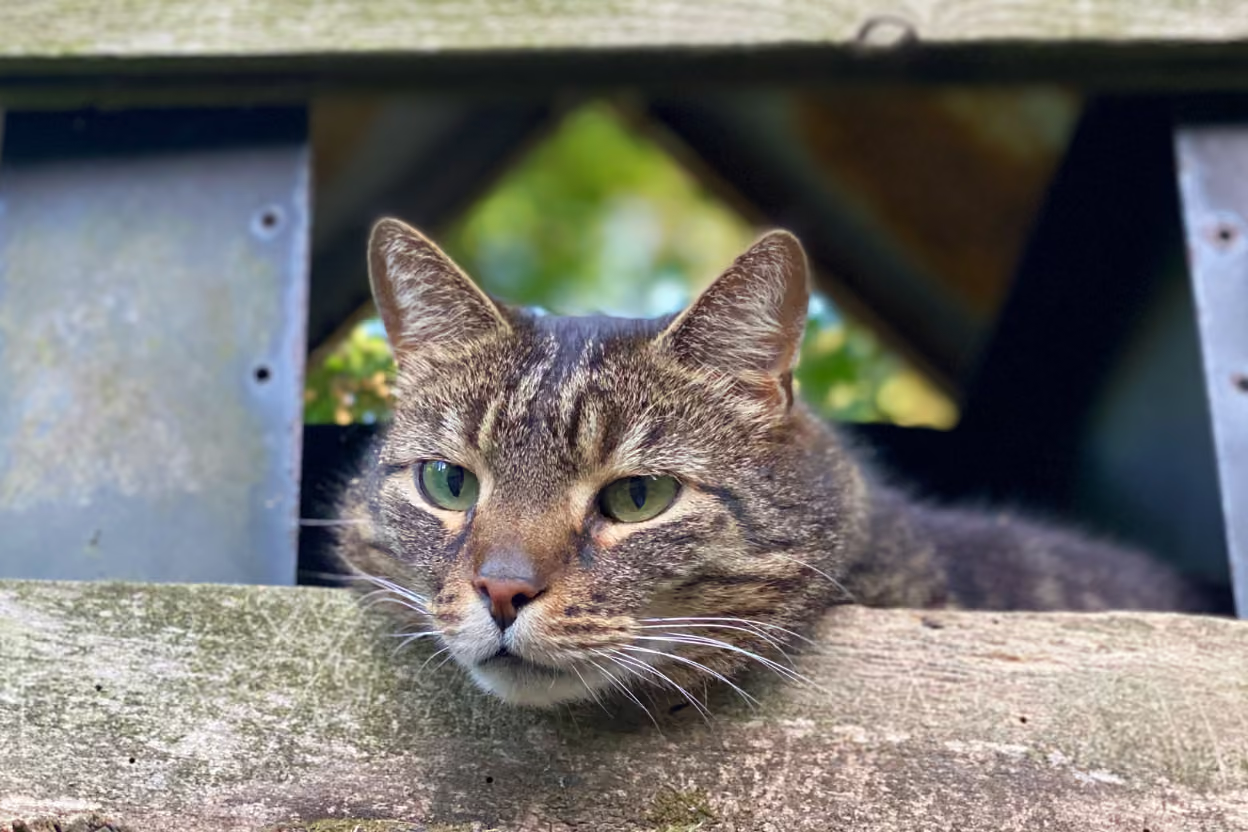
Of the deaths we can count, free roaming cats take the most by a wide margin. The most cited study, by Loss, Will and Marra in 2013, estimates that cats kill somewhere between 1.3 and 4 billion birds a year in the United States, with a median around 2.4 billion, and roughly two thirds of that toll comes from cats without owners rather than pets. It is a hard number to sit with, and it is also one of the most carefully studied of all these causes. The hunting is instinct, not hunger, so even a well fed pet kills. We explain the behavior in why cats kill wild birds, and the humane fixes in how to stop your cat from killing birds and, for the cats that are not yours, how to stop cats killing birds at your feeder.
Glass, by day and by night
Windows are the next great hazard. Estimates for the United States run from roughly 365 million to nearly a billion birds a year, and most of that happens not at famous skyscrapers but at homes and low buildings, simply because there are so many of them. By day, glass kills because it mirrors the sky and the garden or offers a clear view straight through, so a bird sees habitat or open air rather than a barrier. We cover that in why birds hit windows, and the species that turn up most often in the birds that hit windows most often. By night, artificial light disorients migrating birds and pulls them toward lit buildings, the mechanism we explain in why birds fly into lights at night. The good news is that windows are one of the most fixable threats on this list, and we walk through what actually works in how to stop birds from hitting windows.
Vehicles
Traffic accounts for an estimated 214 million bird deaths a year in the United States. Birds gather on and beside roads for grit, salt, spilled grain, warmth, insects, and roadside carrion, and then misjudge how fast a vehicle is closing, because nothing in their history prepared them for that speed. We unpack the roadside ecology in why birds are hit by cars, and the simple habits behind the wheel that help in how to prevent birds from being hit by cars.
The other human causes
Several more causes round out the picture, each smaller than the big three but real, and each a subject we will return to. Power lines and communication towers kill birds through collision and electrocution, wind turbines add a smaller but growing toll, and poisoning, including the rodenticides that move up the food chain into hawks and owls, takes many more. None of these is something a single household fixes overnight, but they belong in any honest accounting of why birds die.
What we can change
Set against billions, one yard can feel like nothing. It is not. Most of the direct causes on this list are the cumulative result of ordinary choices at ordinary homes, which means ordinary homes are also where the fixes live. Making your glass visible to birds, keeping a cat from hunting, and easing off the gas where birds work the roadside are all within reach. Start with the window fix in how to stop birds from hitting windows, the cat solutions in how to stop your cat from killing birds, and the driver guide in how to prevent birds from being hit by cars. Small changes add up, and across a continent of yards like yours and ours, together we make a difference.
FAQ
The biggest drivers of bird decline are habitat loss and a changing climate, which reshape the places and seasons birds depend on. Among the direct human causes we can count, outdoor cats kill the most, followed by collisions with glass and then vehicles. All of these are research estimates with wide ranges rather than precise counts.
Billions, though every figure is an estimate. Free roaming cats are thought to kill between 1.3 and 4 billion birds a year in the United States, glass collisions hundreds of millions up to nearly a billion, and vehicles around 214 million. Habitat loss and climate drive far larger declines that are harder to count bird by bird.
Cats are the largest direct, human-caused killer of birds that researchers can measure, with a median estimate around 2.4 billion birds a year in the United States and roughly two thirds of that from un-owned cats. Habitat loss is still the bigger overall driver of bird decline, so the honest answer is that cats lead among direct causes, not among all causes.
Yes. Collisions with glass kill far more birds than traffic does. Estimates put window strikes in the hundreds of millions, up toward a billion a year in the United States, while vehicle collisions are estimated near 214 million. Most window deaths happen at homes and low buildings rather than skyscrapers.
Yes. Most of the direct causes of bird deaths happen at ordinary homes, which means ordinary homes are also where the fixes live. Making glass visible to birds, keeping a cat from hunting, and easing off the gas where birds work the roadside all help, and multiplied across many yards those small changes add up.