
Why Cats Kill Wild Birds, Even Well Fed Ones
Cats hunt birds on instinct, not hunger, which is why even a well fed pet kills. We explain the drive behind it, the scale, and the birds most at risk.
The hardest thing we have watched in a backyard was not a hawk or a storm. It was the week the young robins left the nest. For a few days a fledgling is out in the world but not yet able to fly, hopping along the ground and through the low cover of a cedar hedge while its parents feed it and scold the sky. That is the window when a cat does the most damage. We watched it happen, a neighborhood cat slipping under the hedge, and there was nothing gentle about how quickly it was over.
If you share your home with a cat, that paragraph may have put you on the defensive, and we want to head that off right away. You are not a bad person, and your cat is not cruel. The reason cats kill birds has almost nothing to do with character and almost everything to do with instinct, and understanding that is the first step toward fixing it without guilt. This is the why. The humane fixes live in their own guides, which we link at the end.
Hunting is instinct, not hunger
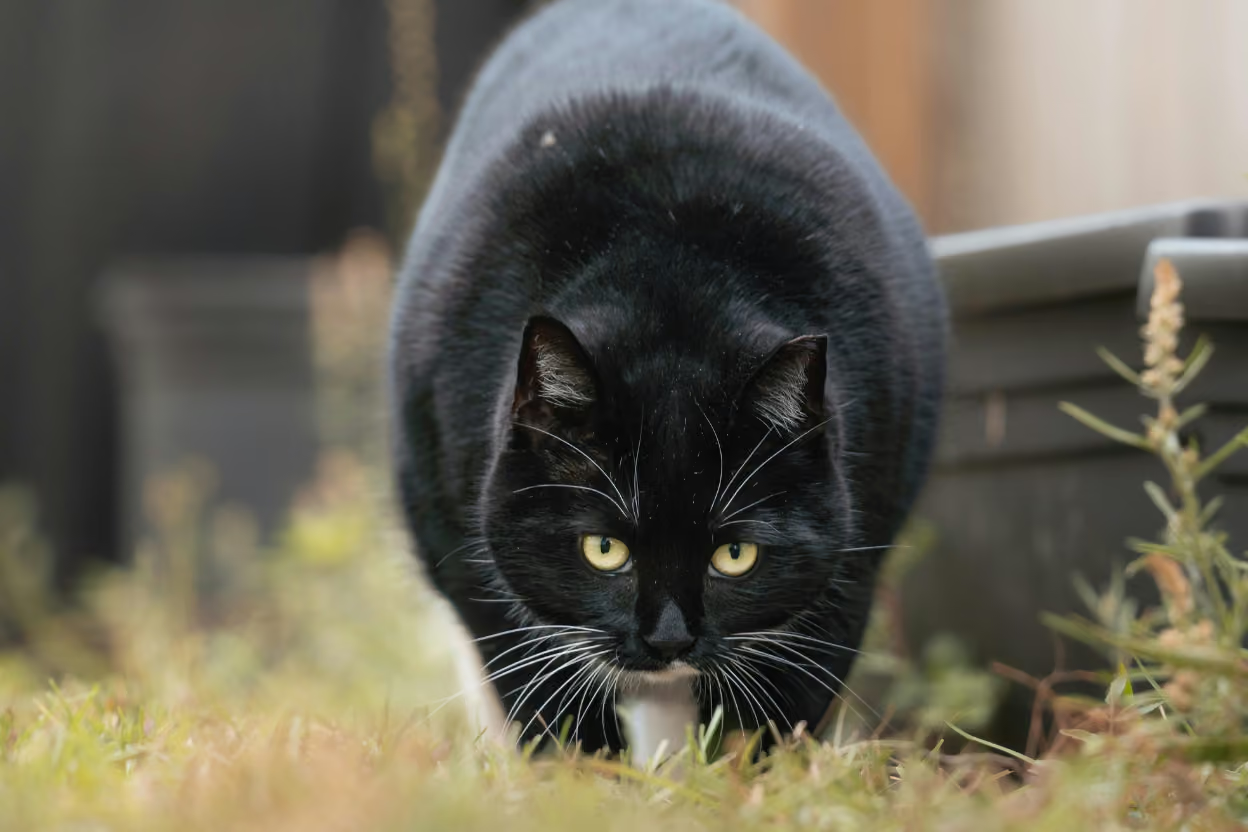
The single most important thing to understand is that a cat hunts because it is built to, not because it is hungry. The drive to stalk, chase, and pounce is hardwired and runs on its own track, separate from the feeling of a full stomach. This is why a well fed house pet with a bowl of food waiting indoors will still spend an afternoon hunting, and why people are so often baffled to find their gentle companion has left a bird on the doorstep. People ask whether cats kill birds for fun, and the honest answer is that it is not malice and it is not really fun either. It is a predatory sequence the cat is compelled to complete, and the catching is the point even when eating is not. A toy mouse triggers the same machinery. A real bird simply triggers it harder.
That same instinct explains the behavior that upsets owners most, the cat that catches a bird, lets it go, and catches it again. The cat is not being sadistic. It is practicing and prolonging the part of the sequence its body rewards it for. None of this makes the bird any less dead, but it does mean the solution is never to shame the cat. The solution is to manage the opportunity.
The scale, told honestly
Here is where it gets sobering. The most careful study we have, by Loss, Will and Marra in 2013, estimated that free roaming cats in the United States kill somewhere between 1.3 and 4 billion birds every year, with a median figure around 2.4 billion. We give that as a range on purpose, because it is an estimate built from many local studies rather than a precise count, but even the low end makes cats the largest direct human linked cause of bird deaths on the continent. Roughly two thirds of that toll comes from cats without owners, the strays and feral colonies that hunt to survive, rather than from pets. Pets still account for a large share, though, which is the part within an owner's control.
People reasonably ask whether cats are truly bad for bird populations, or whether this is alarmism. The concern is real and it is about cumulative pressure. A single cat taking a few birds is part of nature. Tens of millions of cats hunting across every neighborhood, layered on top of habitat loss and all the other threats we cover in the causes of bird deaths in North America, is a pressure wild bird populations did not evolve to absorb. Cats are an introduced predator, and many of the birds they catch never had the instincts to avoid a small, silent, ground based hunter.
Which birds pay the most
Cats do not take birds at random. The ones most exposed are the birds that spend their time on or near the ground, the sparrows, towhees, juncos, thrushes, and robins that forage in leaf litter, lawn edges, and the base of hedges. A cedar hedge or a dense shrub border, the very cover we plant for privacy, is also a perfect ambush lane, giving a cat concealment a stride away from where birds feed. And as that first scene showed, the most vulnerable moment of all is the fledgling stage, the days when young birds are grounded and clumsy after leaving the nest. A cat patrolling a yard during fledging season in late spring and early summer can take an entire brood. This is why the timing of a cat's outdoor access matters as much as whether it goes out at all.
What you can do, without guilt
Knowing why cats hunt points straight at the fixes, and none of them require loving your cat any less. The most effective steps for your own cat, from indoor life and catios to the brightly colored collars that give birds a warning, are in how to stop your cat from killing birds. If the problem is a feeder turning into a hunting ground, or cats that are not even yours, the setup and deterrents are in how to stop cats killing birds at your feeder. The instinct is not going anywhere. The opportunity is the thing we can change.
FAQ
Not exactly. What looks like killing for fun is a hardwired predatory sequence of stalking, chasing, and pouncing that a cat is compelled to complete, and the catching itself is the reward. It is not malice, and it is not really play either. This is also why a cat may catch a bird, release it, and catch it again, prolonging the part of the hunt its body rewards rather than acting out of cruelty.
Yes. The drive to hunt runs on a separate track from hunger, so a cat with a full bowl indoors will still stalk and catch birds. Feeding your cat more does not reduce its urge to hunt. This is why managing opportunity, through indoor time, catios, supervised access, and timing, works far better than assuming a well fed cat will leave birds alone.
The most careful estimate, from a 2013 study by Loss, Will and Marra, puts the figure between 1.3 and 4 billion birds a year in the United States, with a median around 2.4 billion. It is a wide range because it is built from many local studies rather than a single count. Roughly two thirds of that toll comes from unowned strays and feral cats rather than pets.
The concern is real and it is about cumulative pressure rather than any single cat. A cat is an introduced predator, and many birds never evolved the instincts to avoid a small, silent, ground based hunter. Tens of millions of cats hunting across every neighborhood, layered on top of habitat loss and other threats, adds a pressure that wild bird populations did not evolve to absorb.
Birds that spend time on or near the ground are most exposed, including sparrows, towhees, juncos, thrushes, and robins that forage in leaf litter, lawn edges, and the base of hedges. Dense shrub and hedge borders give cats ambush cover right where these birds feed. The most vulnerable moment of all is the fledgling stage, when young birds are grounded and clumsy in the days after leaving the nest.