
Why Birds Fly Into Windows, and What to Do When One Does
Glass is an invisible trap to a bird. We explain why birds fly into windows, the spring bird that attacks its reflection, and what to do when one hits the glass.
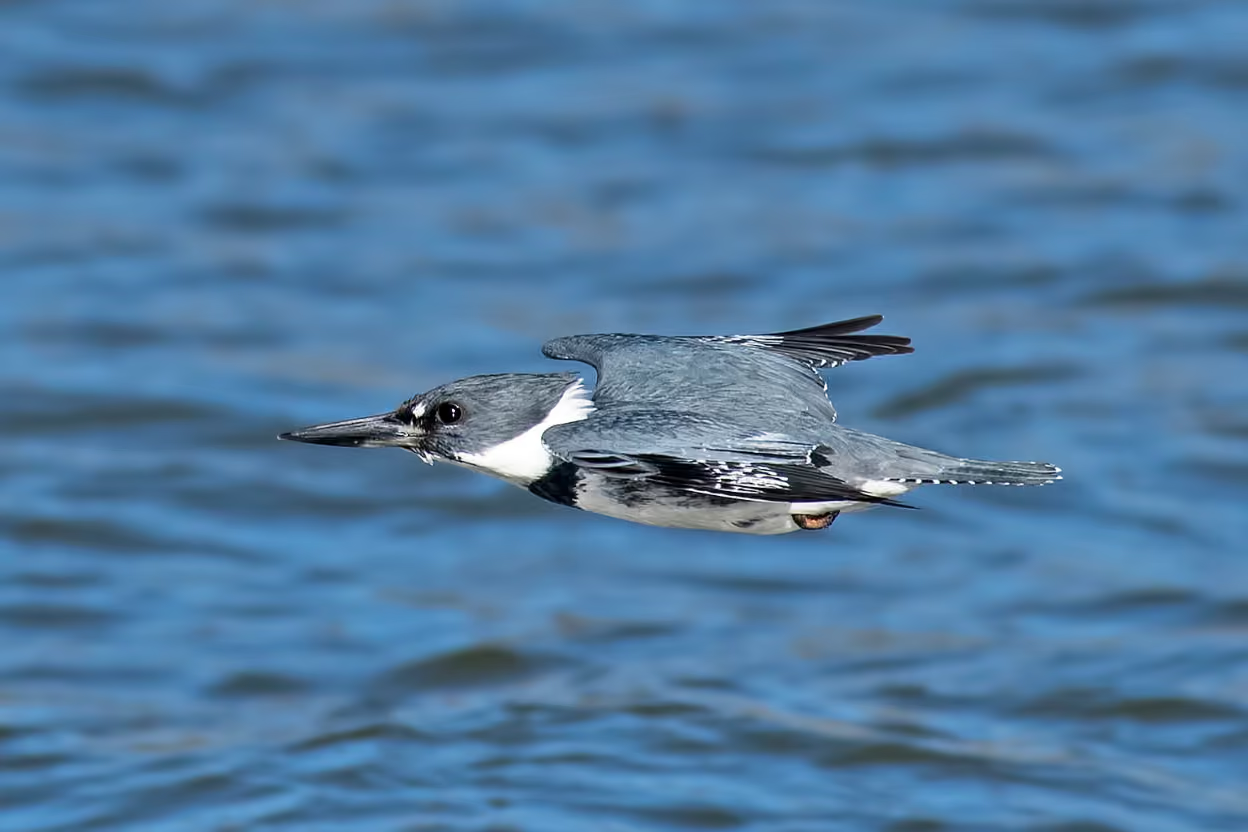
In early spring a Belted Kingfisher flew into a big window overlooking the lake, the kind of wide, bright pane that frames the water like a painting. We found it below the glass. It did not recover. A kingfisher is all speed and purpose over water, and to watch one stopped like that by something it could not see is to understand, in one quiet moment, why this happens to so many birds and why it is worth taking seriously.
If a bird has just struck your window, you are probably feeling a mix of alarm and guilt. The first thing to know is that you did nothing cruel. Glass is a genuinely invisible trap to a bird, and once you understand why, the fixes make sense and the guilt eases. Here we explain the daytime mechanism. The wider toll across the continent we cover in the causes of bird deaths in North America.
Why glass is invisible to birds
Birds do not perceive glass the way we do. They have no concept of a hard, clear barrier, so they read a window by what it shows them, and a window shows them one of two lies. The first is reflection. On most days a pane mirrors the sky, the clouds, and the trees and shrubs around it, so the bird sees inviting open habitat and flies straight at it at full speed. The second is the clear view. When a window lines up with another window or a glass corner, or looks onto a bright room with plants, the bird sees an open passage to the space beyond and tries to fly through. Either way the bird is not being careless. It is trusting its eyes, and its eyes are telling it the way is clear.
This is why the worst offenders are large, clean, unobstructed panes, especially ones that face a garden, a feeder, or water. It is also why collisions spike during spring and fall migration, when huge numbers of birds are moving at night through unfamiliar ground and dropping into strange yards by day. That nighttime piece, where artificial light pulls migrants off course, is its own story, and we tell it in why birds fly into lights at night. The species that turn up most often at the glass, from sparrows and juncos to hummingbirds, are gathered in the birds that hit windows most often.
The bird that keeps attacking your window
There is a second, completely different behavior that people often confuse with a collision, and it deserves its own answer because so many people search for it in a panic. If a single bird flies at the same window again and again, day after day, tapping or fluttering against the glass without hurting itself badly, it is almost certainly not colliding by accident. It is attacking its own reflection.
This is territorial behavior, and it peaks in spring when birds are claiming nesting space. A robin, a cardinal, a mockingbird, or a sparrow sees its reflection, mistakes it for a rival intruding on its patch, and tries to drive the stranger off. The bird will return to the same window, and often the same car mirror or shiny bumper, for as long as the reflection and the breeding urge last. It looks frantic and it can be maddening to listen to, but it is seldom a danger to the bird, and it usually fades once the season settles. The way to end it is to break up the reflection on the outside of the glass so the rival disappears, which is one of the same fixes that prevents true strikes. We cover those in how to stop birds from hitting windows.
What to do when a bird hits your glass
If you find a bird down after a strike, start by watching from a short distance. Many birds are only stunned and will gather themselves and fly off within a few minutes, and the less you handle them the better. If it does not recover on its own, you can give it a quiet, safe place to rest. Gently move it into a paper bag or an unlined shoebox with a few air holes, set somewhere dark, quiet, and at room temperature, well away from pets, children, and noise. Do not offer food or water, because a dazed bird can easily choke, and do not try to nurse it. The dark and the quiet are the whole treatment, since what the bird needs is calm and time.
Leave it undisturbed for about an hour, then take the box outside and open it. A bird that flies off strongly has made it. One that cannot fly after an hour or two, or that has visible injuries, a drooping wing, a head tilt, or that was caught by a cat, needs a licensed wildlife rehabilitator, and a cat strike in particular is urgent because the bacteria from a bite can kill within a day or two without treatment.
The honest part is this. Even a bird that flies away is not guaranteed to live, because many strikes cause internal bleeding or brain swelling that is not visible and can prove fatal hours later. That is exactly why prevention matters more than rescue. For the step by step version of the rescue, see what to do after a bird hits a window.
From understanding to prevention
Knowing why glass fools a bird is the first half. The second half is making your own windows safe, and the good news is that it is genuinely doable and often cheap. The single principle that decides whether anything works is simple, and we lay out the whole ranked toolkit, from films and cords to cheap homemade options, in how to stop birds from hitting windows. Do that for the bird you just found, and for the kingfisher that did not get its second chance.
FAQ
A bird that returns to the same window again and again, often in spring, is not colliding by accident. It is attacking its own reflection, mistaking the image for a rival on its territory. The behavior is most intense during the breeding season and usually fades as it passes. It rarely injures the bird, and breaking up the reflection on the outside of the glass is the fastest way to stop it.
Many traditions treat a bird striking a window as an omen or a message, and it is easy to feel there must be a meaning behind it. What is actually happening is simpler and not a sign of anything. The bird either saw the sky and trees reflected in the glass and flew toward what looked like open habitat, saw a clear path through to another window, or was a territorial bird attacking its own reflection. Understanding the cause is what lets you prevent the next one.
Some do, but many that fly off still die later. A window strike can cause internal bleeding or brain swelling that is invisible from the outside, so a bird flying away is not proof it has fully recovered. Give any stunned bird a quiet, dark place to rest, keep pets away, and contact a licensed wildlife rehabilitator if it does not recover within an hour or two.
A bird that is only stunned often recovers within a few minutes to an hour. Place it in a dark, quiet, ventilated box at room temperature, away from people and pets, and do not offer food or water. After about an hour, open the box outside. If it cannot fly after an hour or two, shows visible injury, or was caught by a cat, it needs a licensed wildlife rehabilitator.
Usually not. Birds do not reliably learn to avoid a window after a single strike, because they never perceived the glass as a barrier in the first place. The same window can claim bird after bird until the glass itself is made visible. That is why lasting prevention depends on treating the window, not on the bird learning.