
How to Stop Cats Killing Birds at Your Feeder
A few changes turn a feeder from a hunting blind into a safe station. Here is how to keep cats away from bird feeders, including the neighborhood and feral cats you don't own.
We once watched a well meaning feeder do exactly the wrong thing. It hung off the corner of a deck, tucked beside a dense shrub, and from a bird's point of view it was a lovely place to eat right up until the moment a cat exploded out of the greenery. That setup was not a feeder, it was a hunting blind with a free buffet. We moved it out into the open, well away from the shrub, and the ambushes simply stopped. That is the whole idea behind this guide, and it works even for the cat you most want to read about, the one that is not yours.
Most people who land here are not trying to manage their own pet. They are watching a neighbour's cat, or a stray, turn their bird feeding into a daily killing ground, and they feel powerless because they cannot control the cat. The good news is that you do not have to. You only have to control the station. A feeder set up correctly makes a successful ambush nearly impossible no matter who the cat belongs to.
The one principle: make an ambush impossible
Cats are sit and wait hunters. They hide in cover near a feeder, stay low, and pounce when a bird drops its guard. Take away the hiding places and the close approach, and you take away the hunt. Everything below serves a single principle, which is to give birds a clear, open sightline in every direction so they always see the cat coming with time to fly. A bird that can see is a bird that escapes.
Placement and the pole do most of the work
Location matters more than any gadget. Put the feeder out in the open, at least 10 to 12 feet from shrubs, fences, decks, brush piles, and anything else a cat can hide behind or launch from. Cats can clear five or six feet horizontally from a solid takeoff point, so mind nearby chairs and low branches too. Raise the feeder 5 to 6 feet off the ground.
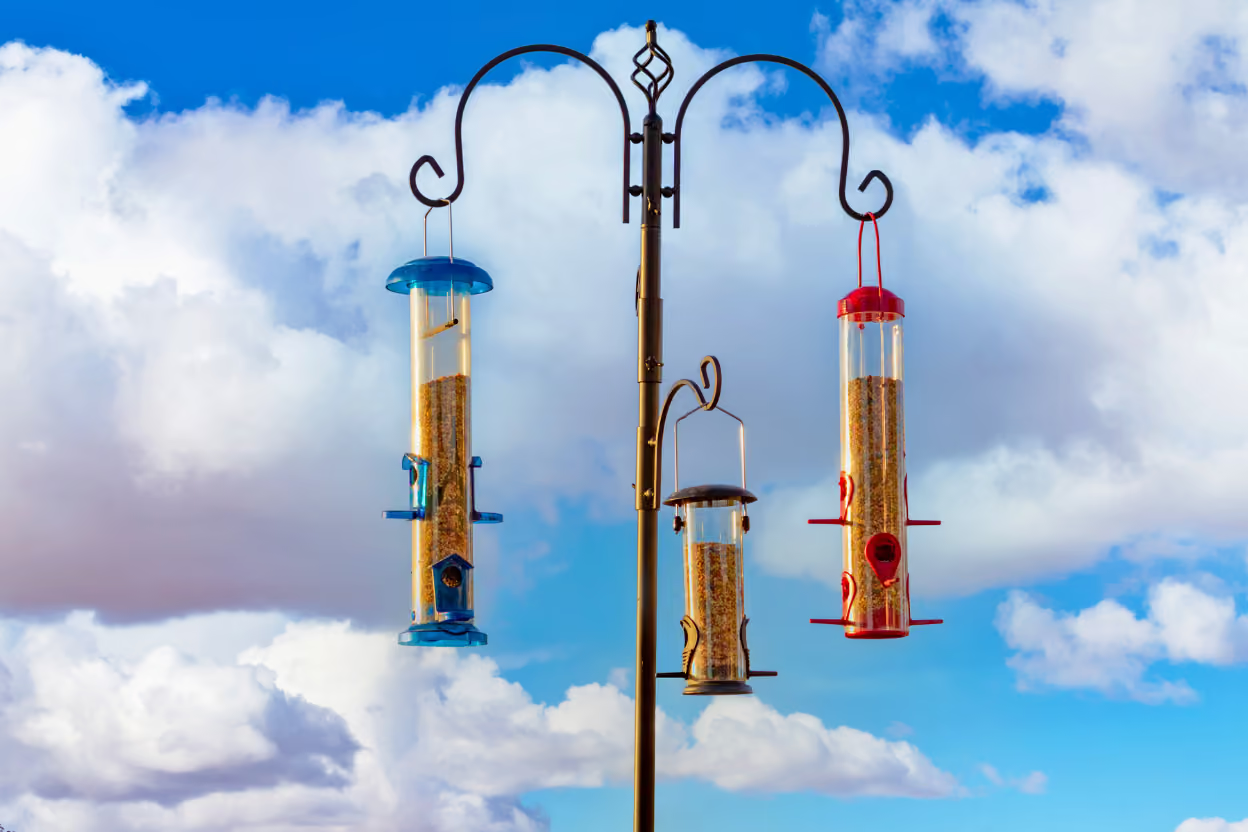
The mount itself is your best hardware. A hanging feeder on a branch is an invitation, while a feeder on a dedicated pole is far harder to reach. (As an Amazon Associate we earn from qualifying purchases.) Use a smooth metal feeder pole that gives no grip, and fit it with a wide pole mounted baffle, a cylinder or cone at least 15 to 18 inches across, set around 4 to 5 feet up so a cat cannot climb past it or reach around it. A baffle only fails when it sits too low or the feeder is close enough to jump to, so pair it with the open placement above and it becomes a genuine barrier.
Clear the ambush cover
Even a well placed feeder can be undermined by a single low tunnel of foliage. Walk the area as a cat would. Prune the lower limbs of nearby shrubs so there are several inches of open leg room beneath them, replace dense groundcover right around the feeder with mulch, gravel, or short lawn, and move brush piles and stacked wood away from the feeding zone. You do not need to strip the yard, just keep the safety circle around the feeder genuinely open and save the bird friendly thickets for the far corners.
Deterrents on the approach, never on the birds
Once the feeder is hard to reach, deterrents discourage a cat from even patrolling. The most effective and humane option is a motion-activated device aimed at the routes a cat uses, not at the feeder. A motion activated deterrent, whether a sprinkler that delivers a harmless burst of water or an ultrasonic unit, startles the cat and quickly teaches it the spot is not worth the trouble, and most cats give up after a few visits. A word of caution on the folk remedies. Skip mothballs, petroleum jelly on the pole, and loose pepper, all of which can poison or injure birds and other wildlife. Physical barriers and motion deterrents are both safer and more reliable. Bells, by the way, do very little here, as we explain in the owner guide below.
The cat that is not yours
This is the part most guides dodge, so we will meet it directly. If the culprit is a neighbour's pet, start with a calm, respectful conversation rather than an accusation. Many owners genuinely do not know their cat is hunting and will happily keep it in during peak hours once asked, especially if you offer a friendly suggestion or two from how to stop your cat from killing birds. It is worth knowing your local ordinances too, since some areas require cats to stay on the owner's property.
For truly ownerless cats, the strays and feral colonies, the humane long term answer is trap neuter return, the community programs that stabilize and gradually shrink colonies over time. One thing to avoid is leaving food out for strays near your feeders, since supplementary feeding tends to draw in more cats and raise the local density, which is the opposite of what you want. Combine a hard to raid feeder with deterrents on the approach, and even a determined neighbourhood cat usually moves on to easier ground.
A station that works for everyone
None of this asks you to choose between loving cats and loving birds. A feeder placed in the open, on a baffled metal pole, ringed by clear ground and a motion deterrent, lets you feed birds in good conscience whether the local cats are yours or not. To understand the instinct you are working around, see why cats kill wild birds, and to place this in the bigger picture, step back to the causes of bird deaths in North America. Small changes at one feeder add up, and together we make a difference.
FAQ
Place it in the open, at least 10 to 12 feet from shrubs, fences, decks, brush piles, and anything else a cat can hide behind or jump from, and raise it 5 to 6 feet off the ground. The goal is a clear sightline in every direction so birds always see a cat coming with time to fly. Open placement does more to protect birds than any single gadget.
Yes, when set up correctly. Mount the feeder on a smooth metal pole and fit a wide baffle, a cylinder or cone at least 15 to 18 inches across, around 4 to 5 feet up so a cat cannot climb past it or reach around it. A baffle only fails when it sits too low or the feeder is close enough for a cat to jump to, so pair it with open placement away from launch points.
Start with a calm, respectful conversation, since many owners do not realize their cat is hunting and will keep it in during peak hours once asked. Pair that with a feeder placed in the open on a baffled pole and a motion-activated deterrent on the cat's approach route. It is also worth checking local ordinances, as some areas require cats to stay on the owner's property. Avoid anything that could harm the cat.
Yes. Motion-activated sprinklers and ultrasonic units are among the most effective and humane deterrents available. Aimed at the routes a cat uses to approach, rather than at the feeder itself, they deliver a harmless burst of water or sound that startles the cat, and most cats learn to avoid the area after a few visits. They keep working even when you are not watching.
Usually not. In most cases it is better to fix the station than to stop feeding, by moving the feeder into the open, adding a baffled pole, and using a motion deterrent. If cats remain a persistent problem, you can shift some or all feeding to native plants that offer seeds and berries higher off the ground. Avoid leaving food out for strays nearby, since that draws in more cats.