
Why Do Woodpeckers Peck on Houses? How to Read the Damage
A house offers a woodpecker everything it wants. Here is how to read where and when the pecking happens to tell which of the four reasons you are dealing with.
The loudest woodpecker we ever dealt with was on the chimney, a Hairy Woodpecker hammering the steel until the sound rang through the whole house at dawn. That story has its own home in why woodpeckers peck on chimneys. But the chimney was only the noisiest part of the problem. The house itself, it turned out, was the real attraction, and that is the thing worth understanding if a woodpecker has started working on yours. A house is the one structure that can offer a woodpecker all of its reasons to peck at once: insects to eat, soft wood to excavate, and hard, resonant surfaces to drum on. That is why houses generate more woodpecker complaints than anything else, and also why the damage is so readable once you know what you are looking at.
The reassuring part, which most of the internet skips on its way to selling you a net, is that a woodpecker is almost never out to ruin your house. It is doing one of the small number of things woodpeckers do, and the house simply happened to fit the bill. We explain the full behavioral picture in why do woodpeckers peck. Here we narrow it to the house, because where and when the pecking happens will usually tell you which of those reasons you are dealing with, and therefore what, if anything, to do.
Why a house, of all things?
To a woodpecker, a wooden house is a strange-looking tree. The same instincts that send a bird to a dead trunk send it to your siding, which is why the building materials that resemble trees most are the ones that get hit. A Cornell study that examined more than 1,100 houses near Ithaca, New York, found this with striking clarity. Houses with stained wood siding were far more likely to be damaged than painted ones, and in wooded areas almost all of the stained houses showed some woodpecker damage. Grooved plywood was the most vulnerable siding, followed by shakes, tongue-and-groove, and board-and-batten. Dark, earth-toned stains in particular, the browns and deep reds and greens that make a house look like bark, drew far more attention than light paint.
The practical reading of that is simple. Cedar, redwood, and grooved plywood in a wooded setting, finished in a natural stain, is close to ideal woodpecker habitat. Clapboard, vinyl, aluminum, and fiber cement are not, because they neither look nor sound nor taste like a tree. None of this means your house is doing anything wrong. It just means it is, from a bird's point of view, a very convincing trunk.
Reading the damage: where it is and what it means
Almost every woodpecker problem on a house is one of three things, and they leave different marks in different places. Learning to tell them apart is most of the battle, because the cause decides the cure.
Small dents clustered on corners, fascia, and trim are drumming. When you find shallow, close-together marks high on a corner board, along the fascia, or on trim, and especially when the noise arrives at dawn in spring, you are looking at a territorial display rather than damage. The bird has chosen a prominent spot to be heard. It is communication, it is seasonal, and it rarely does structural harm.
Irregular holes or neat rows in the siding are feeding. Scattered, ragged holes, or evenly spaced holes drilled in straight horizontal rows, mean the bird is after insects living in the wood. The rows are the giveaway. A woodpecker following the tunnels of bees or beetles inside grooved plywood will track them in a line, which is why feeding damage so often looks oddly organized. This is the kind of damage that is really a message about your wood, not the bird.
A single large, round hole near a board seam is nesting or roosting. A hole more than a couple of inches across, often opened at the seam between boards or in soft fascia, is an excavation, a bird trying to hollow out a cavity to nest or shelter in. These are the least common but the most serious, because a cavity in the wall is an entry point for water, insects, and other animals. They almost always appear in wood that is already soft, aging, or damp.
The feeding holes are usually about insects
If the marks point to feeding, the woodpecker is the symptom and the insects are the cause, which is genuinely good news, because it means there is something specific to fix. Two culprits turn up again and again. Carpenter bees bore finger-sized tunnels into fascia boards, eaves, and trim to lay their eggs, and woodpeckers will tear into that wood to reach the fat larvae inside. Leafcutter bees do something similar in the hollow core gaps of grooved plywood siding, and the bird drills the telltale row of evenly spaced holes to follow them. Wood-boring beetle larvae and carpenter ants in damp or decaying wood round out the menu.
The reason this matters is that no deterrent will hold for long if the buffet is still open. A bird driven off a wall full of carpenter bee larvae simply comes back, or its neighbor does. Dealing with the insects, and with any moisture or rot that invited them, removes the reason the woodpecker was interested in the first place, and tends to solve the problem far more durably than scaring the bird.
The drummers want your gutters, not your wood
Some of the most alarming woodpecker noise leaves no real damage at all. When a bird hammers a metal gutter, a downspout, a vent cap, or a stretch of flashing, it is almost certainly drumming, using the most resonant object it can find as a loudspeaker to announce territory and court a mate. Metal carries the sound far better than wood, which is exactly why the bird chooses it, and it is why the racket peaks at first light in spring and usually fades once breeding is underway. We get into the acoustics of that behavior in why woodpeckers peck on metal, and the loudest version of all, the chimney, in why woodpeckers peck on chimneys. The thing to hold onto is that a drummer on metal is making noise, not holes.
When it is a window, not the wall
One house complaint is not about pecking the building at all. A woodpecker that repeatedly flies at a window, tapping or battering the glass, has usually seen its own reflection and taken it for a rival on its territory. It is the same territorial drive behind drumming, aimed at a phantom competitor, and it tends to spike in the breeding season and stop when the bird gives up or the reflection is broken up. It is a distinct enough problem, with its own distinct fix, that it deserves its own treatment, and we cover it in why do birds peck at windows.
So what do you do about it?
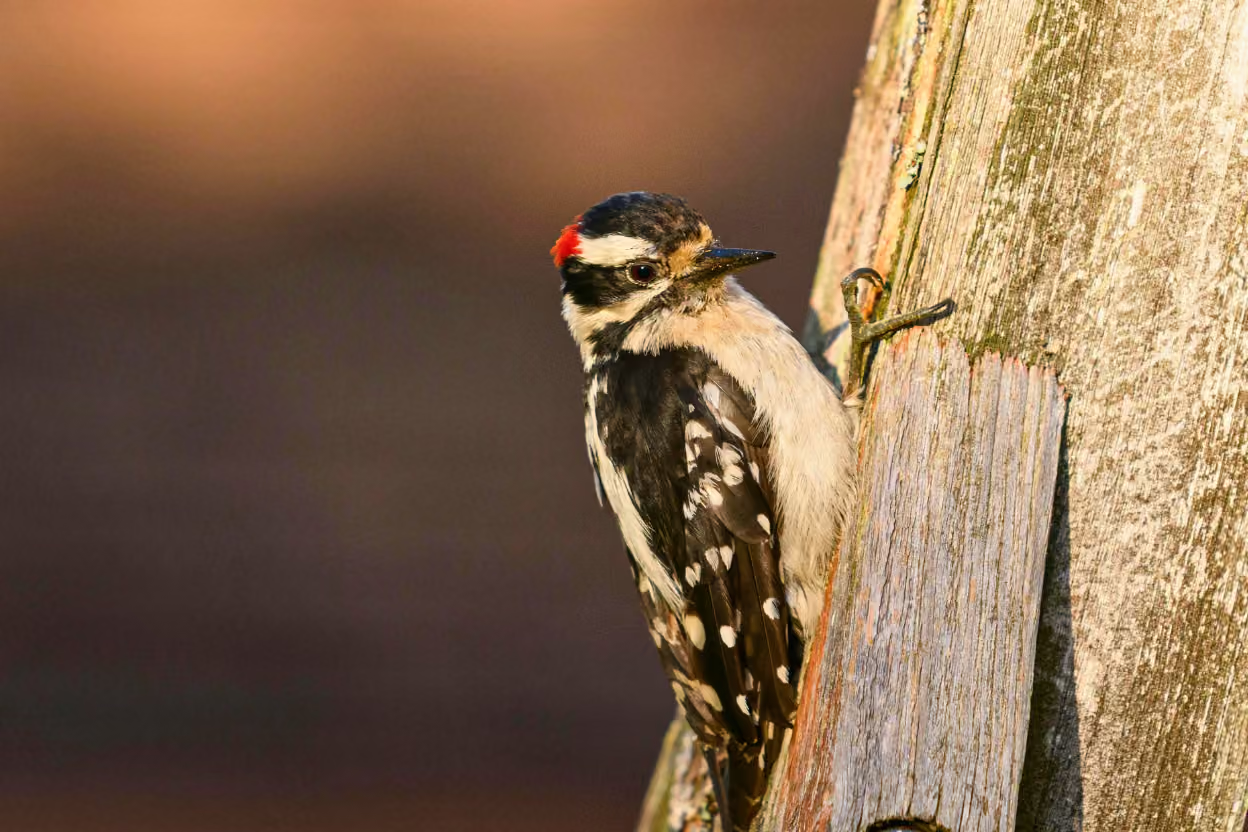
Start by reading the house. Small clustered dents and a dawn racket in spring are a drummer, the most common and least harmful case, and often the bird simply moves on after breeding. Irregular holes or neat rows mean insects in the wood, so the lasting fix is dealing with the bugs and any rot behind them. A large round hole is an excavation that wants attention before water gets in. Each of those has a different answer, and once you have identified which you are facing, our guide to stopping woodpeckers walks through the deterrents that actually work, in the order worth trying them. If you would also like to put a name to the bird on your siding, our guide to the backyard woodpeckers of North America covers the likely suspects, from the small, polite Downy Woodpecker (Dryobates pubescens) and its larger twin the Hairy Woodpecker (Dryobates villosus) to the big Northern Flicker (Colaptes auratus) that does most of the spring drumming, the Red-bellied Woodpecker (Melanerpes carolinus) working aging wood, and the powerful Pileated Woodpecker (Dryocopus pileatus) whose excavations are rare on houses but unmistakable when they happen.
Whatever you do, it has to be non-lethal. Almost every woodpecker in North America is protected by law in both the United States and Canada. That is rarely a real obstacle, though, because reading the house correctly usually points to a fix that works with the bird's behavior rather than against it.
FAQ
Three things, mainly. Insects in the wood, especially carpenter bees, leafcutter bees, and wood-boring beetle larvae, are the biggest draw, because the house becomes a feeding site. Soft, aging, or rotting wood invites excavation for a nest or roost. And resonant surfaces like gutters and siding give a bird a loud surface to drum on in spring. A Cornell study of more than 1,100 houses also found that wooden siding, particularly grooved plywood and cedar finished with dark, earth-toned stain, was far more likely to be damaged than painted wood or non-wood siding, because it most resembles a tree.
Often, yes. When the damage is a cluster of irregular holes or neat rows drilled into the siding, the woodpecker is almost always feeding on insects living in the wood, frequently carpenter bee or leafcutter bee larvae or wood-boring beetles. In that sense the bird is a symptom rather than the underlying problem. Treating the insect infestation and repairing any damp or rotting wood usually removes the reason the woodpecker came. Drumming dents and nesting holes, by contrast, are not about insects.
It comes in three recognizable forms. Small, shallow dents clustered along corners, fascia, and trim are drumming marks, made for communication and usually harmless. Irregular holes or evenly spaced rows in the siding are feeding holes, where a bird has been after insects. And a single large, roughly round hole, often near a seam in the boards, is an attempt to excavate a nest or roost cavity. The location and shape together tell you which of the three you are looking at.
Activity peaks in spring, roughly March through June. Most of that is drumming, the loud territorial rolls males perform to claim territory and attract a mate, which is why complaints about noise spike in early spring and often fade once breeding is underway. Feeding and nesting damage can appear at any time of year but is also most noticeable in spring and into early summer.
Non-wood and hard sidings hold up best. Fiber cement board, vinyl, aluminum, and traditional clapboard are far less attractive than grooved plywood, cedar shakes, tongue-and-groove, or board-and-batten, which the Cornell study found most prone to damage. If you have wood siding in a wooded area, painting it rather than staining it, and choosing lighter colors over dark earth tones, measurably lowers the risk.
The honest first step is to diagnose why the bird is there, because the right fix depends on whether it is feeding, drumming, or nesting. From there the options run from treating an insect problem to reflective and motion deterrents, netting, and finally physical barriers over the pecked area. Because woodpeckers are protected by law in both the United States and Canada, every method has to be non-lethal. Our guide to how to stop woodpeckers walks through what works, in order.