
Why Do Woodpeckers Peck on Metal? It's All About Sound
Metal is the one surface that gives the answer away. No insects, no cavity, so a woodpecker hammering a gutter or sign can only be drumming. Here is why, and why it rarely does harm.
Some spring mornings the most ridiculous sound in the neighborhood is a Yellow-bellied Sapsucker playing a road sign. We hear it every year, a bird perched on a metal sign or a length of flashing, hammering out a loud, ringing tattoo on it like a tiny manic percussionist. From a distance it looks absurd, a woodpecker attacking a stop sign or a satellite dish at six in the morning with total commitment, getting nothing out of it that you can see. And that, it turns out, is the whole point, because the very thing that makes it look pointless is what makes metal the most revealing surface a woodpecker can choose.
If a woodpecker is hammering a metal gutter, a sign, a vent, or a satellite dish, you can stop worrying about what it is after. There is nothing in a metal sign to eat and nothing in it to dig, so unlike almost any other surface, metal gives the answer away immediately. The bird is drumming, and drumming is communication. We lay out the full set of reasons woodpeckers peck in why do woodpeckers peck. Metal is the one case where only a single reason is even possible.
The one surface that gives the answer away
On most surfaces, a woodpecker could be doing any of several things, which is why the rest of this cluster is largely about telling them apart. A bird on a wooden utility pole might be feeding, excavating, or storing food, as we cover in why woodpeckers peck on telephone poles. A bird on your siding could be after insects, after a nest cavity, or just drumming, which is the diagnostic puzzle of why woodpeckers peck on houses. Metal erases all of that ambiguity. There are no wood-boring insects inside a steel gutter, and no woodpecker is going to excavate a nest in a satellite dish. Strip away food and shelter and only one motive is left standing. When a woodpecker hammers metal, it is drumming, full stop.
Why metal? Because it is the best drum going
Woodpeckers do not have a song. Where a robin or a cardinal advertises itself by singing, a woodpecker advertises by drumming, a rapid burst of strikes on a resonant surface that says the same two things a song does: this territory is taken, and I am worth a mate's attention. Since the entire purpose is to be heard by as many rivals and prospects as possible, the bird is always looking for the loudest, farthest-carrying surface it can find.
This is where metal wins. Watch a woodpecker drumming on a dead branch and you will see it shift position slightly, testing the wood, hunting for the spot that rings out best. Metal skips that search entirely. A thin, rigid sheet of metal, a rain gutter, a piece of flashing, a sign, a vent cap, a downspout, a satellite dish, vibrates so freely when struck that it broadcasts farther than even the finest hollow tree. To a bird whose reproductive success depends on the reach of its signal, a metal gutter is not a nuisance object. It is the best instrument in the territory, an upgrade on anything the forest can offer. That is why a bird that discovers a good one returns to it morning after morning. It has found its stage.
Two things that surprise people
The first is that the drummer is as likely to be female as male. In most songbirds only the male sings, but in woodpeckers both sexes drum, because both defend territory and both signal to mates. So the bird on your gutter is not necessarily a showboating male. It may well be a female making exactly the same announcement.
The second is that this is partly a matter of individual personality. Not every woodpecker in an area bothers with metal, and many never do. But certain individuals seem to discover that a particular gutter or sign is gloriously loud and become genuinely attached to it, returning to that one object day after day through the season. Wildlife biologists who field these complaints describe single birds that work their way from house to house hammering gutters and caps, audible streets away. If it feels like the same bird has personally chosen your downspout, you are very likely right.
It is noise, not holes
Here is the reassurance that the sheer volume of the thing tends to drown out. Metal drumming is almost never damaging. A woodpecker's beak cannot punch holes in a steel gutter or an aluminum sign the way it opens up soft wood, and the bird is not trying to. It wants the sound, not the substance. About the worst that prolonged drumming can do to metal is leave minor dents over a long time, and even that is uncommon. What you are dealing with is a noise problem, not a structural one.
It is also a seasonal noise problem. Metal drumming peaks in the breeding season, from spring into early summer, and concentrates in the early morning when the air is still and the sound travels best. Once a bird has paired up and nesting is underway, the drumming usually tapers off, and a metal drummer will often simply stop on its own as the season turns. The loudest and most maddening version of all is the metal chimney cap, where the flue carries the racket down into the house, which we cover in why woodpeckers peck on chimneys.
So which woodpecker is playing your gutter?
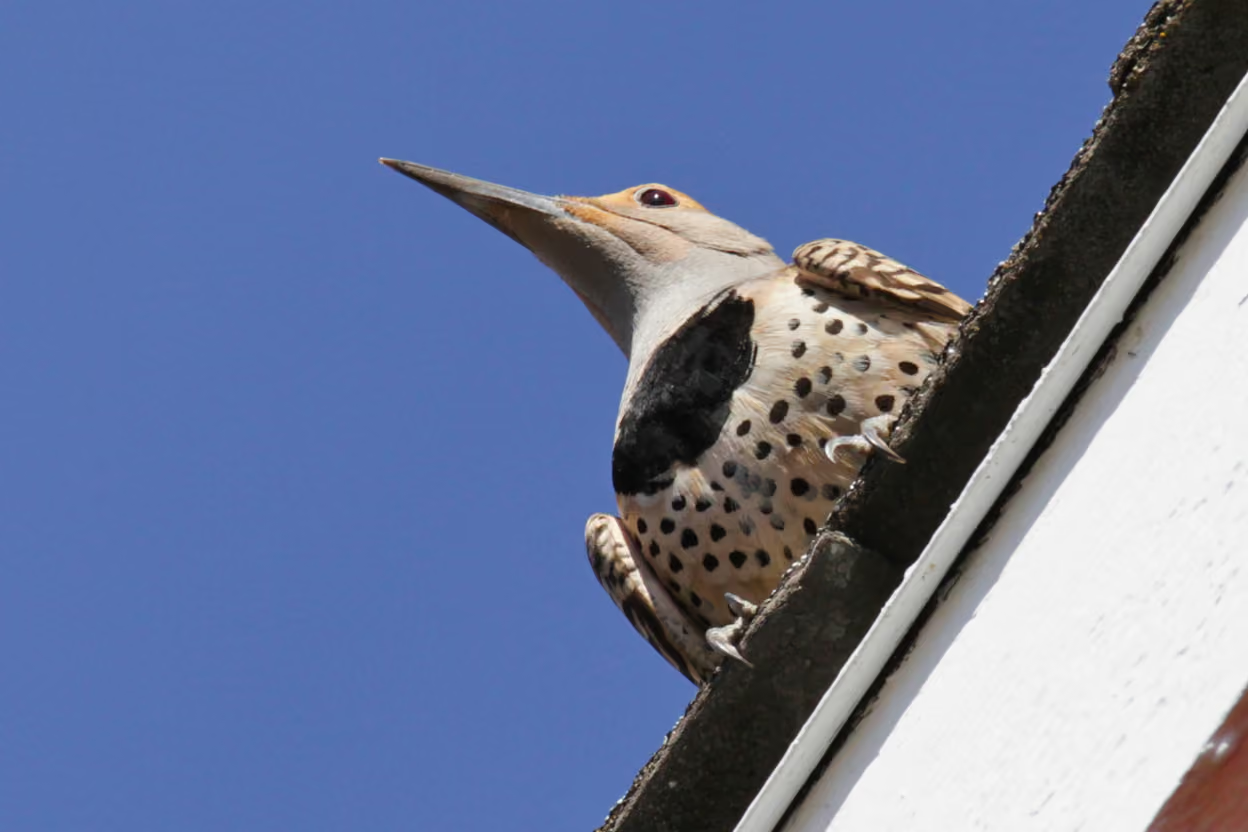
A handful of species account for most metal drumming. The Northern Flicker (Colaptes auratus) is the classic, a big, loud bird that takes to gutters, flashing, and chimney caps readily. The Yellow-bellied Sapsucker (Sphyrapicus varius), the one that started this post, is a committed metal drummer in spring despite spending the rest of its time tending sap wells in trees. The Hairy Woodpecker (Dryobates villosus) and its smaller twin the Downy Woodpecker (Dryobates pubescens) both take to metal as well. They are all doing the identical thing, just on the loudest object they could find. If you would like to put a name to your particular percussionist, our guide to the backyard woodpeckers of North America runs through the likely suspects.
Living with the drummer
Because metal drumming is communication rather than damage, the easiest answer is often patience. The behavior is loud but temporary, and many birds abandon a given object once breeding is settled. If the noise is genuinely unlivable, the fix follows directly from the cause: since the bird only wants the resonance, you take the resonance away or deny it the perch. The towels we once taped over a ringing chimney cap were a crude version of exactly that. The loudest case, the cap that broadcasts down into the house, has its own treatment in why woodpeckers peck on chimneys, and whatever you try has to be non-lethal, because these birds are protected by law in both the United States and Canada. The goal is never to harm the drummer, only to hand it a duller instrument so it takes its performance elsewhere.
FAQ
Because it is not about food at all. Metal contains no insects and offers no cavity to nest in, so a woodpecker hammering a gutter, sign, or vent can only be drumming, the rapid territorial display that woodpeckers use in place of song. The bird is announcing its territory and advertising for a mate, and it has simply chosen metal because it is loud. Of all the surfaces a woodpecker uses, metal is the one that tells you for certain what the bird is doing.
Almost never. A woodpecker's beak cannot punch holes in a steel gutter or an aluminum sign the way it opens up soft wood, and the bird is not trying to, since it wants the sound rather than anything inside the metal. At most, prolonged drumming might leave minor dents over a long period, and even that is uncommon. Metal drumming is a noise problem, not a structural one.
Because it has found an unusually good instrument. A bird looking to broadcast as far as possible prizes the loudest, most resonant surface in its territory, and a particular gutter, sign, or downspout may simply be the best one around. Certain individuals become genuinely attached to a single object and return to it morning after morning through the breeding season. If it feels like one specific bird has chosen your downspout, you are probably right.
Mostly in the breeding season, from spring into early summer, and mostly in the early morning when still air carries the sound farthest. Because drumming is a courtship and territorial display, it fades as birds pair up and nesting begins, and a metal drummer will often stop on its own as the season turns. The same bird may return the following spring, drawn back to a surface it already knows is loud.
Yes. This is one of the ways woodpeckers differ from most songbirds, where typically only the male sings. In woodpeckers both sexes drum, because both defend territory and both signal to potential mates. So the bird hammering your gutter at dawn is as likely to be female as male.
Because the bird only wants the resonance, the fix is acoustic: dampen the metal so it no longer rings, or deny the bird the perch it drums from. Often the simplest answer is patience, since the behavior is seasonal and usually ends once breeding is settled. Our guide to how to stop woodpeckers walks through the deterrents that actually work. Whatever you choose, it must be non-lethal, since woodpeckers are protected by law in both the United States and Canada.