
Why Do Woodpeckers Peck on Telephone Poles? Trees in Disguise
A wooden utility pole is a dead, soft, insect-filled snag standing alone in the open, which is exactly what a woodpecker wants. Here is what they do to poles, and the wildlife that benefits.
Drive almost any rural road for long enough and you will pass it: a lone wooden utility pole drilled through with holes, some small and scattered, one or two big enough to put your fist in. It looks like vandalism, a piece of public infrastructure slowly being chewed to pieces. And from the power company's point of view, that is more or less what it is. But look again, because those holes are not only damage. Some of them are real estate. To a woodpecker, a wooden pole is not a pole at all. It is a tree, specifically the kind of tree woodpeckers like best, and what the bird does to it turns out to make homes for a surprising amount of other wildlife.
Telephone and utility poles are one of the most reliable places to find woodpecker work out in the open, which makes them a good place to understand the behavior. Unlike the metal gutters and chimney caps elsewhere in this story, a pole is rarely about drumming. It is about the two oldest woodpecker motives, food and shelter, with one spectacular western twist involving acorns. We cover the full set of reasons a woodpecker pecks in why do woodpeckers peck. Here we look at why a pole, of all things, pulls them in.
Why a pole, of all things?
A wooden utility pole is, from a bird's perspective, close to an ideal tree. It is dead wood, it is soft enough to work once it has weathered, it stands tall and clear of obstructions, and it is often the most prominent vertical structure for a long way around in open farmland or along a roadside. That is almost the exact description of a snag, the standing dead tree that woodpeckers prize above all others for feeding and nesting. A pole is simply a snag that a utility company put there on purpose.
It does not matter much that poles are pressure-treated. Treatment slows decay near the surface, but poles weather, crack, and check as they age, and insects colonize the seasoned wood inside exactly as they would in any dead tree. Once there are insects in the wood, there is a reason for a woodpecker to start working, and once the wood is soft enough, there is a reason to dig deeper. If the bird is hammering the metal hardware on a pole rather than the wood, that is a different behavior entirely, the drumming we cover in why woodpeckers peck on metal. The wood itself is about food and housing.
The insects come first
The first thing a pole offers is a meal. Wood-boring beetle larvae, carpenter ants, and other insects move into weathered pole wood, and a woodpecker hunting them leaves the same marks it would on any infested tree, scattered probing holes and, where a bird has followed a tunnel, larger excavations. Smaller species like the Downy Woodpecker (Dryobates pubescens) and the Hairy Woodpecker (Dryobates villosus) work poles for insects on a modest scale, while the bigger birds dig deeper. An infested pole can keep a woodpecker coming back for as long as the insects last. This is the same feeding behavior that brings birds to a wooden house, which we untangle in why woodpeckers peck on houses, just transferred to a post in a field instead of your siding.
The Pileated and the homes it leaves behind
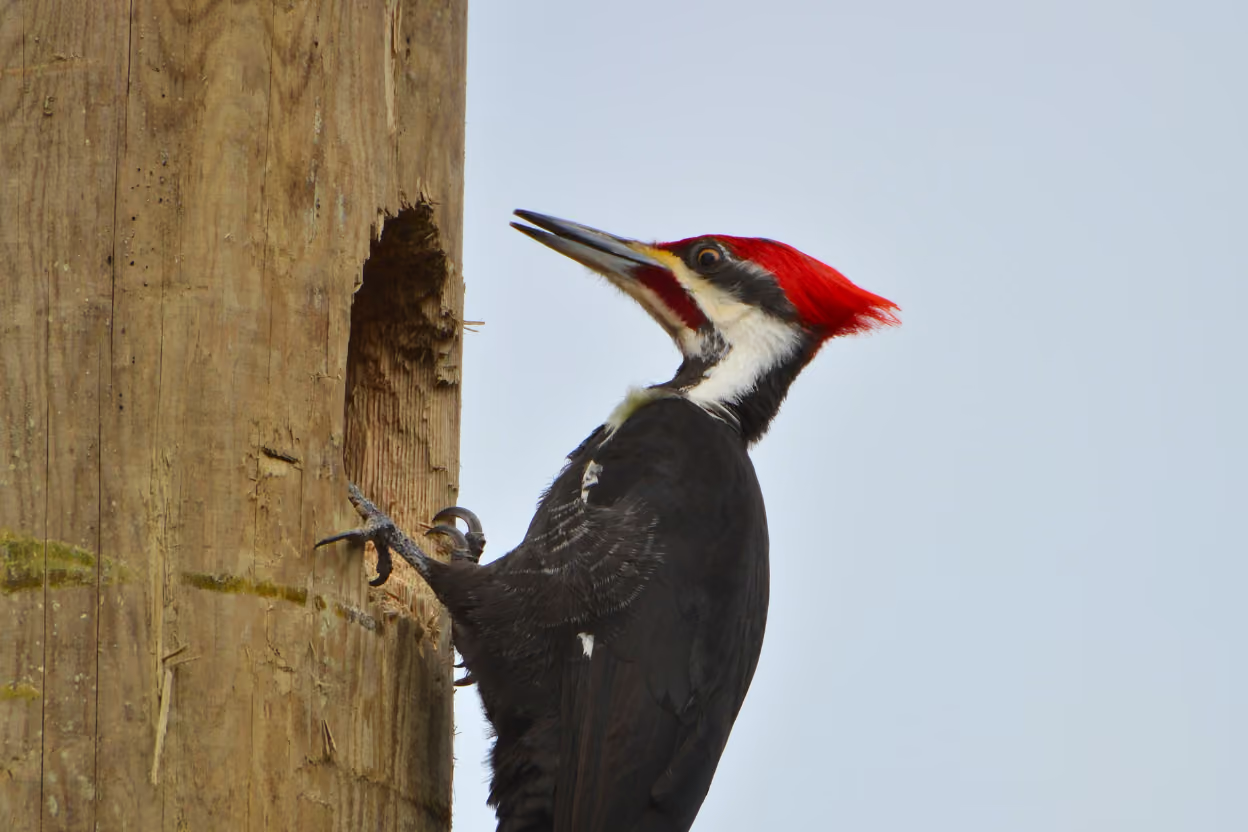
The most consequential bird on a utility pole is the Pileated Woodpecker (Dryocopus pileatus), the crow-sized giant of the family, and it is here that pole pecking becomes something more than damage. The Pileated chisels for carpenter ants, leaving the large rectangular excavations that are its feeding signature, but it also does something bigger. It excavates nest and roost cavities, and it will use a tall, sound utility pole for the purpose much as it would use a large forest snag. A Pileated nest entrance is not the rectangular shape of its feeding holes. It is a clean oval, almost egg-shaped, opening into a deep chamber hollowed out below.
That cavity is the gift. The Pileated is what ecologists call a keystone species, a bird whose excavations create housing that a long list of other animals cannot make for themselves. When the woodpecker moves on, its abandoned pole cavity becomes a home for the cavity nesters that depend entirely on holes other birds have dug. American Kestrels, Northern Saw-whet Owls, and even other woodpeckers such as the Northern Flicker (Colaptes auratus) will move in. So will the so-called woodpecker ducks, the Wood Duck and the Hooded Merganser, cavity-nesting waterfowl that cannot excavate a thing and rely on big woodpecker holes to raise their broods. A single weathered pole, drilled and abandoned over the years, can end up working as a vertical apartment block for half a dozen species. Audubon describes woodpecker snags as multi-level condominiums for wildlife, and a pole is the same thing, just one a person installed.
The Acorn Woodpecker's granary
The other showstopper belongs to the West. The Acorn Woodpecker (Melanerpes formicivorus) does not drill poles for food or shelter at all, but to build a pantry. A colony, anywhere from a pair to fifteen birds, drills a pole, snag, or building full of small holes, each one sized to hold a single acorn, then wedges a fresh acorn into every hole so tightly that squirrels cannot pry them loose. The result is a granary, and it can be staggering. A well-used granary may hold hundreds to thousands of acorns at once, and some long-established granary trees and poles carry tens of thousands of holes drilled over many years. The colony guards and refills it across generations, posting a bird to stand watch over the hoard.
A utility pole studded with neatly placed acorns, catching the light, is one of the strangest and most wonderful sights in western birding, and it is the surest way to know an Acorn Woodpecker colony is nearby. It is also, from the utility's side, a serious headache, which brings us to the other half of the story.
Builders, or vandals?
To a power company, none of this ecology helps. Woodpecker holes weaken a pole, shorten its working life, and can make it unsafe for a lineman to climb, which means infested or heavily drilled poles have to be inspected and replaced, at real and recurring cost. Utilities have spent decades and considerable money on the problem, from wire mesh and barriers to visual deterrents. It is a genuine conflict, not an imaginary one.
What has changed is that utilities increasingly recognize the other side of the ledger. Southern California Edison, for instance, runs an avian protection program precisely because its wooden poles double as homes, breeding sites, and granaries for native Acorn Woodpeckers, and the company works to protect the birds while managing the poles. That is the honest tension at the heart of this post. The very same holes are, depending on who is looking, costly damage and valuable habitat. The woodpecker is not a vandal. It is a builder that happened to choose a structure we needed for something else. If you would like to put a name to the builder on the pole down your road, our guide to the backyard woodpeckers of North America covers the Pileated, the Acorn, and the rest of the likely suspects.
FAQ
Because a wooden utility pole is, to a woodpecker, a dead tree. It is soft, weathered wood standing tall and clear in open country, which is exactly the kind of snag woodpeckers favor for feeding and nesting. Insects colonize the seasoned wood even in treated poles, giving birds a reason to feed, and the soft wood is easy to excavate for nest and roost cavities. In the West, Acorn Woodpeckers also use poles to store acorns. Unlike metal hardware, a wooden pole is almost never about drumming.
Yes, and utilities take it seriously. Feeding holes, nest cavities, and acorn granaries all weaken a pole, shorten its working life, and can make it unsafe for a lineman to climb, which forces costly inspection and replacement. At the same time, those very holes create habitat for other wildlife, so many utilities now try to manage the poles while protecting the birds, which are legally protected in both the United States and Canada.
That is the work of the Acorn Woodpecker, a social western species that stores food in a communal granary. A colony drills a pole, snag, or building full of small holes, each sized for a single acorn, and wedges one fresh acorn into each hole so tightly that squirrels cannot remove it. A single granary can hold hundreds to thousands of acorns, and the colony guards and refills it across generations. It is feeding behavior, just aimed at storing food rather than finding it.
A surprising number. Woodpeckers, especially the large Pileated, are keystone species whose abandoned cavities become homes for animals that cannot excavate their own. American Kestrels, Northern Saw-whet Owls, Wood Ducks, and Hooded Mergansers will all nest in old woodpecker holes, and a single weathered pole can end up housing several species over time. What a utility records as damage often doubles as wildlife habitat.
The Pileated Woodpecker is the heavyweight, cutting large feeding excavations and deep nest cavities. The Acorn Woodpecker builds its granaries in poles across the West. Northern Flickers, Downy Woodpeckers, and Hairy Woodpeckers also work poles, mostly feeding on the insects in weathered wood. The larger the bird, the more substantial the damage it can do.
On utility poles this is mainly a job for the utility rather than a homeowner, and the usual tools are physical barriers such as wire mesh wrapped around the pole, along with visual deterrents. Because woodpeckers are protected by law in both the United States and Canada, any method has to be non-lethal. Since the wood itself is the attraction, addressing the insects in a pole and using less vulnerable materials are the more durable long-term answers.