
How to Stop Woodpeckers Pecking on Your Chimney (What Works)
An honest, ranked guide to stopping a woodpecker on your chimney. Diagnose why first, then work from the cheapest reflective deterrents to the durable fixes that actually last.
When the Hairy Woodpecker took up residence on our steel chimney, our first instinct was the obvious one: make it go away. We clapped, we shouted, we banged on the window, we went out and shooed it off the roof. It worked beautifully, for about four minutes. The bird simply circled the house and came straight back to the one spot in its whole territory that rang like a struck bell. Scaring it away did not work, because we were fighting the symptom and ignoring the cause. The chimney was the loudest drum the bird had ever found, and no amount of waving our arms was going to make it give that up.
What finally worked was taping a few folded towels over the cap to deaden the resonance. Once the chimney stopped ringing, the bird lost interest within a couple of days and moved on. That is the whole principle of stopping a woodpecker in one sentence: you do not win by chasing the bird, you win by taking away whatever it wanted from the spot. Everything below follows from that, ranked honestly from the cheapest and least invasive fix to the most durable, with frank notes on what tends to disappoint.
As an Amazon Associate we earn from qualifying purchases. The product links below are ones we are comfortable recommending, and using them supports this site at no extra cost to you.
First, work out why it is there
Every effective fix starts with a correct diagnosis, because the right deterrent depends entirely on what the bird is doing. The good news is that the cause is usually easy to read. Ringing, rhythmic noise on a metal cap with no holes left behind is drumming, a territorial display, and the fix is acoustic. Actual holes in a wooden chimney chase or in siding are feeding or nesting, and the fix is about insects and exclusion. If you are not sure which you have, our companion piece on why woodpeckers peck on chimneys walks through the tells, and why woodpeckers peck on houses does the same for the wider building. The full behavioral background is in why do woodpeckers peck.
One thing matters more than any product: act early. A woodpecker that has just discovered your chimney is far easier to move than one that has spent three weeks treating it as the center of its territory. The longer a bird drums on a spot, the more attached it becomes, so the cheap early steps below work best before a habit hardens.
Step one: take away what the bird wants
The cheapest and most durable fix is almost always to remove the attraction rather than to add a deterrent. If the bird is drumming on a metal cap, deaden it. Anything that stops the cap ringing, a wrap of dense fabric, a length of foam, the folded towels that saved our mornings, even a soft burlap cover while the fireplace is out of use, turns the loudspeaker back into a dull surface and removes the entire reason the bird is there. If instead you are finding holes in wood, the bird is after insects, and the lasting answer is to treat the infestation and repair the damp or rotting wood behind it. No deterrent on earth will hold a bird off a wall that is still full of food.
Reflective scare deterrents: the best first buy
If removing the attraction is not enough on its own, the most effective inexpensive product is reflective scare material. When the Cornell Lab of Ornithology tested a range of deterrents, most worked briefly but the one consistent performer was reflective tape, because woodpeckers dislike the unpredictable flashing and movement of a shiny surface in the wind. A few strips of holographic reflective scare tape or spinning reflective rods hung right at the problem spot, close enough to move in the breeze, will unsettle most birds. It reflects sun and moonlight, so it works day and night. The honest caveats: it depends on wind and good placement, it looks like what it is, and it weathers and needs replacing over a season. But for the money, nothing beats it as a first active step.
The honest truth about decoys and noise
This is where most guides oversell, so we will be blunt. A plastic owl or hawk decoy can genuinely help, but only for a while. In the same Cornell testing, decoys and predator calls scared birds at first and then stopped working as the woodpeckers learned the threat was fake. If you use one, buy a decoy that moves in the wind and, crucially, relocate it every few days so it never becomes part of the furniture. Treat it as a supplement that buys time, not a permanent solution. Sound devices are similar: recorded distress and predator calls habituate just as fast, and ultrasonic repellents are close to useless on birds, which hear in roughly the same range we do, not in the ultrasonic. One product to avoid entirely is sticky or tacky repellent gel. It can foul a bird's feathers and harm it, and it stains and damages roofing and siding. Skip it.
Bird netting: the reliable exclusion
When a bird will not take the hint, the surest way to protect an area is to deny physical access to it, and the US Fish and Wildlife Service considers netting the one product that reliably keeps woodpeckers off. Bird netting with a mesh of one inch or smaller, hung at least three to four inches out from the surface so the bird cannot reach through to peck, will simply shut the problem down. It is more work to install neatly and it is more visible than tape, which is why it sits further down this list, but for a wooden chimney chase or a stretch of siding under sustained attack, it is the dependable answer.
Deny the perch with spikes: the durable chimney fix
For the specific case of a bird drumming on a chimney cap, there is one more durable, low-profile fix: take away the perch. A woodpecker has to land on the cap to hammer it, so a row of bird spikes fitted around the cap denies the bird a place to stand without harming it. The spikes are not weapons, they simply make the surface impossible to perch on, and because they are permanent and weatherproof, they solve the problem for good in a way that tape and decoys cannot. For a cap that a bird returns to year after year, this is often the fix that finally ends the cycle.
What works, in order
Put together, the honest sequence is this. Diagnose why the bird is there. Take away what it wants, by deadening a ringing cap or treating the insects in wood. Hang reflective scare tape as your first active deterrent. Use a moving, frequently relocated decoy only as a short-term supplement, and do not bother with ultrasonic gadgets or harmful gels. If the bird persists, exclude it with netting, and for a chimney-cap drummer, deny the perch with spikes for a permanent fix. Work down that list and you will resolve almost any woodpecker problem without ever harming the bird.
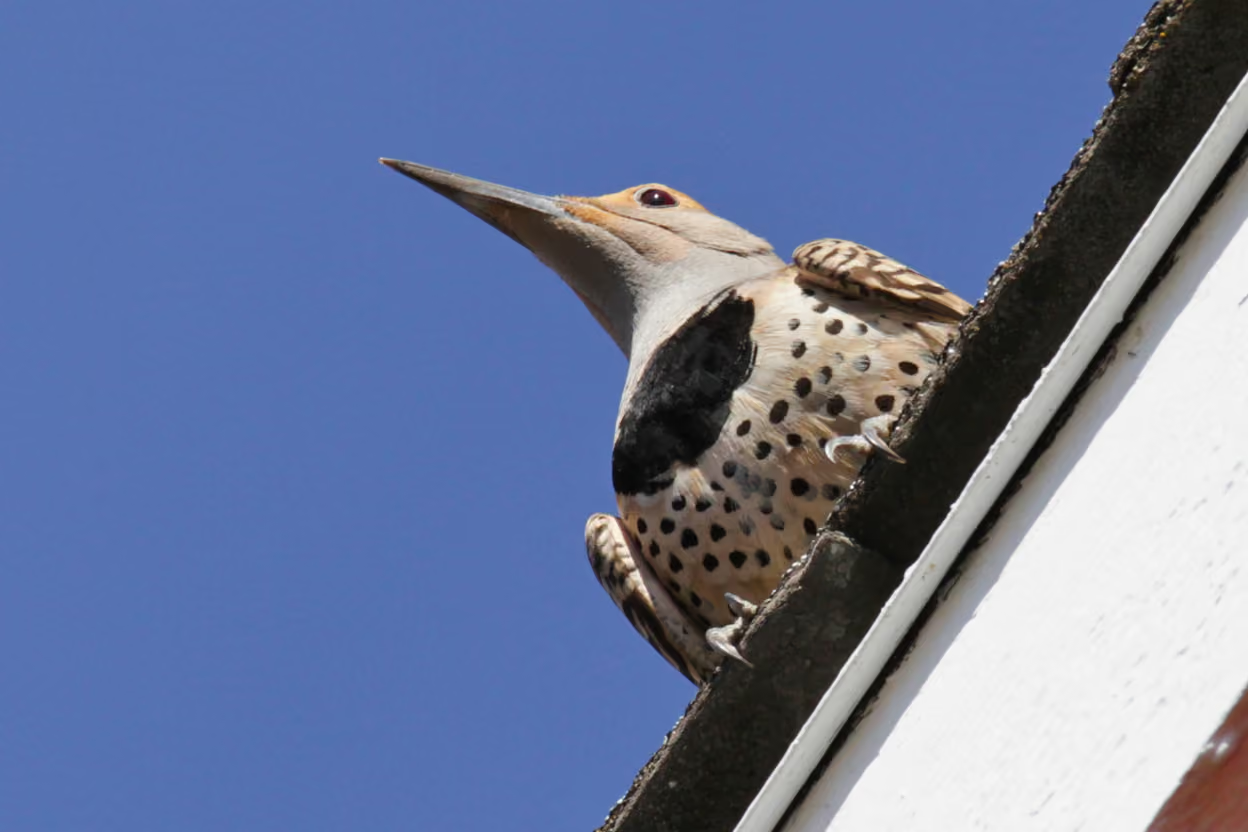
That last point is not optional. Almost every woodpecker in North America is protected by law in both the United States and Canada, so lethal control is off the table and unnecessary. The bird is not malicious, just loud, and once you understand what it is really after, the solution is simply to make your chimney a worse stage. If you would like to know exactly which species has chosen your roof, whether a Northern Flicker (Colaptes auratus), a Downy Woodpecker (Dryobates pubescens), or the Hairy Woodpecker (Dryobates villosus) that drummed on ours, our guide to the backyard woodpeckers of North America will help you put a name to the drummer.
FAQ
Start by recognizing that drumming on a chimney is a territorial display, not damage, so the bird only wants the resonant surface. The most reliable fixes follow from that. Deaden the cap so it no longer rings, hang reflective scare tape nearby, and for a lasting solution fit bird spikes around the cap so the woodpecker has nowhere to perch. Chasing the bird off rarely works, because it simply returns to the best drum in its territory.
Yes, better than most options. In testing by the Cornell Lab of Ornithology, reflective tape was the most consistent deterrent, because woodpeckers are unsettled by the unpredictable flashing and movement of a shiny surface in the wind. It works day and night, since it reflects both sun and moonlight. The limitations are that it needs wind and good placement, and it weathers and has to be replaced over time.
Only briefly. Predator decoys like plastic owls scare woodpeckers at first, but the birds quickly learn the threat is not real and ignore them. If you use one, choose a decoy that moves in the wind and relocate it every few days so it does not become familiar. Treat a decoy as a short-term supplement that buys time, not as a permanent solution.
Not reliably. Ultrasonic repellents are largely ineffective on birds, which hear in roughly the same range humans do rather than in the ultrasonic. Recorded distress and predator calls can work for a short time, but woodpeckers habituate to them just as they do to decoys. Sound is at best a temporary supplement, and ultrasonic gadgets are best avoided altogether.
Physical exclusion. The US Fish and Wildlife Service regards bird netting as the only product that reliably keeps woodpeckers away, using a mesh of one inch or smaller hung three to four inches off the surface so the bird cannot reach through. For a chimney cap specifically, fitting bird spikes to deny the perch is an equally durable fix. Both work permanently because they take away access rather than relying on scaring the bird.
You may deter and exclude them, but not harm them. Almost every woodpecker in North America is protected by law in both the United States and Canada, which makes it illegal to kill the birds or destroy their nests or eggs. All of the methods that actually work, removing the attraction, reflective deterrents, netting, and perch spikes, are non-lethal, so staying within the law and solving the problem point in the same direction.