Backyard Woodpeckers of North America: Who's Pecking Your House
The woodpeckers a North American homeowner actually meets, and how to connect the bird to the damage. Field marks, ranges, and the pecking habits that give each one away.
A few springs ago we had a Hairy Woodpecker that decided our steel chimney was the finest drum in the neighborhood. Every morning at first light it landed up there and hammered out a fast, ringing roll that carried down the flue and into the room below. The chimney offered no food and no place to nest. The bird simply liked the sound. We stopped it by taping a few folded towels over the spot to soften the resonance, and within a couple of days the drumming moved on. A Yellow-bellied Sapsucker will do the same on gutters and flashing, turning anything metal into a tambourine at dawn.
That morning taught us something every frustrated homeowner eventually learns. Before you can do anything about a woodpecker on your house, you have to know which woodpecker it is, because the bird tells you why it is there. A drummer on a metal cap wants an audience. A bird chiseling neat holes in cedar siding is after the insects inside it. A crow-sized excavator tearing rectangular cavities in a dead trunk is doing something different again. This guide profiles the woodpeckers a North American homeowner actually meets, gives you the field marks to tell them apart, and pairs each one with what it tends to peck, so you can read the bird and the damage together.
Why the species matters more than the damage
Woodpeckers peck for only a handful of reasons, and we cover the full behavioral picture in why do woodpeckers peck. The short version is that they are foraging for insects, drumming to claim territory and attract a mate, or excavating a cavity to nest and roost. The useful part for a homeowner is that different species lean on different reasons, and they leave different signatures. Knowing the bird narrows the cause, and the cause points to the fix. If the damage is on your house specifically, why woodpeckers peck on houses walks through siding, fascia, and trim in detail.
Downy Woodpecker
The Downy Woodpecker (Dryobates pubescens) is the one almost everyone has, whether they know it or not. It is the smallest woodpecker in North America, roughly 6 inches long, barely larger than a chickadee, and it turns up year round in yards, parks, and woodlots across the continent except the dry Southwest. Look for crisp black and white plumage, a broad white stripe down the back, bold white facial lines, and a short, stubby bill that looks almost too small for the head. Males carry a small red patch on the back of the head that females lack.
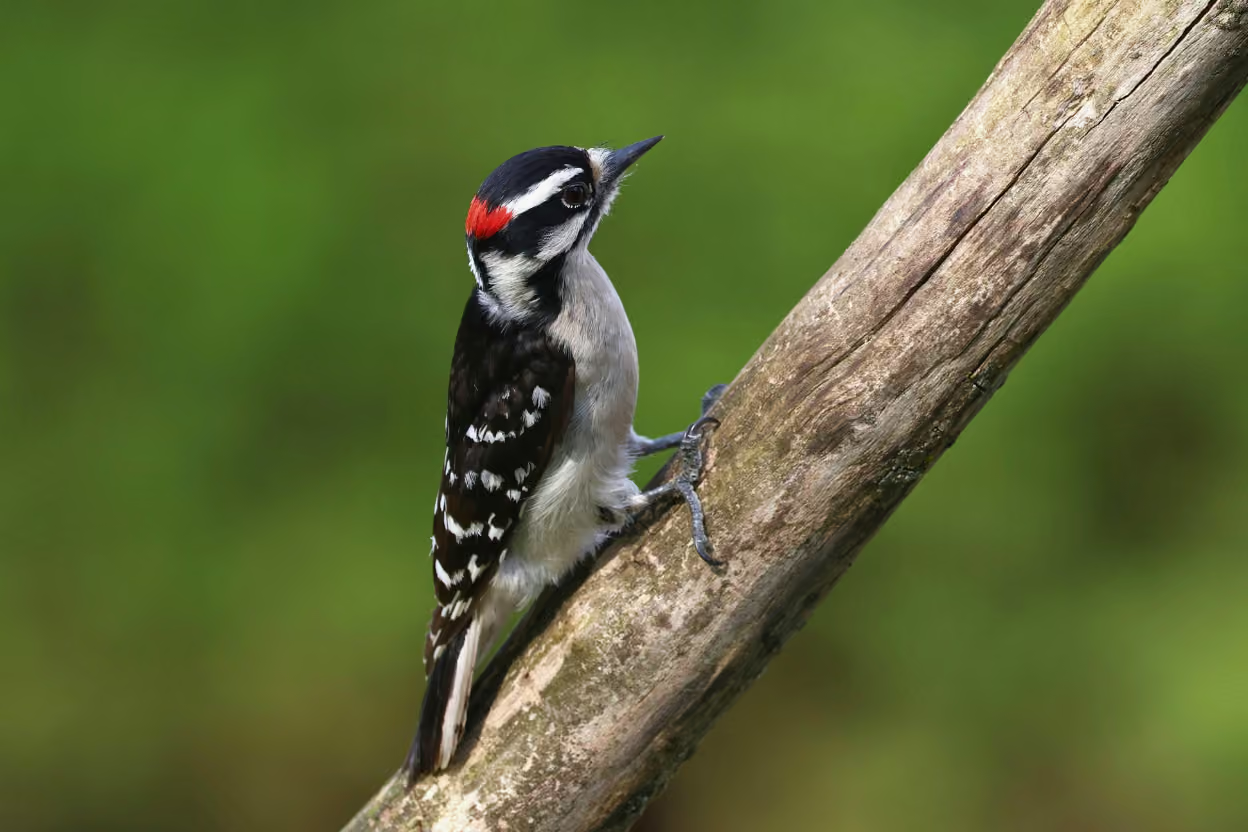
What it pecks: Downies are light hitters. They glean insects from bark and stems, take suet readily, and drum on gutters or dead branches in spring, but they rarely do structural damage. If something small is tapping politely on your siding, this is usually the bird.
Hairy Woodpecker
The Hairy Woodpecker (Dryobates villosus) is the Downy's larger lookalike, and telling the two apart is one of the first real identification challenges every birder works through. The plumage is almost identical. The tells are size and proportion. The Hairy is noticeably bigger, around 9 inches, with a longer, heavier bill that is roughly as long as its head is wide, where the Downy's bill is much shorter than its head. The voice helps too, with a sharp, emphatic "peek" and a whinny that stays level rather than descending. We are keeping both profiles short here on purpose, because a full side by side comparison deserves its own post, and we will link one in when it is ready. For now, focus on the bill. Cornell's All About Birds has clean reference photos if you want to train your eye.
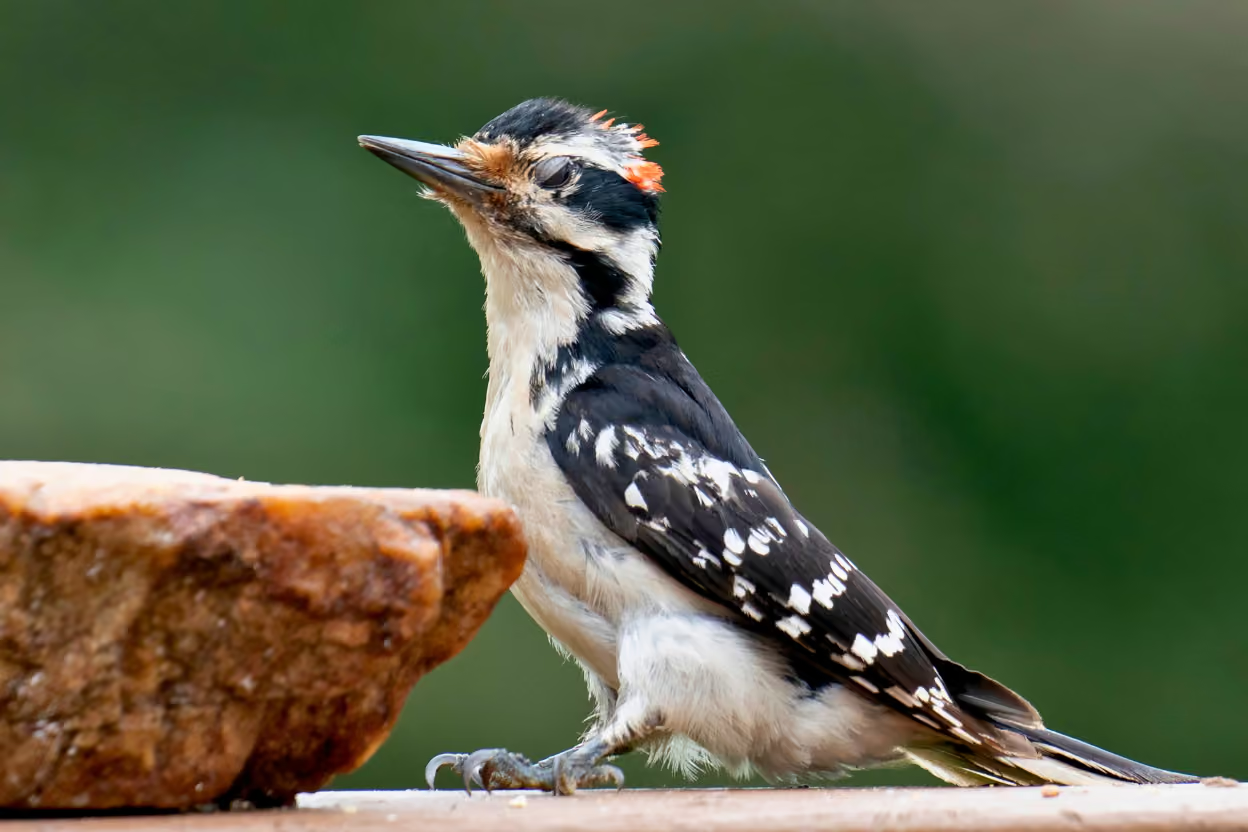
What it pecks: The Hairy is the bird that gave us our chimney story. It is a stronger excavator than the Downy and a committed drummer, and that is the surprise, because a Hairy will happily abandon wood for a resonant steel cap when it wants its territorial roll to carry.
Northern Flicker
The Northern Flicker (Colaptes auratus) is the woodpecker most likely to be on the wrong end of a homeowner complaint, and also the least woodpecker-looking of the bunch. It is large, around 12 inches, sandy brown rather than black and white, with a barred back, a spotted belly, a black crescent across the chest, and a flash of color under the wings and tail that is yellow in the East and salmon red in the West. Flickers spend much of their time on the ground hunting ants, which is unusual for the family.
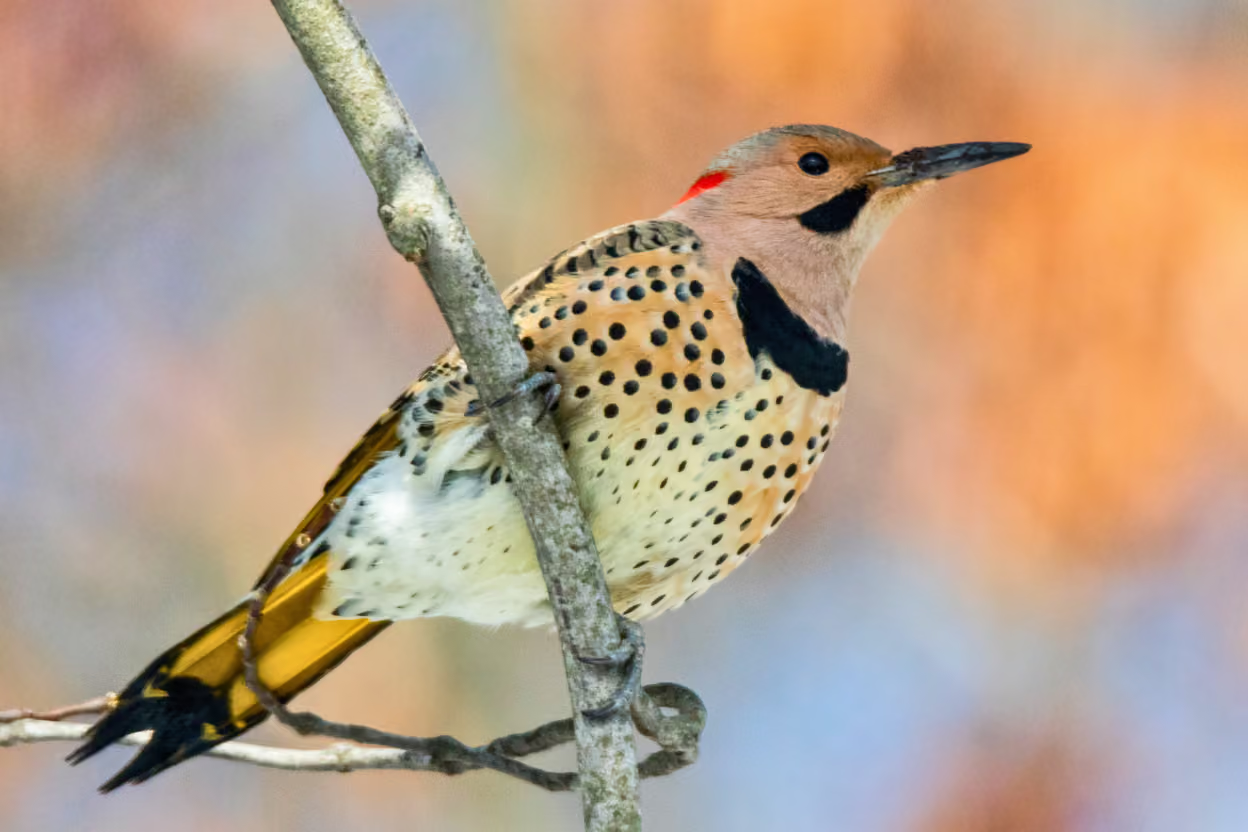
What it pecks: Despite the ground feeding, the flicker is the classic house and chimney drummer. It is big, loud, and strongly territorial in spring, and it favors prominent resonant surfaces for its display, which is exactly why it ends up on metal chimney caps, gutters, and siding corners. If a large brown woodpecker is hammering your house at dawn in April, this is almost certainly your bird.
Red-bellied Woodpecker
The Red-bellied Woodpecker (Melanerpes carolinus) is a common feeder and yard bird across the eastern United States, and its name causes endless confusion, because the field mark people notice is the bright red cap and nape, not the faint blush on the belly that gives the bird its name. It is medium sized, around 9 inches, with a pale face and a finely barred black and white back that birders call a zebra pattern. It is expanding its range northward and has become a familiar suburban resident.
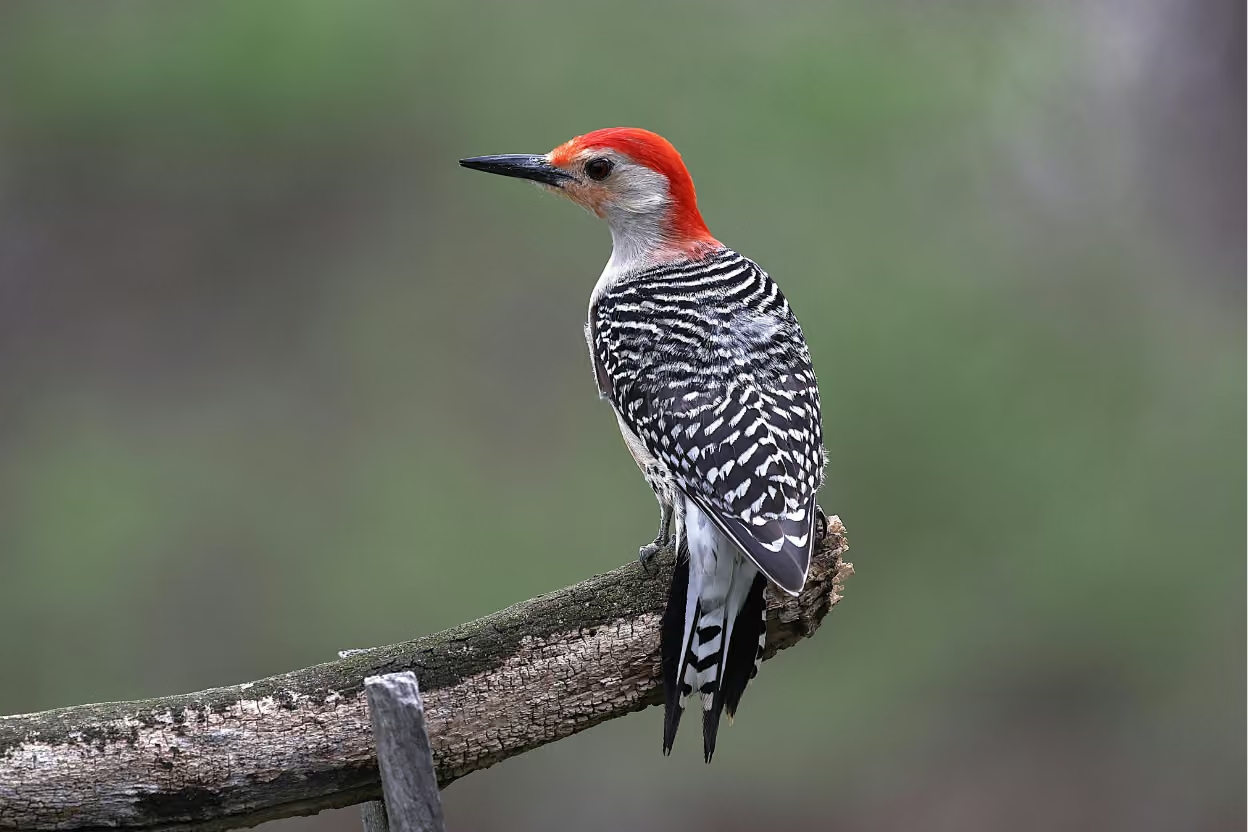
What it pecks: Red-bellied Woodpeckers forage for insects, nuts, and fruit, and they will excavate nest cavities in dead or dying wood. On houses they are more often after insects in soft or aging wood than drumming, so their damage tends to be feeding holes rather than the relentless dawn roll of a flicker.
Pileated Woodpecker
The Pileated Woodpecker (Dryocopus pileatus) is the largest woodpecker in North America, a crow-sized bird with a flaming red crest that looks like it flew in from a much wilder place. It needs mature forest with large trees, so it is a yard bird mainly for people who live near woods, but where it does turn up it is unmistakable. Watch for the deep, slow, powerful drumming and the loud ringing call.
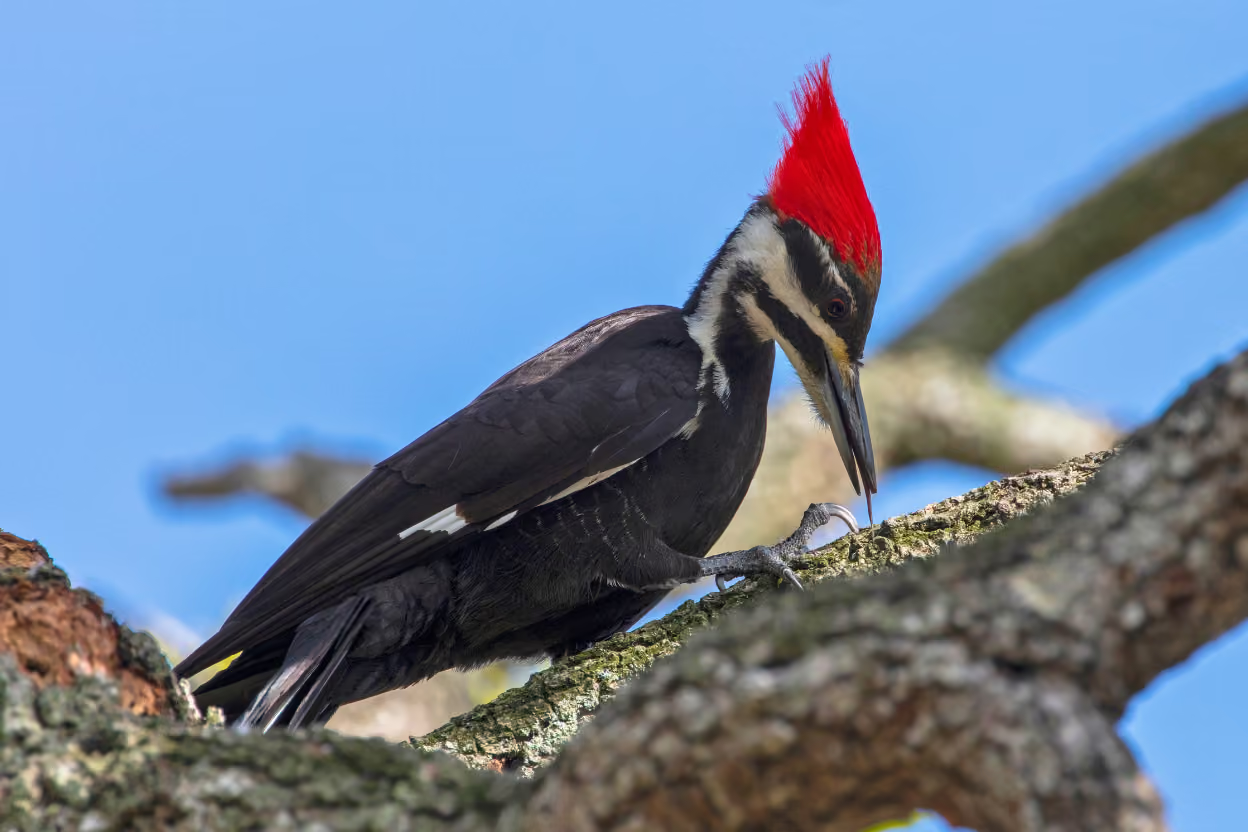
What it pecks: The Pileated is the excavator. It chisels large rectangular holes deep into rotten wood to reach carpenter ant nests, and those distinctive rectangular cavities are its signature. On a house it is rare but serious, because a Pileated working a soft fascia board or a log wall removes real material fast. The good news is that it is almost always telling you the wood is already rotten and full of insects.
Yellow-bellied Sapsucker, the gutter drummer
The Yellow-bellied Sapsucker (Sphyrapicus varius) is not a true woodpecker in the way the others are, but it belongs to the same family and it earns its place here because it is one of the birds most likely to put on a metal drumming performance against your house. It is a tidy black and white bird with a red forehead, a pale yellow wash on the belly, and a long white wing patch that shows in flight. It breeds across Canada and the northern states and passes through much of the East on migration.
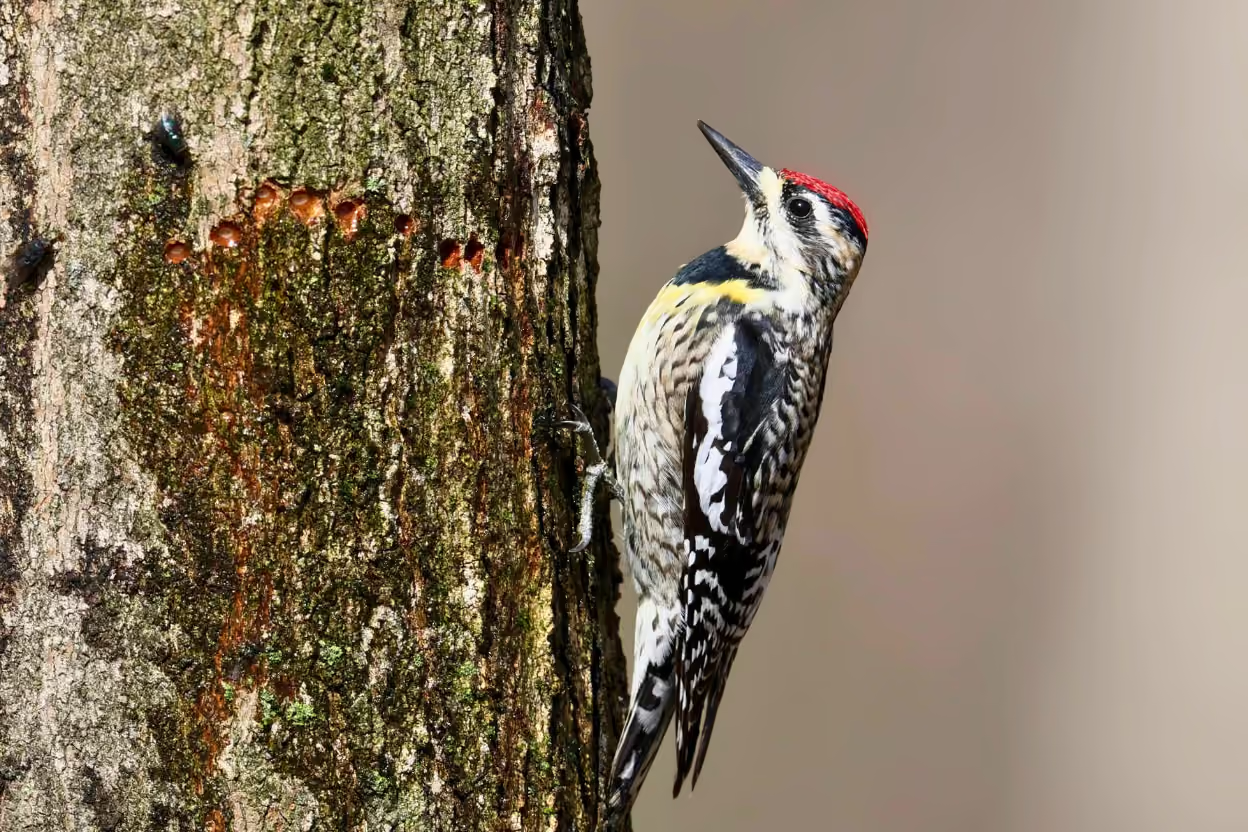
What it pecks: On trees, sapsuckers drill the neat horizontal rows of shallow wells they are named for and return to drink the sap and eat the insects it traps. Around houses, the behavior that gets noticed is drumming. A sapsucker will choose the loudest object it can find, which is how a quiet sap feeder becomes the bird hammering your aluminum gutter or stovepipe at sunrise. We go deeper into that acoustic puzzle in why woodpeckers peck on metal.
Two regional specialists: Acorn and Red-headed
The last two are birds you will only meet in the right part of the country, but both are striking enough to be worth knowing. Acorn Woodpecker: a clownish, social bird of western oak country (Melanerpes formicivorus), unmistakable with its red cap, pale eye, and black and white face. It is famous for the granary, a tree, pole, or wall that a colony drills with thousands of small holes, each one wedged with a single acorn. If you live in the oak woodlands of California or the Southwest and find a wooden surface studded with acorns, this is the architect. We cover that behavior in why woodpeckers peck on telephone poles.
Red-headed Woodpecker: one of the most beautiful and most declining woodpeckers in North America (Melanerpes erythrocephalus), with an entirely crimson head, a clean white body, and bold black wings with white patches. It favors open woodland, savanna, and dead standing timber across the Midwest and East, and it caches food in bark crevices much as the Acorn does with acorns. It is more a bird of the woodland edge than the house wall, but it is a thrill when one appears.
So which one is on your house?
Put the bird and the behavior together and the picture usually resolves quickly. Polite tapping from a small black and white bird is almost always a Downy. A loud, ringing roll on a metal cap or gutter at dawn in spring is a flicker or a sapsucker drumming for territory, noisy but rarely damaging. Neat round feeding holes in aging wood point to a Red-bellied or a Hairy after the insects inside. Deep rectangular excavation in soft or rotten wood is the Pileated, and it is usually a sign the wood was already failing. Once you know who you are dealing with, you can decide what, if anything, to do about it. If the answer is a chimney drummer like the one that started our morning, how to stop woodpeckers pecking on your chimney covers the deterrents that actually work, in the order worth trying them.
One last thing worth knowing. Almost every woodpecker in North America is protected by law in both the United States and Canada, under the Migratory Bird Treaty Act in the US and the Migratory Birds Convention Act in Canada, so whatever you do has to be non-lethal. That is less of a constraint than it sounds, because understanding the bird is usually enough to solve the problem.
FAQ
The Downy Woodpecker is the most common and most widespread backyard woodpecker across most of North America. It is also the smallest, and it visits feeders readily, especially suet, which is why it turns up in so many yards year round.
The Pileated Woodpecker is the largest woodpecker in North America, a crow-sized bird with a tall red crest. It excavates deep rectangular holes in dead and rotting wood to reach carpenter ants, and those distinctive cavities are the easiest way to know one has been working a tree.
The fastest tell is the bill. A Downy Woodpecker has a short, stubby bill, much shorter than the width of its head, while a Hairy Woodpecker has a longer, heavier bill that is roughly as long as its head is wide. The Hairy is also noticeably larger overall, and its call is a sharper, more emphatic note. Plumage alone will not separate them, because the two are nearly identical in pattern.
The Northern Flicker is the species behind most house and chimney complaints. It is large, loud, and strongly territorial in spring, and it favors prominent resonant surfaces for its drumming display, which is why it ends up on metal caps, gutters, and siding corners. Downies, Hairies, and Red-bellied Woodpeckers also visit houses, usually after insects in the wood rather than to drum.
Yes. Almost every woodpecker native to North America is protected by law in both the United States and Canada, under the Migratory Bird Treaty Act of 1918 in the US and the Migratory Birds Convention Act in Canada. It is illegal to harm the birds, their nests, or their eggs, so any response to a woodpecker problem has to be non-lethal, which in practice means deterrence and removing whatever is attracting the bird.
When a woodpecker hammers metal, it is almost always drumming rather than feeding. Metal gutters, flashing, chimney caps, and signs are loud and carry sound well, which makes them excellent instruments for the territorial display woodpeckers normally perform on hollow branches. It is noisy but rarely damaging, and it peaks at dawn in the spring breeding season.