
How to Watch Bird Courtship Displays: Leks, Timing, and the Optics That Matter
Courtship is the most watchable thing birds do, and the most easily ruined by watching it badly. Here is how to find displays, how to behave at them, and what to carry.
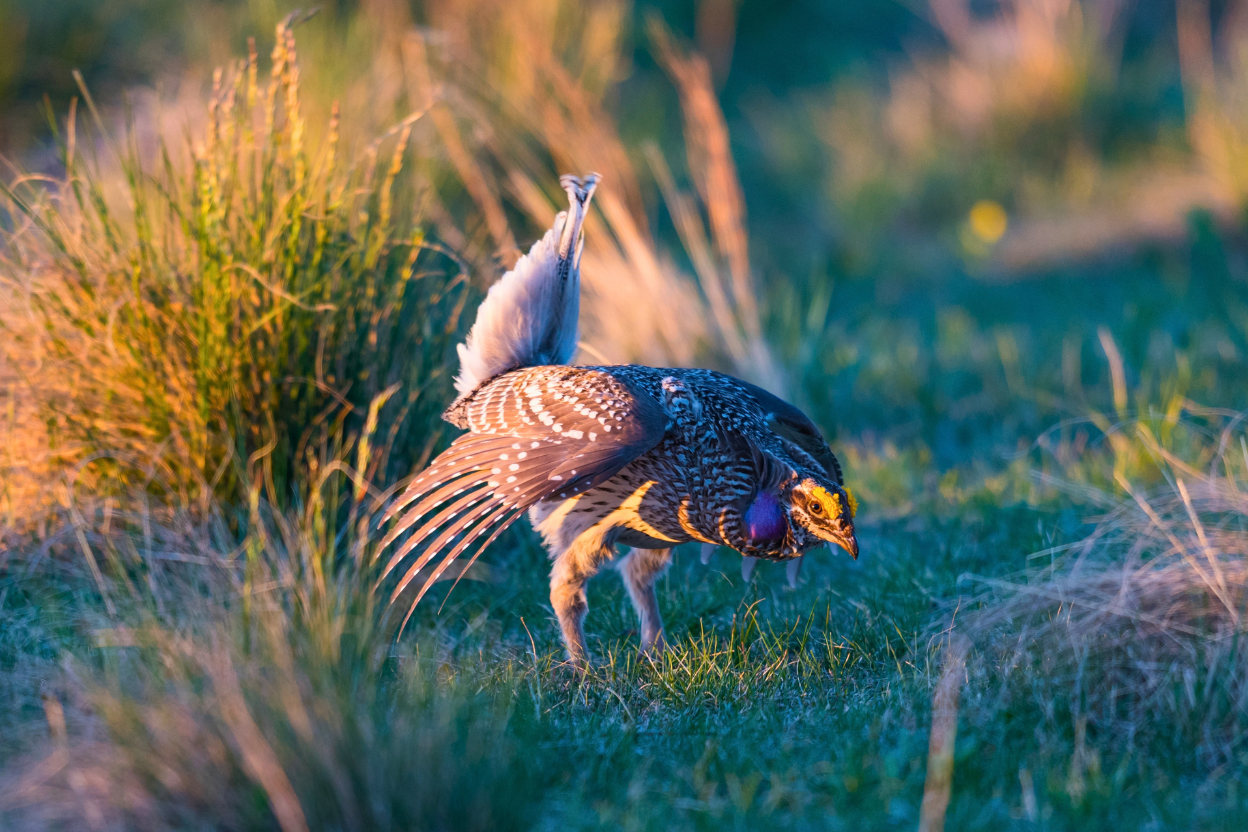
We heard them before we could see anything at all. A big bog in northern Canada, first light, and fog sitting on the ground so thickly that the far edge simply did not exist. Somewhere out in it, Sharp-tailed Grouse (Tympanuchus phasianellus) were dancing. The sound arrived in layers, a low cooing that seemed to come from everywhere at once, and underneath it a dry rattling purr that we later understood was dozens of feet stamping too fast to count. We stood still and listened to a lek we could not see. It was one of the finest mornings of birding we have had.
That morning also taught the lesson this article is built on. Courtship is the most watchable thing birds do, and it is the easiest to ruin by watching it badly. A lek is not a bird at a feeder. It is a small patch of ground where the entire breeding season of a local population is decided, and birds that are flushed off it lose that morning's chance. So we start with the ethics, which are not optional, then cover how to find displays and read them, and only then talk about the optics, because a display arena at distance in bad light is one of the few situations in birding where equipment genuinely decides whether you see anything.
The etiquette comes first
State wildlife agencies have published lek viewing rules for decades, and they exist because leks are traditional sites used year after year. Disturb one badly enough and the birds may abandon it. The rules below come from agencies such as Wyoming Game and Fish and Montana Fish, Wildlife and Parks, and they generalize well to any display ground.
Arrive in the dark. Be in position at least an hour before sunrise. Birds are often already on the ground before first light, and a vehicle arriving at dawn drives them off. Keep your distance. Park at least 100 yards from the nearest displaying male, on an established road, and never drive onto the arena itself. Stay in the vehicle. At most managed leks this is the rule rather than the suggestion, because a car is a far better blind than anything you can build. Kill the lights and the engine, and do not slam doors.
Then do the hard part, which is waiting. Do not leave until the birds do. This is the rule people break most often, usually because they got their photographs and the light was nice. Driving away mid-display scatters the lek and undoes the morning for every bird on it. If you cannot commit to sitting until the grouse leave on their own, the right decision is not to go.
Away from formal leks the same principles hold in softer form. Stay on the edges rather than walking into the open, keep low, avoid skylining yourself on a ridge, and never use playback at a display site, where a rival male's voice can disrupt the thing you came to watch.
Finding displays, and knowing when
Almost all of this happens in a narrow window, and being in the right place on the wrong schedule is the commonest way to see nothing.
Grouse leks run at dawn in spring. Sharp-tailed Grouse display from roughly March into May, with females arriving to choose in April, and the northern birds use bog edges and shrubby openings in the boreal rather than the prairie habitat most articles describe. Greater Sage-Grouse (Centrocercus urophasianus) follow the same dawn pattern on sagebrush leks further west, and their viewing sites are the best signposted in North America, with several states publishing lek locations specifically to keep visitors concentrated where the disturbance is managed. Starting at a signposted site is both easier and more responsible than hunting for your own.
American Woodcock display at dusk, not dawn, which makes them the most accessible display in eastern North America by a wide margin. If that is the one you want, we have written it up in full in our guide to the American Woodcock sky dance, including the habitat to look for and the timing that decides whether you see it.
Practical notes: ask your regional wildlife agency or local bird club rather than searching blind, since active lek locations are often known and sometimes deliberately unpublished. Check eBird for recent reports, but treat precise lek coordinates as sensitive information rather than something to broadcast. And go more than once. Weather flattens display activity, and a calm morning after a mild night is worth far more than a fixed date on the calendar.
Reading what you are looking at
Once you are watching, the interpretation is its own skill, and it is where most of the pleasure sits.
At a lek, watch the geometry rather than any single bird. Territories on the arena are not equal, the central ones belong to the dominant males, and most matings go to very few birds. If you can work out where the centre is, you are watching the part that matters. Listen as well as look, since much of a Sharp-tailed Grouse display is acoustic, the cooing through inflated neck sacs, the clicking of tail feathers, and the purr of stamping feet, and in fog that may be all you get.
Away from leks, the confusion to resolve is courtship against aggression, because at speed they look alike. Courtship usually keeps two birds of opposite sexes in close contact without either fleeing, and often involves ritualized posture, food passing, or mutual display. Aggression ends with one bird driving another out of the area entirely. We unpack the behaviour behind all of this in our guide to how birds mate, and the display systems themselves in lekking birds and their dance battles.
Two more things are worth knowing before you assume you understand a pair. Not every bonded pair is a male and a female, as we cover in same-sex pairing in birds, and not every species keeps to the spring calendar, which is the subject of why crossbills breed whenever they want.
The optics, and why this is where they earn it
We are cautious about gear recommendations, because most birding is done perfectly well with whatever you own. Display watching is the exception. You are held at distance by the ethics, the light is at its worst, and the subject is small and low to the ground. That combination is exactly what good glass is for.
As an Amazon Associate we earn from qualifying purchases. The three items below are what we actually carry, not a padded list.
Binoculars. We use Vortex Viper HD 10x42 binoculars, and we will be straight about the trade-off, because display watching is exactly where it shows. A 10x42 delivers a 4.2mm exit pupil against 5.25mm from an 8x42, and since your own pupils dilate past 5mm in the dark, an 8x42 genuinely looks brighter at first light and sits steadier in cold hands. What the extra magnification buys back is reach, and when the etiquette holds you 100 yards off an arena, reach is the thing you are short of. We accept a slightly dimmer pre-dawn image in exchange for resolving detail once the light arrives. If you already own an 8x42, it is a fine choice here and not worth replacing.
Spotting scope. This is the piece that changes what is possible, and we use the Vortex Viper HD 20-60x85. The practical advice is to resist winding it to the top of its range. At 60x an 85mm objective yields an exit pupil of roughly 1.4mm, which in dawn light is a dim and shimmering image. At 20x the same scope gives about 4.25mm and a far brighter, steadier view. We spend most of a lek morning between 20x and 30x and only go higher once the sun is properly up, which is the opposite of what most people do when they first mount a scope.
Tripod. A scope is only as good as what holds it, and this is where people economize and regret it. We use a Manfrotto 290 Xtra with the 128RC micro fluid head, an old and unglamorous combination that keeps working. The fluid head is the important half, because panning smoothly across an arena to follow a bird is a different motion from locking onto a static subject, and a stiff photographic head makes it unpleasant. The kit carries up to about 8.8 lb, which covers any birding scope, and weighs 5.6 lb itself, which is honest rather than light. Extend the legs before the centre column, since a raised column is the least stable part of any tripod.
One thing that is not optional: warmth. Sitting still from an hour before sunrise in April is colder than anything a walk prepares you for, and cold is what actually ends most display watching early, not equipment.
A dawn worth planning
The shape of a good display morning is simple. Find the site in daylight the day before so you are not navigating in the dark. Be in position at least an hour before sunrise with the scope already mounted, because setting up a tripod in the dark next to a lek is exactly the noise you are trying to avoid. Then sit, let the light come, and stay until the birds have finished and gone.
You may get fog. We did, and we could not see a thing, and it remains one of the best mornings we have spent in the field. The birds were doing what they have done on that bog for longer than anyone has been watching, and we got to sit at the edge of it without changing a single thing about the morning. That is the whole aim.
FAQ
At least an hour before sunrise, while it is still fully dark. Grouse are frequently on the display ground before first light, so a vehicle arriving at dawn pushes birds off the lek before anyone sees anything. Arriving early is the single biggest difference between a good morning and an empty one. It also means finding the site in daylight the day before, since navigating unfamiliar back roads in the dark is how people end up driving onto an arena by accident.
Park at least 100 yards from the nearest displaying male, on an established road, and never drive onto the lek itself. Most managed viewing sites also ask you to stay inside your vehicle, which is not a restriction so much as an advantage, since a car is a better blind than anything you could build. Turn off lights and engine and avoid slamming doors. The rule people forget is the last one: do not leave until the birds do, because driving off mid-display scatters the whole lek.
Not for everything, but for leks it changes what is possible. Ethical viewing keeps you at distance in poor light, which is precisely the situation a scope is built for. For closer displays such as woodcock at dusk or waterfowl courtship on a pond, binoculars are enough and often better, because displays involving flight need a wide field of view rather than magnification. A reasonable approach is binoculars for anything you can walk up to, a scope for anything happening on an arena.
There is a real trade-off here rather than a single right answer. An 8x42 gives a 5.25mm exit pupil against 4.2mm from a 10x42, and since your own pupils dilate past 5mm in the dark, the 8x42 looks brighter at first light and holds steadier in cold hands. The 10x42 gives back reach, which matters when ethics hold you 100 yards from an arena. We carry Vortex Viper HD 10x42 binoculars and accept a slightly dimmer pre-dawn image for that extra resolution. If you already own an 8x42, it is a fine choice for this and not worth replacing.
Spring, but the exact window depends on the species and it is narrower than people expect. Sharp-tailed Grouse display from roughly March into May, with females arriving to choose during April, and Greater Sage-Grouse follow a similar spring schedule on sagebrush leks. American Woodcock display in early spring at dusk, running from late February in the southern United States to May in Canada. Weather matters as much as the date, since cold fronts and strong winds suppress display activity, so a calm morning after a mild night beats a fixed calendar target.