
White-throated Caracara: How and Where to See It in Patagonia
The White-throated Caracara is one of Patagonia's most striking mountain raptors. We cover where it lives, the best places to see it, and practical tips for finding it in the field.
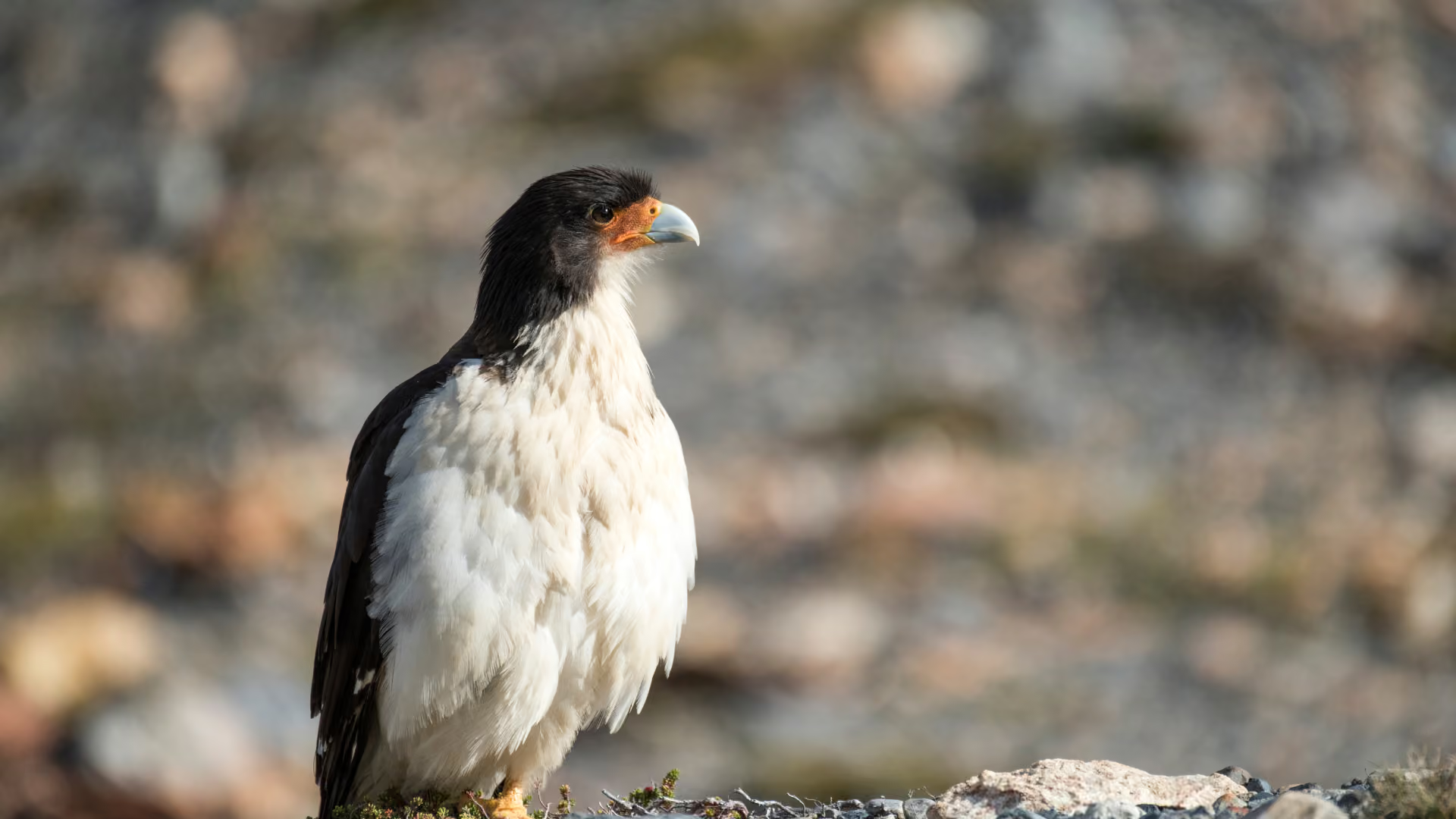
The White-throated Caracara is one of Patagonia's most charismatic raptors. Bold, curious, and endlessly adaptable, this Andean species turns up in dramatic mountain settings where few other birds of prey venture, and it often does so close enough to study without a scope. For many visitors it becomes the surprise highlight of a trip, a bird that seems as curious about us as we are about it.
Where Is the White-throated Caracara Found?
The White-throated Caracara is a true Patagonian endemic, found only in southern Chile and Argentina, from roughly southern Neuquén south through Patagonia and into Tierra del Fuego. It favors open ground along the Andes, from alpine slopes and rocky passes down into windswept valleys, and it is the one member of its genus that will also work the edges of southern beech forest. In practice we look for it wherever rugged terrain meets strong wind, since it rides those updrafts effortlessly for hours.
Within Patagonia the most productive ground tends to be mountainous country in southern Chile and Argentina, higher elevations near glaciers and alpine lakes, and exposed ridgelines and open valleys where the wind funnels through. Its presence is closely tied to that combination of steep relief and moving air.

Best Places to See the White-throated Caracara in Patagonia
Two locations stand out above the rest, and both double as classic Patagonia treks, so you give up nothing by planning your walking around them.
Torres del Paine National Park. This is one of the most reliable places to connect with the species. Birds are seen regularly along the popular hiking trails, they forage near viewpoints and rest areas, and they soar low over ridges and valleys throughout the day. Their curiosity means they will sometimes drift in to inspect hikers, especially in exposed sections with steady foot traffic. Our Torres del Paine birding guide covers exactly where to focus your time in the park.

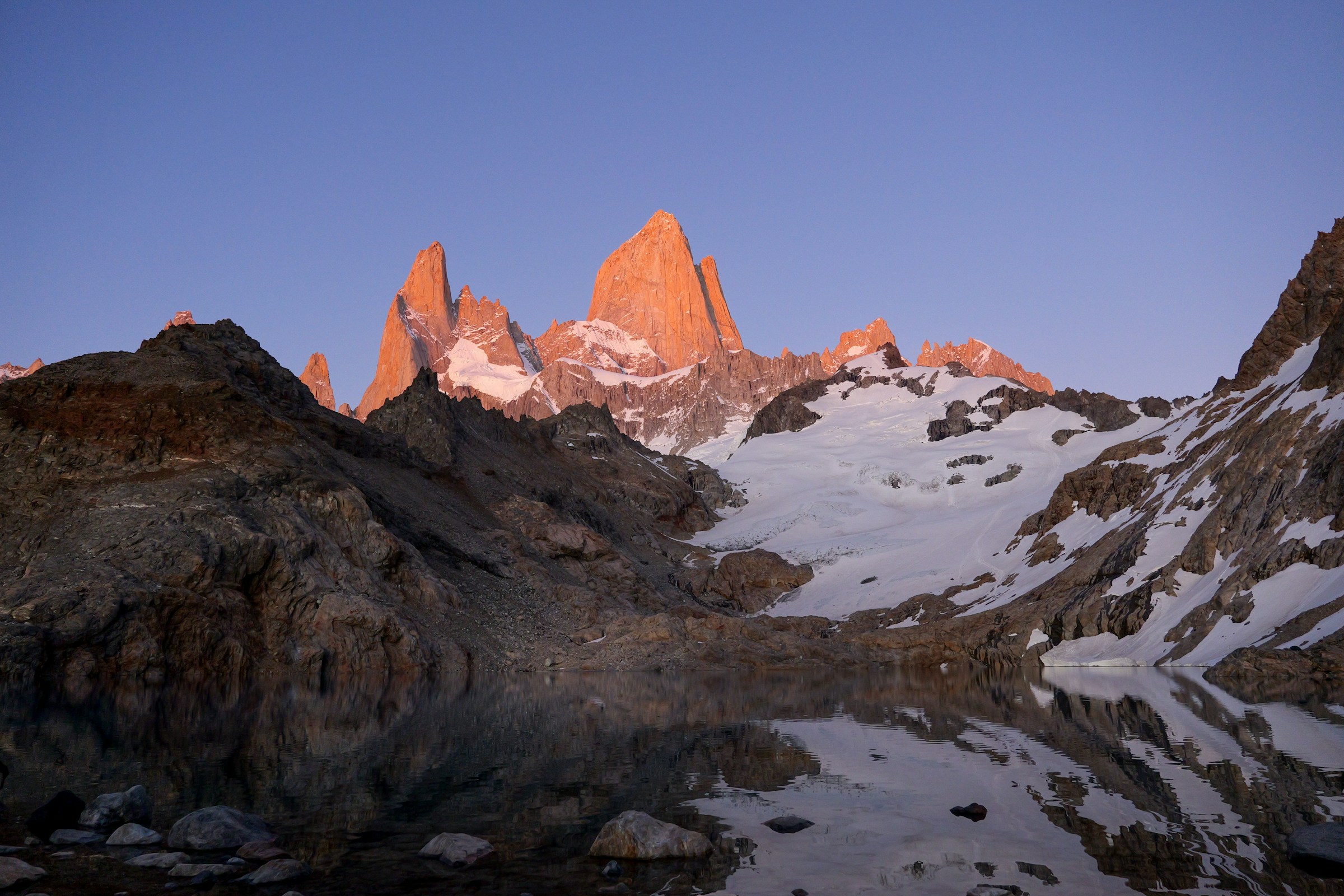
Fitz Roy Trail and Laguna de los Tres, El Chaltén. The top of the Fitz Roy Trail, up at Laguna de los Tres, is arguably the finest spot in all of Patagonia for this bird. Caracaras often pass extremely close to observers here, visibility is excellent near the lake and along the final ascent, and the high wind and steep terrain create ideal soaring conditions. Patience at the summit is usually rewarded with dramatic flybys. If you are building the wider day around it, our guide to birding El Chaltén covers the forest birds and condors you will meet on the way up.
Behavior and What to Look For
White-throated Caracaras are strong, confident fliers, more often seen gliding and tumbling on updrafts than flapping hard. They are opportunistic foragers, and much of their diet is scavenged, so they readily investigate human activity and gather at carcasses, sheep slaughtering sites, and rubbish dumps. Unlike many raptors that stay distant and elusive, this species is often conspicuous and approachable, particularly in open alpine settings where there is nowhere to hide.
Tips for Seeing the White-throated Caracara
The simplest approach is to spend real time at high viewpoints and scan the ridgelines and open sky near summits, since that is where the soaring happens. Pause often near popular trails, because a bird that drifts past will frequently circle back for another look. Windy days almost always improve activity, so we treat a stiff breeze as good news rather than bad. Arriving early at the iconic viewpoints also thins the crowds and makes for calmer, better observation.
How This Fits Into a Patagonia Birding Trip
The White-throated Caracara slots naturally into the classic Patagonia circuit, pairing well with El Chaltén and Fitz Roy, Torres del Paine, and the high Andean trails in between. It is often seen alongside other Patagonian raptors and alpine specialists, and at carcasses it will share the sky with the unmistakable Andean Condor. If you want to see how it fits into a full route, our roundup of the 20 best birds of Patagonia and our two week Patagonia itinerary both map out where to catch it alongside the rest of the region's headline species.
Planning Your Patagonia Birding Experience
Patagonia's mountains reward birders who slow down. Spending time at elevation, watching the sky, and allowing for a little stillness is what turns a hoped for sighting into an unforgettable one, and the White-throated Caracara is a perfect example of a bird that comes to those who wait. Good optics help you pick it out at distance and enjoy it when it drifts in close, so it is worth checking the essential gear we actually use in Patagonia before you go.
FAQ
The White-throated Caracara is a highly opportunistic feeder, which is part of why it turns up so readily around trails and viewpoints. Its diet mixes carrion with live prey. In Patagonia it scavenges cattle and sheep carcasses and also takes small rodents, young birds, and a large amount of insects and other invertebrates. We have watched them flipping dung and loose stones on alpine slopes to reach the insects underneath, and they are well known for gathering at rubbish dumps such as the one outside Ushuaia. Its full diet and breeding biology remain among the least studied of any caracara, so some details are still genuinely uncertain.
The two are close relatives that were long treated as almost the same bird, yet they rarely share the same ground. The White-throated Caracara ranges lower and is the only member of its genus that ventures into southern beech forest, while the Mountain Caracara (Daptrius megalopterus) keeps to open country higher in the Andes and farther north. Where their ranges brush together in northern Patagonia, around Neuquén and Río Negro, observers have recorded apparent hybrids, so a small number of birds there can be genuinely hard to assign. On a good view, adult White-throated Caracaras show clean creamy white underparts and a bold white tail tip, which helps separate them.
No. The White-throated Caracara is listed as Least Concern by the IUCN, and across its Patagonian range it is fairly common in the right habitat. Even so, it is a Patagonian endemic with a limited world range, found only in southern Chile and Argentina, so it is a real regional specialty rather than a bird you can see anywhere else. In prime spots it is often conspicuous and even approachable, which makes it one of the more rewarding raptors to connect with on a Patagonia trip.
You have a good chance year round wherever the species occurs, but the most comfortable window lines up with the austral summer, roughly November through March, when the main Patagonian trails are open and updrafts are strong. This also overlaps the breeding season, which runs from about September to March, so birds are active and often visible near their cliff nesting ledges. Windy days tend to produce the best soaring, so we plan time at exposed high viewpoints when the weather is breezy.
The species carries the alternative name Darwin's Caracara because the specimen that first brought it to science was collected by Charles Darwin. The English ornithologist John Gould formally described it in 1837 from that Darwin specimen, taken at Santa Cruz in Patagonia. The scientific name albogularis simply means white throated, a nod to the pale throat and underparts that stand out against its dark plumage. Seeing one soar over the same Patagonian country Darwin once traveled adds a nice thread of natural history to any encounter.