
How to Plan a Two-Week Patagonia Birding Trip: The Complete Itinerary from Ushuaia to Puerto Natales
The complete 14-day Patagonia birding itinerary from Ushuaia to Puerto Natales with flexible daily structures and species targets at each base.
The biggest mistake we see in Patagonia is the one-to-two night itinerary. People we crossed paths with who were moving that fast were not having as much fun, and they were having a lesser experience than those who stayed longer. When you give a place three nights minimum, something shifts. You find the panaderias. You discover the coffee shop that becomes your morning ritual. You make connections with other travellers and locals. You learn which trail is best at dawn and which is best at dusk. You stop rushing toward the next thing and start actually living inside the landscape. In Patagonia, on either the Argentine or Chilean side, that is where the real experience begins. Slow down. The birds will still be there on day two.
This itinerary runs 14 days from Ushuaia north through El Chalten and El Calafate to Puerto Natales, crossing between Argentine and Chilean Patagonia. It is built around a minimum of three nights per base, a flexible daily structure that accounts for weather, and honest notes on what each destination delivers for a dedicated birder. It is not a rushed highlight reel. It is a trip designed to be genuinely experienced.
Before You Go: The Non-Negotiables
Book Isla Martillo (Piratours) before anything else. The concession sells out weeks in advance in December and January. As soon as your Ushuaia dates are confirmed, book this. Everything else can be flexible. This cannot.
Download Merlin offline with the South America bird pack before boarding your first flight. Mobile data is unreliable across most of this route. As we cover in our Best Field Guides and Digital Tools guide, Merlin offline is your primary field ID tool for the entire trip.
Pack your rain jacket in your daypack every single day. Not in your luggage. In your daypack. As we explain in our Essential Gear for Birding in Patagonia guide, Patagonian weather changes in minutes and the birder who has their hardshell accessible stays productive while everyone else retreats.
Time your trip for December. As we cover in detail in our Best Time to Go Birding in Patagonia guide, December is the optimal month: peak breeding activity, longest days, and manageable crowds at most sites.
Days 1 to 3: Ushuaia
Fly into Ushuaia the day before your birding begins. Use the arrival afternoon for the waterfront. Within ten minutes of leaving your accommodation you will be watching Northern and Southern Giant Petrels, Blackish Oystercatchers, Dolphin Gulls, Magellanic Steamer-Ducks, and the dusky subspecies of Black-crowned Night Heron from the channel edge. Three nights here is the minimum. Five would be better.
Day 1: Beagle Channel waterfront at dawn, low tide if possible. Bahia Encerrada reserve mid-morning, 45 minutes maximum. Return to waterfront in the afternoon and stay until dark. Species goal: 25 to 35 birds including both Giant Petrel species, Dolphin Gull, Blackish Oystercatcher, and steamer ducks.
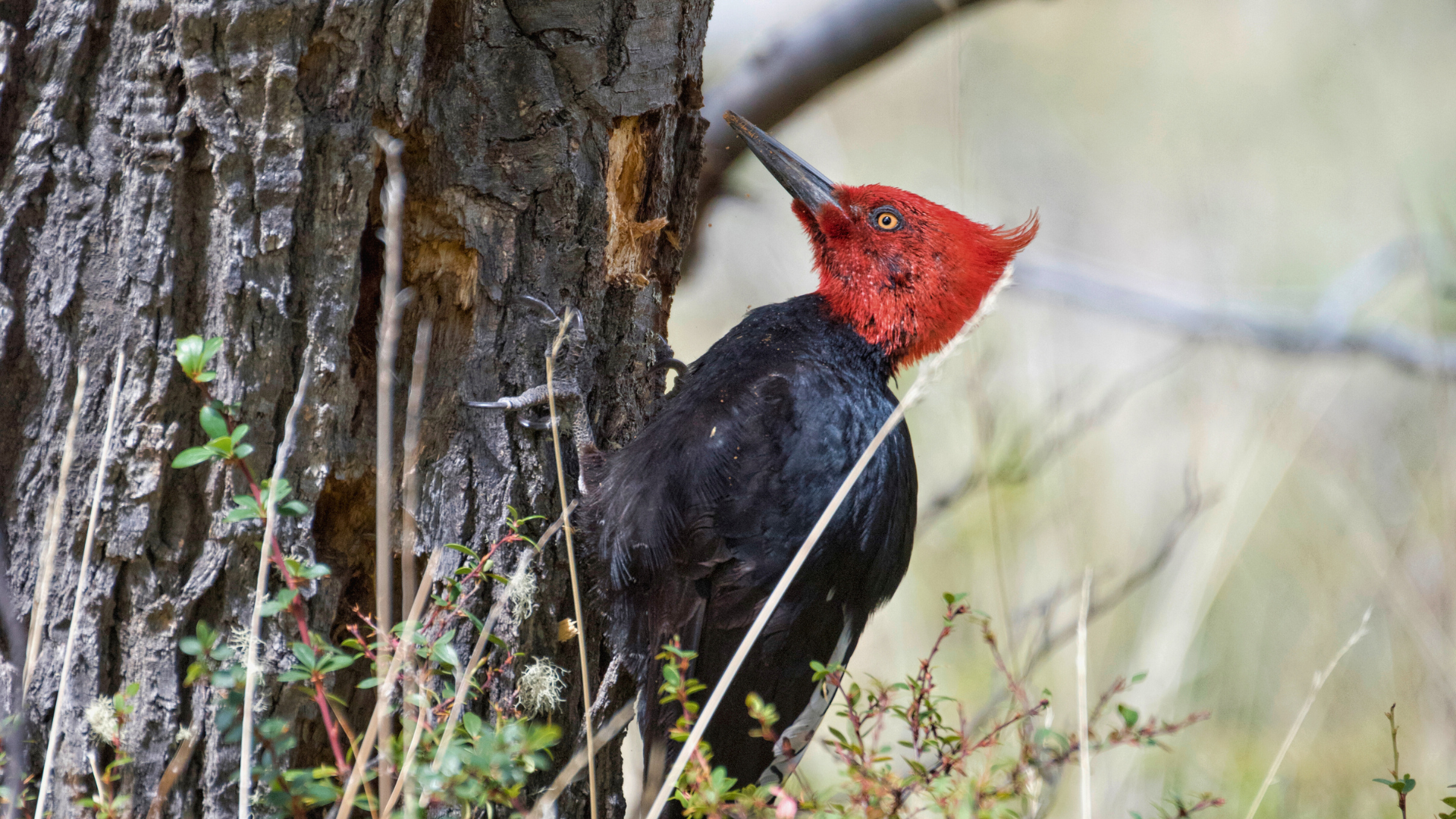
Day 2: Isla Martillo full day via Estancia Harberton. Drive east along the Beagle Channel road, stopping at every Nothofagus forest section for Magellanic Woodpecker and Thorn-tailed Rayadito. Then Piratours to Isla Martillo for Magellanic Penguin, Gentoo Penguin, and if fortune is with you, King Penguin at the ramp. Full account in our Magellanic Penguin Colony Guide.
Day 3: Paso Garibaldi morning for White-bellied Seedsnipe and Rufous-chested Dotterel on the high moorland. Tierra del Fuego National Park afternoon for Magellanic Woodpecker and Austral Pygmy-Owl. Evening waterfront walk. Species goal across three days: 70 to 90 species. Full guide at our Birding Ushuaia guide.
Days 4 to 6: El Chalten
Fly or bus from Ushuaia to El Calafate and connect to El Chalten by bus. The drive passes through excellent open steppe with Lesser Rhea, Upland Goose, and raptors visible from the bus window. Arrive in the afternoon and go immediately to the Rio de las Vueltas for Torrent Duck before the light goes.
Day 4: Condor viewpoint before sunrise. Town river margins for Torrent Duck mid-morning. Begin the Laguna de los Tres trail in the early afternoon, moving slowly through the forest section. The goal is not the lagoon on this day. The goal is the forest between kilometres 3 and 7. Stay until dark.
Day 5: Laguna Torre trail full day. Different forest character, different species mix. Magellanic Woodpecker focus on the outward journey. Raptor watching at Laguna Torre. Return via the river for a second Torrent Duck attempt.
Day 6: Repeat Laguna de los Tres, specifically targeting kilometre 7 for Austral Pygmy-Owl. Listen for mobbing alarm flocks. As we describe in our El Chalten Birding Guide, the owl is found by sound, not by sight. Species goal across three days: 50 to 65 additional species. Cumulative total: 120 to 150.
Days 7 to 9: El Calafate
Bus from El Chalten to El Calafate takes approximately 3 hours. Arrive mid-afternoon and go directly to Laguna Nimez. You have arrived at the finest accessible birding reserve in all of Patagonia. Allow yourself to feel it.
Day 7: Laguna Nimez at arrival. Evening session through sunset. The flamingos turn pink in the gold. The rails call from the reeds. The Yellow-winged Blackbirds approach within metres. Plan to come back every morning and every evening for the next three days.
Day 8: Laguna Nimez dawn session. Lago Argentino shoreline east of town midmorning for Magellanic Plover. Return to Laguna Nimez for afternoon and sunset. Species focus: Austral Rail at the reed edge at dawn, Many-coloured Rush Tyrant at the reed margins, Austral Grass-Wren in the scrubby sections.
Day 9: Glacier road full day. Leave at 7am before the tour buses. Stop every bridge over fast water for Torrent Duck. Work the Nothofagus forest near the glacier car park for Magellanic Woodpecker. Evening Laguna Nimez sunset session. Full account in our El Calafate Birding Guide. Species goal across three days: 40 to 55 additional species. Cumulative total: 160 to 200.
Days 10 to 12: Puerto Natales
Bus or rental car from El Calafate across the border to Puerto Natales. The crossing passes through excellent steppe on the Argentine side with Lesser Rhea and raptors. Allow 4 to 5 hours for the journey including stops.
Day 10: Arrive mid-afternoon. Walk the Puerto Natales waterfront on Ultima Esperanza Sound for Kelp Goose, Flightless Steamer-Duck, and Imperial Shag.
Day 11: Cerro Dorotea morning. Taxi to the trailhead, steep and short hike to the ridge, then walk the ridge in the second half of the day. This is where we watched 51 condors pass through in a single afternoon, some soaring below our feet. Budget the full afternoon here. Cost: under $15 total. Full account in our Andean Condor guide.
Day 12: Torres del Paine full day. The road from Puerto Natales to the park is itself outstanding birding. Inside the park: Laguna Amarga for Chilean Flamingo and Black-chested Buzzard-Eagle, steppe road for White-throated Caracara and Lesser Rhea with chicks, Mirador del Condor for afternoon condor soaring. Full guide at our Torres del Paine Birding Guide. Species goal across three days: 40 to 55 additional species. Cumulative total: 200 to 250.
Days 13 and 14: Punta Arenas and Departure
Bus from Puerto Natales to Punta Arenas, 1 hour 30 minutes. Two days here adds the Chilean coastal experience and the Strait of Magellan crossing.
Day 13: Seno Otway penguin colony in the morning. The steppe road between Punta Arenas and the colony holds excellent open-country species. Return to Punta Arenas for afternoon waterfront birding on the Strait of Magellan.
Day 14: Isla Magdalena boat trip if logistics allow. The two-hour crossing passes through Strait of Magellan seabird territory. The island itself holds 120,000 Magellanic Penguin pairs. Full comparison at our Magellanic Penguin Colony Guide. Depart from Punta Arenas or connect to Santiago.
What This Trip Delivers
A December two-week circuit from Ushuaia to Puerto Natales, done at three nights per base with genuine field effort, delivers 200 to 260 species across six entirely distinct habitat types. Every major iconic Patagonian species is accessible: Andean Condor, Magellanic Penguin, Lesser Rhea, Magellanic Woodpecker, Chilean Flamingo, Torrent Duck, Austral Pygmy-Owl, Magellanic Plover, and all four caracara species.
More importantly, it delivers the experience of a place rather than a checklist of highlights. The people who spent one night in each city did not see fewer birds. They felt less of the place. Three nights minimum is not a luxury. It is the difference between visiting Patagonia and understanding it.
For the budget breakdown for this entire circuit, see our Patagonia Birding Budget Guide. For every species you will encounter along the route, see our 20 Best Birds to See in Patagonia guide.